
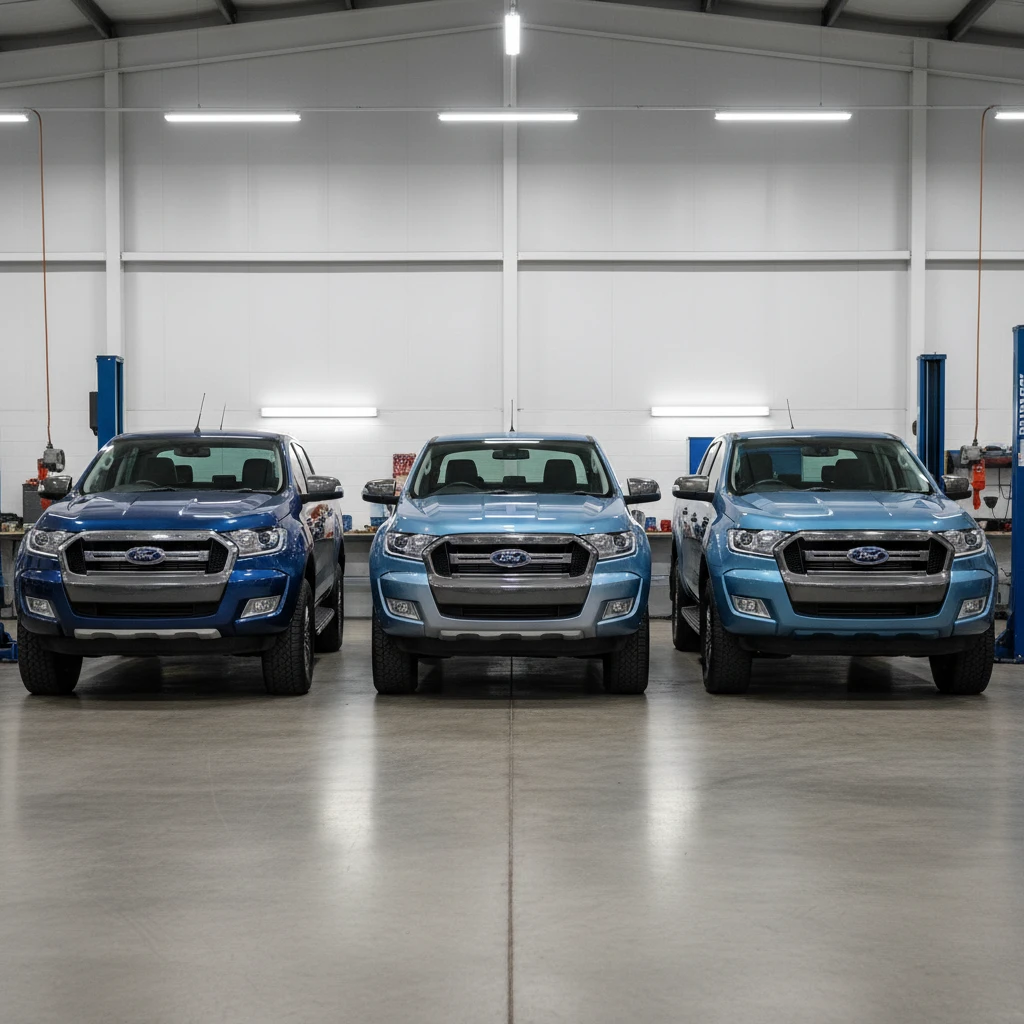
Body Panel & Glass Compatibility
When sourcing Ford Ranger body panels in NZ, compatibility relies heavily on the model generation (PX1, PX2, PX3, or Next-Gen). While the cabin shell and doors remain largely interchangeable across the PX series (2011–2022), front-end components like bonnets, guards, and bumpers are specific to each facelift. Always verify the VIN and series year to ensure correct fitment regarding sensor placement and mounting points.
Identifying Your Ford Ranger Series in NZ
Before purchasing any replacement parts, it is critical to correctly identify which version of the Ford Ranger you own. In the New Zealand market, the Ranger has undergone significant evolution, and while they may look similar at a glance, the mounting points and body lines differ substantially between generations.
The vast majority of body panel inquiries in NZ revolve around the T6 platform, which includes the PX1, PX2, and PX3. Understanding these distinctions is the first step to avoiding costly returns and workshop delays.
- PX1 (Mk1): Produced from late 2011 to mid-2015. Characterized by a smaller, rectangular grille and simpler headlight design.
- PX2 (Mk2): Produced from mid-2015 to mid-2018. This update introduced a hexagonal grille, narrower headlights, and a redesigned interior.
- PX3 (Mk3): Produced from mid-2018 to early 2022. Features a distinct split-bar grille (on XLT/Wildtrak) and often includes advanced radar technology in the bumper.
- Next-Gen (RA): Released in mid-2022. This is a completely new platform; panels from previous generations are not compatible.
Interchangeable Panels Between PX Series (T6)
For Kiwi mechanics and DIY enthusiasts, the T6 platform offers a surprising amount of modularity, provided you know which sections of the vehicle remained static during the facelifts. The central “cell” of the vehicle—the cabin structure—remained largely unchanged from 2011 through 2022.
Are Ford Ranger doors interchangeable?
Yes, for the most part, the door shells are interchangeable across the PX1, PX2, and PX3 ranges. If you have a dented door on a 2019 Wildtrak, a shell from a 2013 XLT will physically bolt onto the hinges. However, the internal components differ significantly.
While the steel shell fits, the wiring looms, door cards, inner handles, and side-impact sensors have evolved. When swapping doors, the best practice is to strip the replacement door back to the bare metal shell and transfer your original vehicle’s glass, regulator, locking mechanism, and wiring harness. This ensures that your central locking and electric windows continue to function correctly without triggering Body Control Module (BCM) errors.
Roof and Rear Cab Panels
The roof skin and rear cabin panels (including the rear window aperture on double cabs) are consistent across the series. However, be cautious with the high-mount stop light (third brake light) cutouts, as these have seen minor variations in lens shape and integrated cargo lighting on higher-spec models like the Wildtrak.
Front-End Architecture: The Facelift Challenge
This is where the compatibility matrix becomes complex. Many NZ owners wish to “facelift” their older PX1 trucks to look like a newer PX3 or Raptor. While possible, this is not a simple bolt-on process for individual panels.
Can I put a PX3 bonnet on a PX2?
Not in isolation. The front-end panels interlock in a specific geometry. The bonnet lines must match the top of the grille and the curvature of the guards (fenders). If you need to replace a bonnet on a PX2, you must source a specific PX2 bonnet. You cannot use a PX3 bonnet unless you are also changing the front bumper, grille, and headlights simultaneously.
Guards and Fenders
The front guards (fenders) dictate the shape of the headlight cutout. A PX1 guard has a larger opening for the square headlight, whereas the PX2 and PX3 guards are tapered to fit the narrower, more aggressive headlight units. If you have sustained corner damage, you must match the guard to your specific series.
Furthermore, NZ models often feature factory flares. XLT and Wildtrak models have pre-drilled holes in the guard lips for flare attachment, whereas XL models might not. Always check for these mounting holes if you plan to reinstall factory flares.
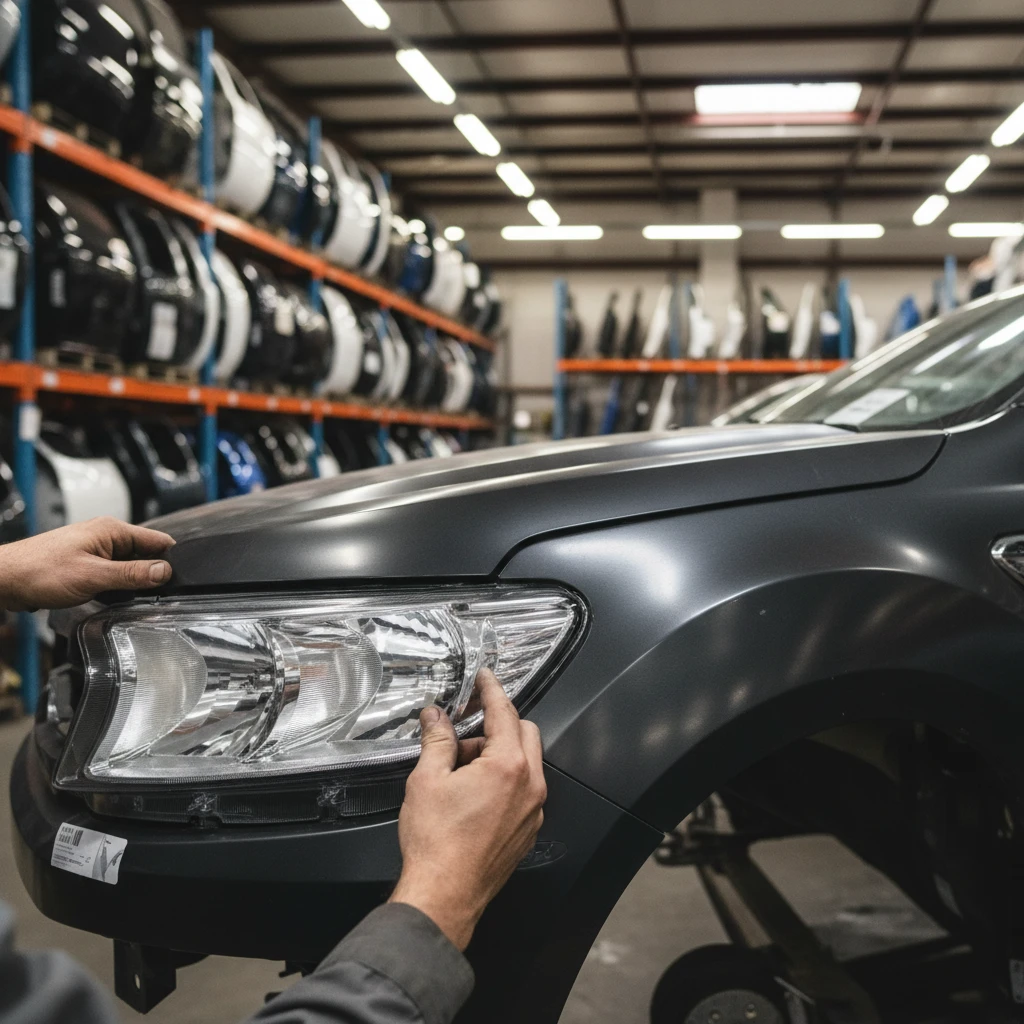
Mirror Assembly Replacements & Electronics
Side mirrors are among the most frequently damaged body parts on NZ roads, often victims of narrow rural gates or tight city parking. When searching for “Ford Ranger body panels NZ” regarding mirrors, you will encounter a variety of pin configurations.
Understanding Pin Configurations
You cannot simply buy a “Ranger Mirror” and expect it to work. Ford used multiple wiring looms depending on the trim level (XL, XLT, Wildtrak) and year.
- Base Models (XL): Usually feature basic electric adjustment but manual folding. These have fewer pins in the connector.
- Mid-Range (XLT): Often include power folding, integrated turn signals (indicators), and heated glass.
- Top-Spec (Wildtrak/Raptor): These include puddle lamps (lights underneath the mirror), blind-spot monitoring (BLIS) indicators in the glass, and sometimes 360-degree cameras.
The passenger side mirror on PX2 and PX3 models also houses the ambient temperature sensor. If you replace this mirror with a cheap aftermarket unit that lacks the sensor, your climate control system may malfunction, and your dashboard will display an incorrect outside temperature (or no reading at all), which can actually affect engine management parameters.
Tailgate, Tub, and Wellside Components
The rear of the Ranger is generally more robust, but tailgates are prone to damage. The “wellside” (or tub) design remained relatively consistent in dimensions, meaning a canopy from a PX1 will often fit a PX2 or PX3, provided the mounting system is compatible.
Tailgate Interchanges
The physical dimensions of the tailgate sheet metal are identical across the PX range. You can physically bolt a PX1 tailgate onto a PX3 tub. However, the handle mechanism and aesthetic molding differ.
Later models (PX2 and PX3) introduced the “Easy Lift” torsion bar system, which makes the tailgate significantly lighter to close. This system requires specific mounting brackets inside the tub’s rear pillars. If you are putting a newer tailgate on an older truck, you may not have the mounting points for the torsion bar, rendering the lift-assist feature useless unless you retrofit the brackets.
Tail Lights
Tail lights are physically interchangeable regarding screw points, but the wiring connectors may differ. Putting PX1 lights on a PX3 is a common downgrade to avoid, while upgrading PX1 trucks with PX3 smoked tail lights is a popular modification. This usually requires a “plug and play” adapter harness to align the brake, indicator, and reverse light pins correctly.

Glass Compatibility and ADAS Sensors
Replacing glass is no longer just about keeping the rain out; it is about maintaining the safety integrity of the vehicle. Ford Ranger windscreens in NZ vary drastically based on the technology package installed.
Windscreen Sensor Brackets
When ordering a replacement windscreen, you must specify if your vehicle has:
- Rain Sensors: Automatic wipers require a specific prism bracket bonded to the glass.
- Lane Keep Assist Camera: Located in the rearview mirror housing against the glass. The glass must have the correct trapezoidal heating element and camera window.
- Acoustic Interlayer: High-spec models use acoustic glass to reduce road noise. Cheaper aftermarket glass may lack this layer, resulting in a noisier cabin.
If you install a windscreen without the correct camera bracket on a PX3 with Autonomous Emergency Braking (AEB), the system will fail to calibrate, triggering warning lights and disabling safety features.
The Raptor Factor: Wide Body Differences
The Ford Ranger Raptor (released during the PX3 era) is a distinct beast. While it shares the cab structure, the body panels are unique.
Do not attempt to fit standard Ranger panels to a Raptor.
- Guards: Raptor guards are significantly wider and made of composite material (on the front) to accommodate the wider track and long-travel suspension.
- Tub/Wellside: The rear tub sides are flared outward. A standard Ranger tailgate will fit a Raptor, but the bumper and tub sides will not align with a standard XLT or Wildtrak.
- Bonnet: The Raptor bonnet is largely the same as the PX3, but the grille fitment is unique to the Raptor bumper assembly.
Sourcing Genuine Ford Ranger Body Panels in NZ
When searching for “Ford Ranger body panels NZ,” you are faced with a choice: Genuine Ford Parts (OEM) or Aftermarket.
Why Genuine Matters for Body Panels
In the New Zealand market, rust protection is paramount due to our coastal environment. Genuine Ford panels come with high-quality electro-coating (E-coat) that provides superior corrosion resistance compared to cheaper aftermarket “black parts.”
Furthermore, aftermarket body panels often suffer from poor fitment. A gap of just 2-3mm on a bonnet or door line can cause excessive wind noise and visual misalignment. For insurance repairs and high-quality restorations, genuine stamped steel is always the recommendation to ensure the crumple zones perform as designed during an impact.

If you are unsure about compatibility, the most reliable method is to provide your VIN (Vehicle Identification Number) to your parts supplier. This 17-digit code allows suppliers to pull the “Build Data” of your specific truck, ensuring that the mirror you buy has the correct temp sensor, or the windscreen has the correct camera bracket.
People Also Ask
Can I put a PX3 front bumper on a PX2 Ranger?
Directly, no. The PX3 bumper has a different shape where it meets the headlights and grille. To fit a PX3 bumper onto a PX2, you must perform a full “facelift conversion,” which involves replacing the bonnet, headlights, grille, and sometimes the front support brackets to match the PX3 profile.
Are Ford Ranger and Mazda BT-50 body panels the same?
Despite sharing the same chassis and drivetrain (up until 2020), the body panels are completely different. The door skins, guards, bonnet, and tailgate are unique to each brand. You cannot use Mazda BT-50 body panels on a Ford Ranger.
How do I find the paint code for my Ford Ranger in NZ?
The paint code is located on the manufacturer’s compliance label, usually found on the passenger side B-pillar (the door jamb area) or sometimes in the engine bay. Common NZ colours include Cool White (A2W), Shadow Black, and Aluminium Silver.
Will a Wildtrak roller shutter fit an XLT wellside?
Yes, the tub dimensions are the same. However, the Wildtrak roller shutter requires specific mounting brackets and drainage tubes to be drilled into the tub. You will also need to remove the standard XLT sports bar to fit the shutter assembly.
Are aftermarket body panels as safe as genuine Ford parts?
Not always. While some aftermarket panels are CAPA certified, many cheap alternatives use thinner steel and may not crumple correctly in an accident. Genuine Ford panels are tested to meet specific safety ratings and rust protection standards suitable for NZ conditions.
Do I need to recalibrate my Ranger after changing the windscreen?
If your Ranger is equipped with ADAS features like Lane Keep Assist or Autonomous Emergency Braking (common on PX2 and PX3 XLT/Wildtrak), yes. The camera mounted behind the glass must be recalibrated by a professional to ensure it reads the road markings and distances correctly.