
150,000km Timing Belt & Chain Kits
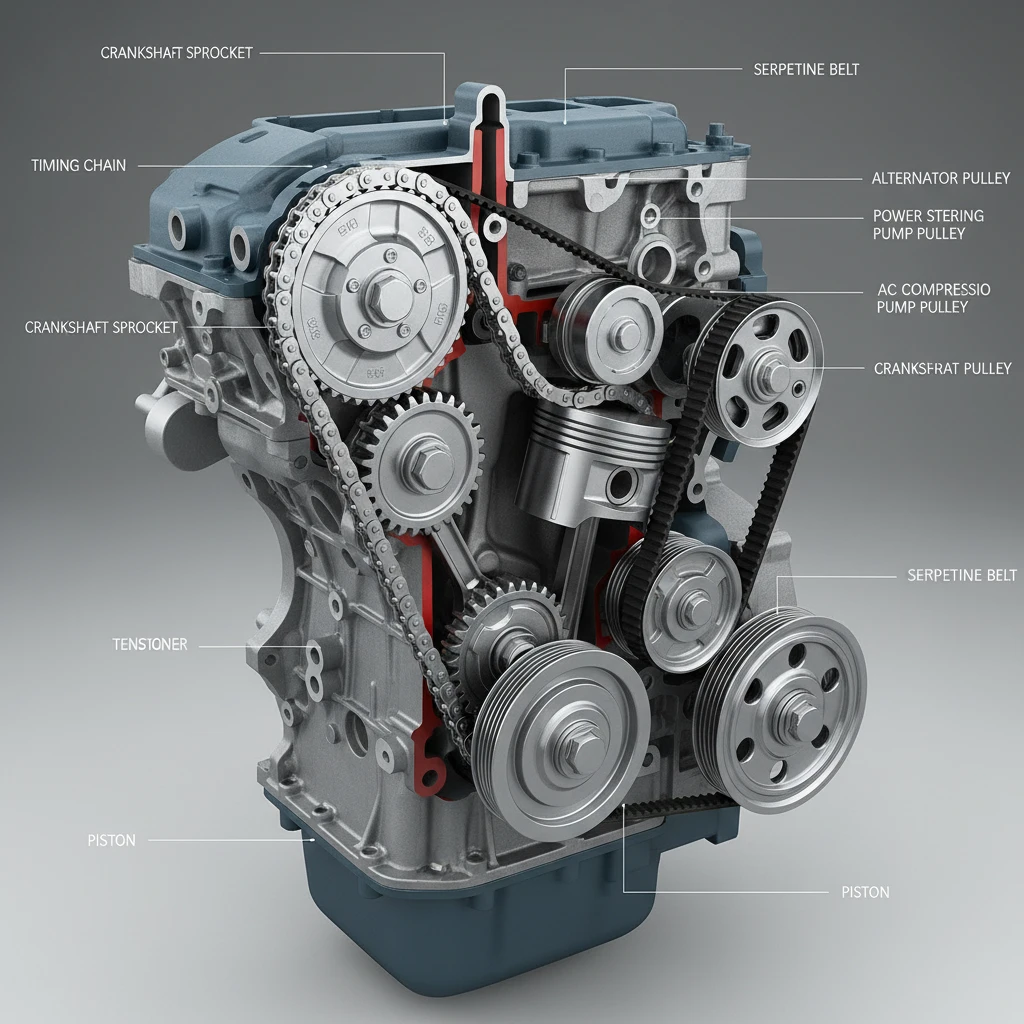
The Ford Ranger 3.2L Duratorq engine utilizes a timing chain rather than a timing belt for camshaft synchronization. While the chain is designed for the engine’s service life, the Front End Accessory Drive (FEAD) belt, tensioner, and idler pulleys require mandatory replacement at 150,000 km. Mechanics also recommend inspecting the timing chain for stretch and replacing the water pump during this major service interval to ensure reliability.
Introduction: The 150,000km Milestone for Ford Ranger Owners
For New Zealand Ford Ranger owners, hitting the 150,000km mark is a significant milestone. It represents a period where the vehicle transitions from “broken in” to requiring serious preventative maintenance. The 3.2L Duratorq 5-cylinder engine is legendary for its torque and towing capacity, but misinformation regarding its timing system is rampant.
One of the most common queries we receive at the parts counter is: “When do I replace the timing belt on my Ranger 3.2?” The confusion often stems from previous generations of diesel engines or the newer 2.0L Bi-Turbo engines, which utilize different configurations. Understanding the distinction between timing belts, timing chains, and the critical drive belt system is essential for avoiding catastrophic engine failure on our rugged NZ roads.
Timing Belt vs. Timing Chain: What is in Your Ranger?
Before ordering parts, it is imperative to identify exactly what is under the bonnet of your PX, PX2, or PX3 Ford Ranger. The maintenance schedule differs drastically depending on the engine code.
Does the Ford Ranger 3.2L have a timing belt?
No, the Ford Ranger 3.2L (P5AT/Duratorq) engine is equipped with a timing chain. Unlike a rubber timing belt, which has a strict replacement interval (usually around 100,000km to 150,000km depending on the manufacturer), a steel timing chain is theoretically designed to last the life of the engine.
However, “life of the engine” is a subjective term. In the context of New Zealand’s heavy towing, steep terrain, and agricultural use, timing chains can and do stretch over time. While you do not have a scheduled service interval to replace the chain at 150,000km, this is the mileage where we begin to see issues with chain tensioners and guides.
Which Ranger engines use a Timing Belt?
Confusion arises because other Ranger models do use belts:
- Ranger 2.0L Bi-Turbo / Single Turbo (Next-Gen & Raptor): These engines utilize a timing belt (specifically a belt-in-oil system for the oil pump and a dry belt for cams in certain configurations) which has strict service requirements.
- Older Ranger PK (Pre-2011) 3.0L: These utilized a traditional timing belt that required replacement every 100,000km.
The 150,000km Service: What Must Be Replaced?
If the 3.2L has a chain, why are we discussing a 150,000km kit? Because the Front End Accessory Drive (FEAD) belt—often called the serpentine belt or drive belt—is scheduled for replacement at this interval. Neglecting this is just as dangerous as ignoring a timing belt.
When the drive belt snaps on a Ranger 3.2L, you lose power steering, the alternator stops charging, and most critically, the water pump stops circulating coolant (depending on the routing), leading to rapid overheating. Furthermore, a shredding drive belt can sometimes be sucked behind the harmonic balancer and damage the front main seal or interfere with the timing chain casing.
The Comprehensive 150k Kit List
A proper 150,000km service for a Ford Ranger 3.2L should include:
- Serpentine Drive Belt: The main belt driving the alternator, A/C, and fan.
- Automatic Belt Tensioner: The spring-loaded arm that keeps the belt tight.
- Idler Pulleys: Usually two or three smooth pulleys that guide the belt.
- Coolant Flush: Ford specifies a long-life coolant change at 10 years or roughly this mileage.
Water Pump Replacement: Why Do It Now?
On the 3.2L Duratorq, the water pump is not driven by the timing chain, but it is often serviced simultaneously with the drive belt system. Why replace a working water pump?
The Labour Overlap Factor
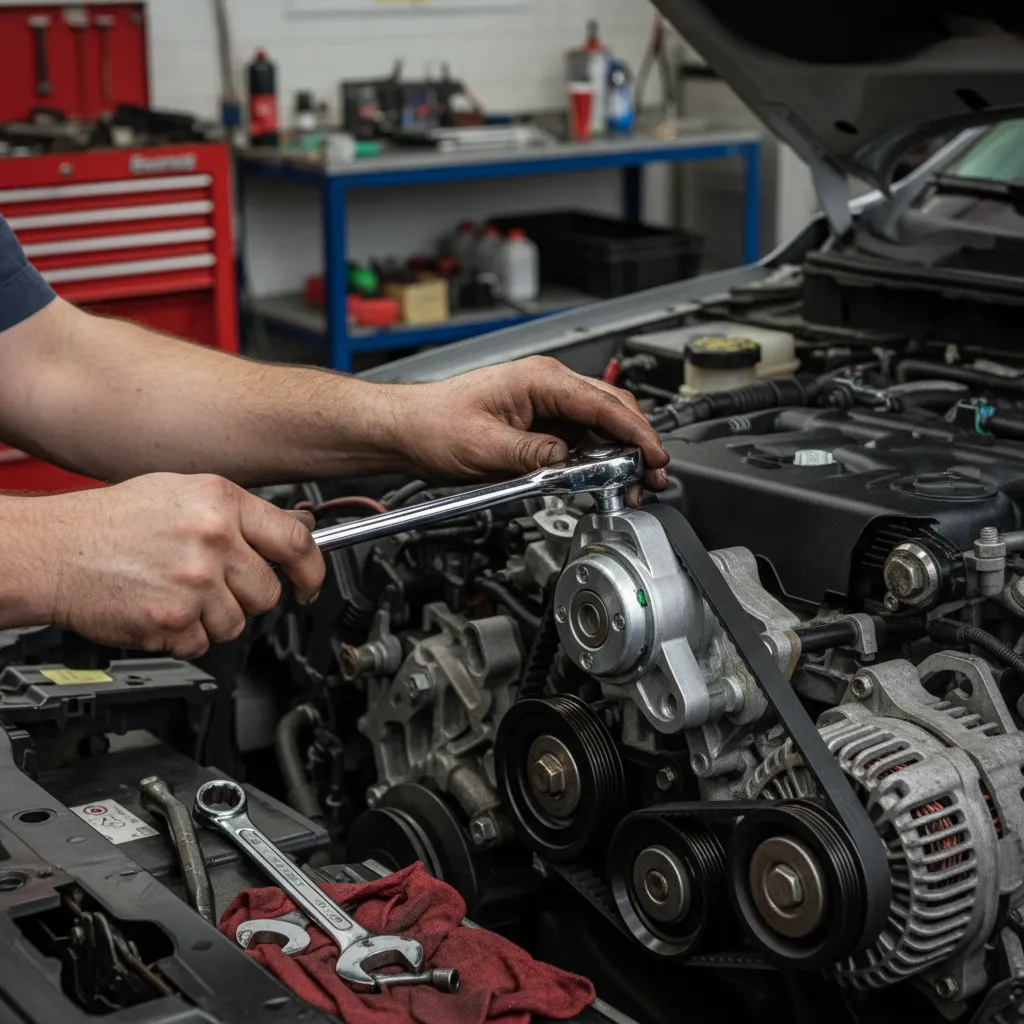
To access the drive belt tensioners and idlers effectively, a mechanic must remove the viscous fan, the shroud, and clear the front of the engine. The water pump is located in this exact vicinity. By 150,000km, the mechanical seal inside the water pump is nearing the end of its reliable life.
If you replace the belts and tensioners now but leave the old water pump, and that pump begins to leak 10,000km later, you will have to pay for the exact same labor hours all over again. It is a false economy to skip the water pump during the 150k service.
Cooling System Integrity
The 3.2L engine runs hot, especially when towing boats or caravans through the Southern Alps. A failing water pump impeller or a weeping seal compromises the cooling system pressure. Combined with a fresh coolant flush, a new genuine water pump resets the clock on your cooling system reliability.
Tensioner and Idler Pulley Kits: The Silent Killers
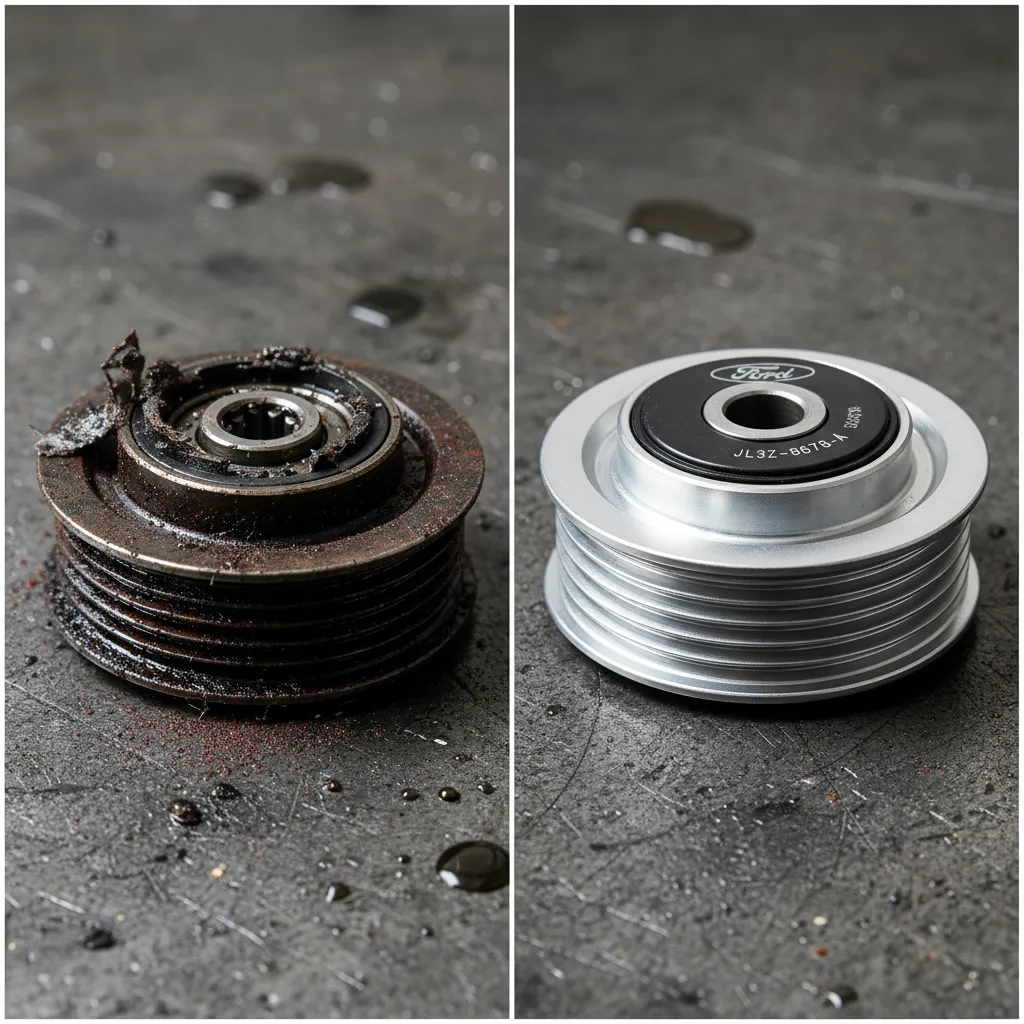
The belt itself rarely fails without warning. The catastrophic failures usually stem from the tensioner assembly or the idler pulleys. These components contain bearings that spin at thousands of RPM whenever the engine is running.
Why Tensioners Fail
The tensioner on the Ranger 3.2L is spring-loaded. Over 150,000km, two things happen:
- Spring Fatigue: The internal spring loses its tension, allowing the belt to slip or “flap” under load. This reduces alternator efficiency and causes squealing.
- Bearing Seizure: If the bearing in the pulley seizes, the belt will be dragged across a stationary surface. Friction will melt the belt within seconds, causing it to snap.
Pro Tip: If you hear a “chirping” sound on a cold start that disappears as the engine warms up, this is often the first sign of a failing tensioner or idler bearing. Do not ignore it.
Symptoms of Timing Chain Stretch and Wear
While we have established the 3.2L uses a chain, we must address when that chain does need attention. While not a scheduled 150k item, high-mileage Rangers (or those with poor oil maintenance histories) can suffer from chain stretch.
How do I know if my Ranger timing chain needs replacing?
Listen for the “Death Rattle.” This is a distinct metallic rattling sound coming from the front of the engine, most noticeable for the first 3-5 seconds after a cold start. This sound indicates that the hydraulic chain tensioner has bled down or the chain has stretched beyond the tensioner’s ability to take up the slack.
If you experience this:
- Immediate Action: Have the vehicle inspected immediately.
- The Fix: Replacement of the timing chain, guides, hydraulic tensioner, and sprockets.
- The Cost: This is a significantly more expensive job than a belt replacement, often requiring engine removal or significant disassembly.
Regular oil changes (every 10,000km, not the extended 15,000km+ intervals) are the single best way to prolong the life of your timing chain.
Genuine Ford Parts vs. Aftermarket Kits
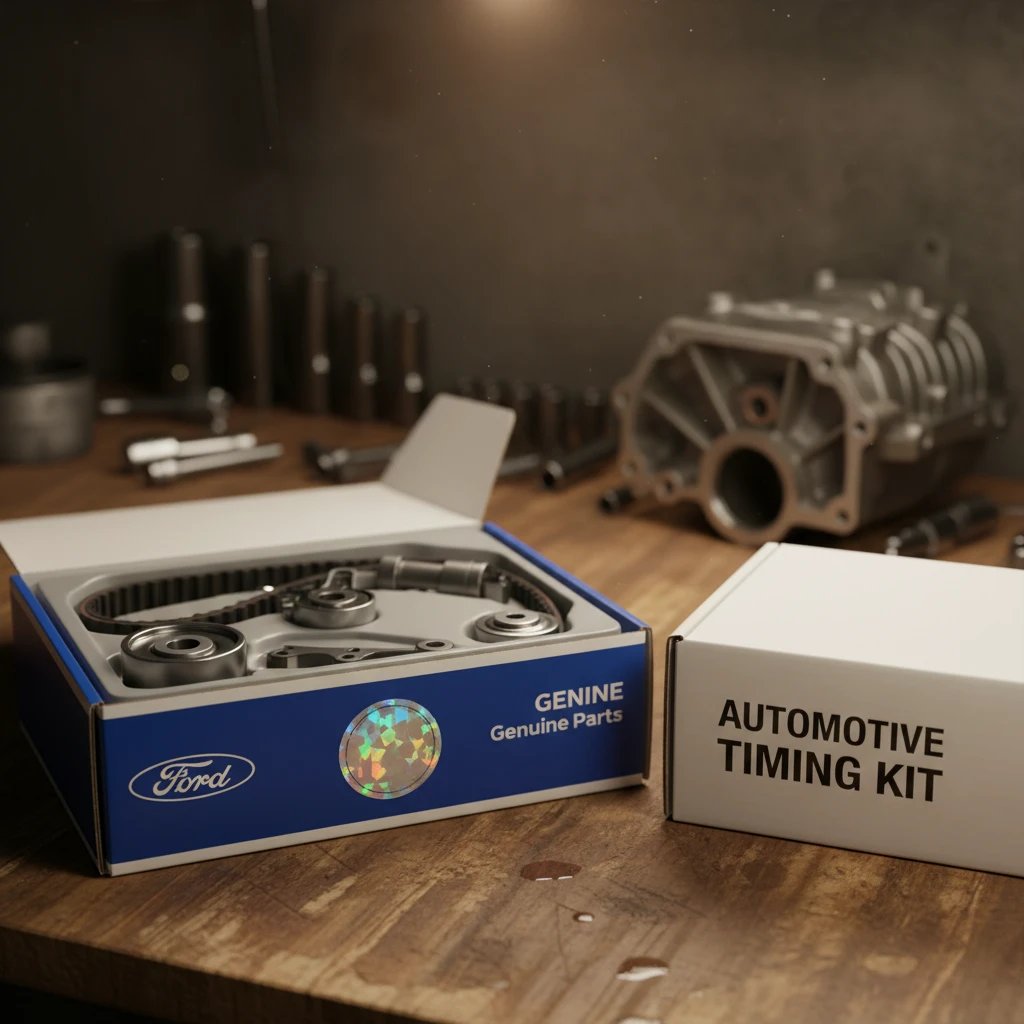
When sourcing a 150,000km kit for your Ranger, the market is flooded with options. As technical authorities in the NZ market, we strongly advocate for Genuine Ford Motorcraft parts or high-end OEM equivalents (like Gates or Dayco) for critical timing and drive components.
The Risk of Cheap Kits
Budget aftermarket kits often fail in the following areas:
- Tensioner Damping: Cheap tensioners lack the hydraulic damping quality of the OEM unit, leading to belt flutter.
- Bearing Quality: Inferior bearings in idler pulleys may not be sealed correctly against NZ dust and water crossings, leading to premature seizure.
- Fitment: Slight variances in bracket casting can cause belt misalignment, leading to shredding.
Considering the labor cost involved in the 150,000km service, saving $100 on parts is a risk that does not pay off. Stick to parts that meet Ford’s engineering specifications.
Conclusion
While the Ford Ranger 3.2L does not require a timing belt replacement at 150,000km (because it has a chain), this mileage is the critical service interval for the accessory drive system. Replacing the serpentine belt, tensioner, idlers, and water pump at this stage is essential preventative maintenance.
By investing in a comprehensive service kit now, you ensure your Ranger remains the reliable workhorse it was designed to be, ready for the next 150,000km of New Zealand roads.
People Also Ask
Does a 2016 Ford Ranger 3.2 have a timing belt or chain?
The 2016 Ford Ranger with the 3.2L 5-cylinder engine uses a timing chain. It does not have a cambelt that requires scheduled replacement, though the accessory drive belt must be changed.
How much does it cost to replace a timing chain on a Ford Ranger 3.2?
Replacing the timing chain on a 3.2L Ranger is a major repair, typically costing between $2,500 and $4,000 NZD depending on labor rates and whether genuine parts are used, as it involves significant engine disassembly.
What is the service interval for a Ford Ranger drive belt?
The accessory drive belt (serpentine belt) on the Ford Ranger PX series is typically inspected at every service but is recommended for replacement, along with tensioners, at 150,000km or 10 years.
What happens if the serpentine belt breaks on a Ranger?
If the belt breaks, you will lose power steering, the alternator will stop charging the battery, and the water pump will stop circulating coolant, causing the engine to overheat rapidly if not stopped immediately.
Is the Ford Ranger 3.2 an interference engine?
Yes, the 3.2L Duratorq is an interference engine. If the timing chain fails or jumps teeth, the pistons will collide with the valves, causing catastrophic engine damage requiring a rebuild or replacement.
Can I just change the belt and not the tensioner?
It is highly discouraged. A tensioner that has done 150,000km has a worn internal spring and bearing. Putting a new, tight belt on an old tensioner often causes the old tensioner to fail shortly after.