
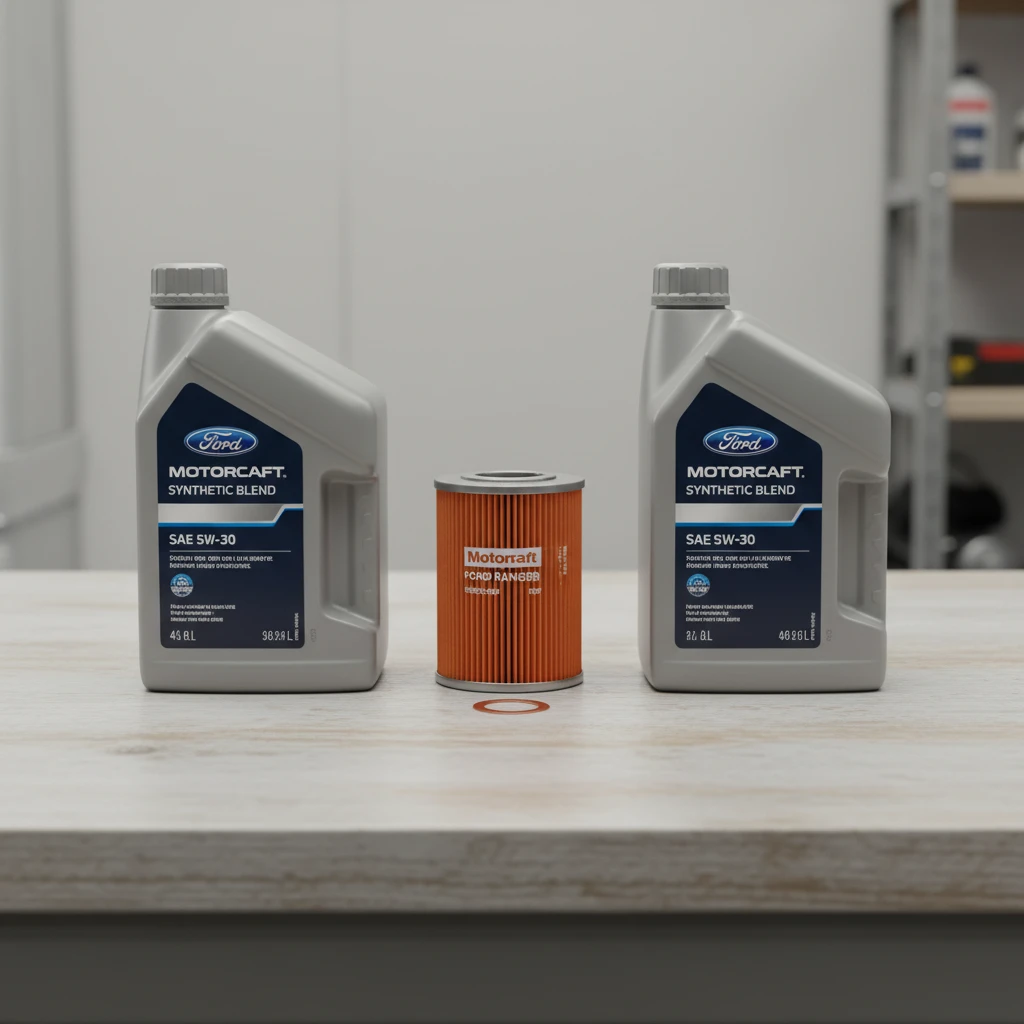
15,000km Minor Service Kits
A Ford Ranger 15k service kit is a curated maintenance package designed for the standard minor service interval. It typically includes a genuine OEM oil filter, the specific volume of manufacturer-approved engine oil (usually 5W-30 or 0W-30 depending on the engine), and a replacement sump plug washer. Regular use of these kits ensures warranty compliance and optimal engine longevity.
What is Included in a Ford Ranger 15k Service Kit?
Maintaining a Ford Ranger in New Zealand’s rugged conditions requires strict adherence to service schedules. The 15,000km interval is known as a “minor service,” but it is arguably the most critical for the long-term health of your powertrain. Whether you are driving a PX1, PX2, or the latest Next-Gen Ranger, the 15k service kit is the foundation of preventative maintenance.
A high-quality, transactional-ready service kit for a Ford Ranger is not merely a box of random parts; it is a synchronized set of components designed to reset the engine’s lubrication cycle. When purchasing a Ford Ranger 15k service kit, you are looking for three non-negotiable components:
- Genuine or OEM-Equivalent Oil Filter: This is responsible for trapping contaminants, soot, and metal shavings that accumulate in the oil over time.
- Manufacturer Specification Engine Oil: Ford Rangers are highly sensitive to oil viscosity and additive packages. The kit must contain the correct volume (ranging from 8.6 to 9.8 liters depending on the model) of the correct spec oil.
- Sump Plug Washer: A single-use crush washer that ensures a perfect seal on the oil pan.
While some aftermarket retailers may offer generic substitutes, authorities in Ford maintenance strongly advocate for kits that utilize genuine Ford Motorcraft parts or reputable OEM alternatives like Mann or Ryco, specifically tailored to the rigorous demands of the NZ market.
Oil and Filter Essentials: The Core of Your Service
The heart of the 15,000km service is undoubtedly the oil change. However, simply dumping in any lubricant can lead to catastrophic failure, particularly in modern common-rail diesel engines equipped with Diesel Particulate Filters (DPF).
Understanding Ford Oil Specifications
When selecting a service kit, you must verify the oil meets Ford’s engineering standards. For the popular 3.2L Duratorq and 2.2L engines found in the PX Ranger series, the oil usually requires the WSS-M2C913-D specification. This is typically a 5W-30 Full Synthetic oil designed to handle high soot loading and provide excellent shear stability.
Conversely, the newer 2.0L Bi-Turbo engines require a different formulation, often WSS-M2C950-A, which is a 0W-30 viscosity. Using the wrong oil in these high-tolerance engines can result in turbocharger starvation or premature wear of internal components. A proper service kit eliminates the guesswork by providing the exact fluid required for your specific VIN or engine code.
The Role of the Oil Filter
The oil filter included in your Ford Ranger 15k service kit is the first line of defense against engine wear. Ford’s diesel engines circulate oil at high pressures. An inferior filter may collapse under this pressure or go into “bypass mode” too early, allowing dirty oil to circulate through the engine.
Genuine filters feature:
- High-Efficiency Media: Synthetic blend media that captures smaller particles than standard cellulose filters.
- Anti-Drain Back Valve: A silicone valve that prevents oil from draining out of the filter when the engine is off, ensuring immediate oil pressure upon startup—critical for reducing wear on cold mornings.
- Robust Canister Construction: Designed to withstand the vibration and pressure spikes inherent in diesel operation.

The Sump Plug Washer Inclusion: Small Part, Big Impact
It is a common misconception that the sump plug washer can be reused. This is a dangerous practice. The washer included in a professional Ford Ranger 15k service kit is designed as a “crush washer.” When the sump plug is torqued to specification (usually around 30-40Nm, though check your specific manual), the washer deforms to fill the microscopic imperfections between the steel sump plug and the oil pan.
Why You Must Replace It
Once a washer has been crushed, it loses its ability to deform a second time. Reusing a washer often leads to two scenarios:
- Overtightening: The mechanic tries to stop a leak by tightening the plug further, stripping the threads on the oil pan—a repair that costs hundreds of dollars.
- Slow Leaks: Oil slowly drips onto your driveway or, worse, onto environmental protection trays where it goes unnoticed until the oil level drops dangerously low.
A comprehensive service kit will always include this $2 part because it protects the integrity of the entire service.
Inspection Checklist for Minor Service
While the “oil and filter” are the tangible goods in the kit, a true 15,000km service involves a rigorous inspection of the vehicle. If you are performing this service yourself or buying the kit for a mechanic to use, the following checklist should be completed to match dealership standards.
Under the Bonnet Checks
Beyond the oil change, inspect the following:
- Air Filter: While often changed at 30k or 45k, NZ’s dusty roads may require the air filter to be blown out or replaced sooner. Check for dust ingress.
- Fuel Filter: Check the water trap sedimenter. If the warning light has flickered, drain the water.
- Coolant Level and Condition: Ensure the reservoir is at the ‘MAX’ line and the fluid retains its bright color (usually orange for Ford).
- Brake Fluid: Check for moisture content and level.
- Serpentine Belt: Inspect for cracks, fraying, or squealing noises.
Under the Vehicle Checks
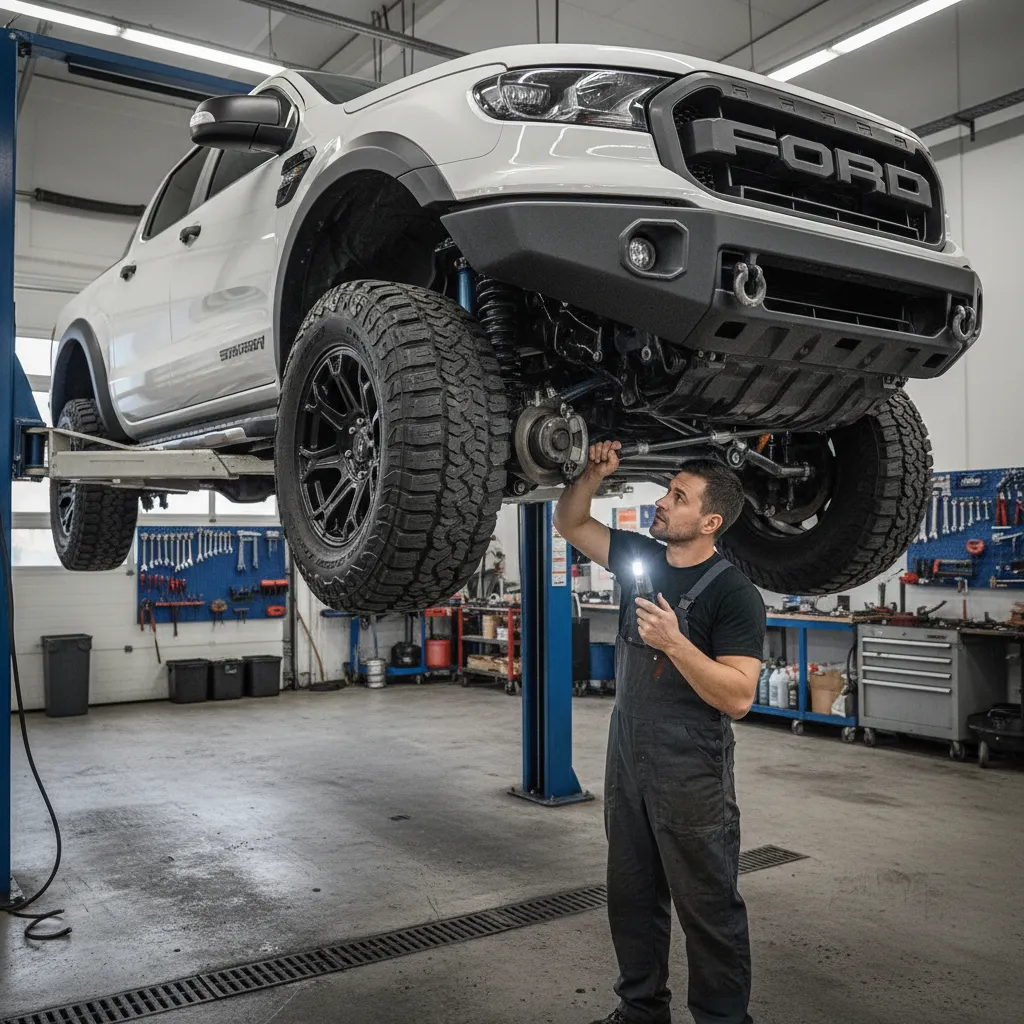
Since you are already under the truck to change the oil, take the opportunity to inspect:
- Driveline: Inspect CV boots for tears and grease leaks. Check the rear differential for weeping seals.
- Suspension: Look for leaking shock absorbers or worn bushings.
- Brakes: Visually inspect brake pad thickness. If pads are below 3mm, they should be replaced immediately.
- Tires: Check pressures (including the spare) and look for uneven wear patterns that suggest alignment issues.
Service Kit Variations: 3.2L vs 2.0L Bi-Turbo
Not all Ford Rangers are created equal, and purchasing the wrong kit is a common error. The evolution of the Ranger powertrain has led to distinct requirements for the 15k service kit.
The 3.2L Duratorq (5-Cylinder)
This legendary engine is known for its reliability but has a high oil capacity. A service kit for the 3.2L will typically include 10 liters of 5W-30 oil (the engine takes roughly 9.8L). The oil filter is a cartridge style located accessibly on top of the engine in many models, or a spin-on in others depending on the year.
The 2.0L Bi-Turbo (Next-Gen & Raptor)
The newer 2.0L engine is a more complex piece of engineering. The tolerances are tighter, and the oil channels are smaller. The service kit for this engine mandates a 0W-30 specific oil (WSS-M2C950-A). Using the thicker 5W-30 from the 3.2L kit can cause sluggish performance and potential damage to the belt-in-oil system found in some modern Ford designs. Always cross-reference your VIN when ordering a Ford Ranger 15k service kit.
DIY Installation Tips for New Zealand Owners
For the Kiwi DIY enthusiast, performing a 15k service at home is a rewarding way to save money and bond with your ute. However, modern vehicles require specific procedures.
1. Resetting the Oil Life Monitor
After installing your service kit, you must reset the vehicle’s computer. On most PX2 and PX3 models, this is done via the steering wheel controls under the “Settings” > “Vehicle” > “Oil Life Reset” menu. Failing to do this will result in the service wrench light remaining on.
2. Dealing with the Skid Plates
If you have an off-road ready Ranger (Wildtrak or Raptor), you will likely have heavy skid plates (bash plates) protecting the sump. You will need to remove these to access the sump plug and filter. Ensure you have a torque wrench to reinstall these bolts correctly—loose bash plates rattle, and overtightened ones shear off.
3. Oil Disposal
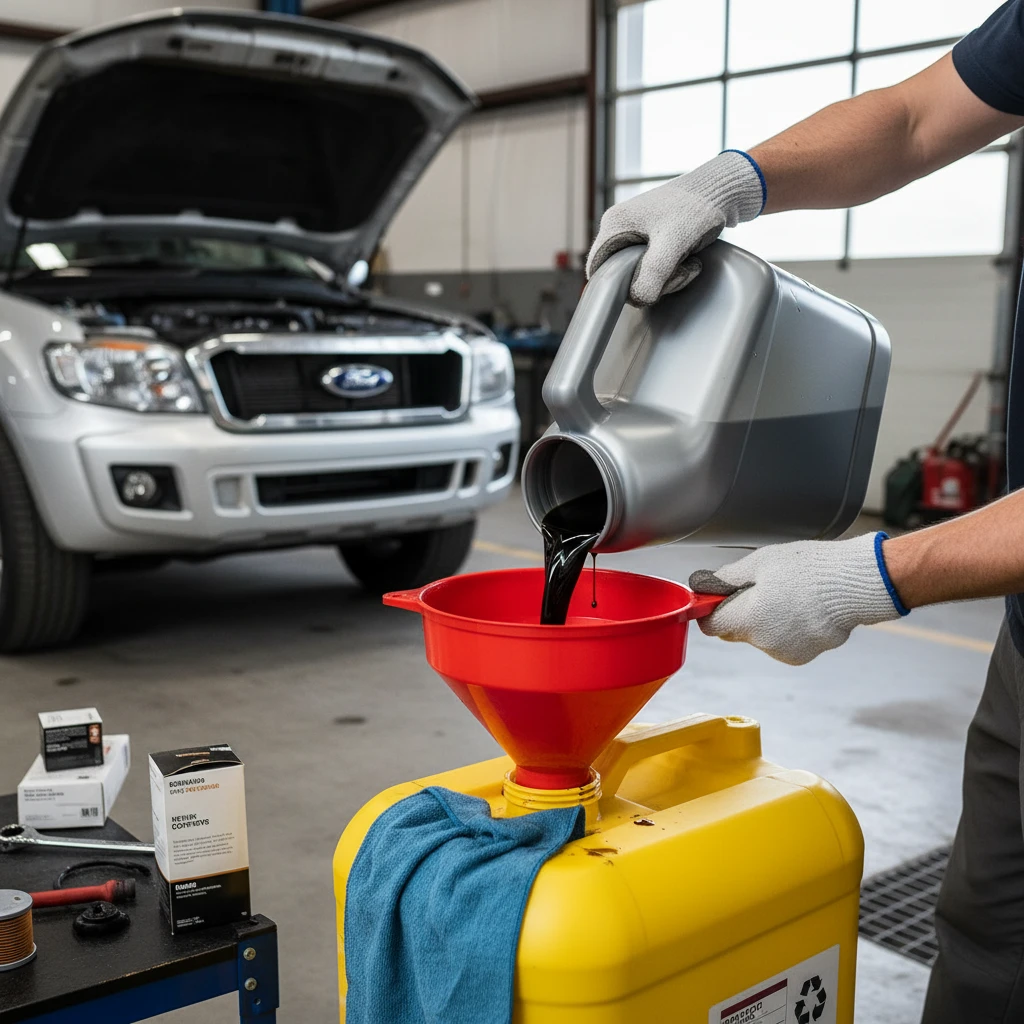
New Zealand has strict environmental laws regarding waste oil. Never dump oil in the drain or on the ground. Pour your used oil back into the empty containers from your new service kit and take them to your local Supercheap Auto, Repco, or refuse station that accepts waste oil.
Frequently Asked Questions
How much oil does a Ford Ranger 3.2L take?
The Ford Ranger 3.2L 5-cylinder engine typically requires between 9.6 and 9.8 liters of engine oil when changing the oil and filter. Always check the dipstick after adding 9 liters to prevent overfilling.
Can I use aftermarket filters in my Ford Ranger?
Yes, you can use high-quality aftermarket filters from reputable brands like Ryco, Mann, or Wesfil without voiding your statutory warranty, provided they meet or exceed OEM specifications. However, genuine Motorcraft filters are recommended for guaranteed compatibility.
How do I reset the oil change light on a Ford Ranger?
Turn the ignition to the ‘ON’ position (do not start the engine). Press the brake and accelerator pedals simultaneously and hold for about 20 seconds until the service reset message appears on the dashboard cluster.
What is the correct oil viscosity for a Ford Ranger in NZ?
For most PX1, PX2, and PX3 3.2L and 2.2L models, 5W-30 Full Synthetic meeting Ford spec WSS-M2C913-D is standard. For 2.0L Bi-Turbo engines, 0W-30 meeting WSS-M2C950-A is required.
Does a 15k service kit include a fuel filter?
Typically, a standard “minor” 15k service kit only includes the oil filter, oil, and sump washer. The fuel filter is usually part of a “major” service kit, often recommended every 30,000km or 45,000km, though many owners change it every 15k for safety.
Why is the sump plug washer important?
The sump plug washer is a single-use seal that crushes to prevent oil leaks. Reusing an old washer can lead to oil dripping or the need to overtighten the plug, which can strip the oil pan threads.