
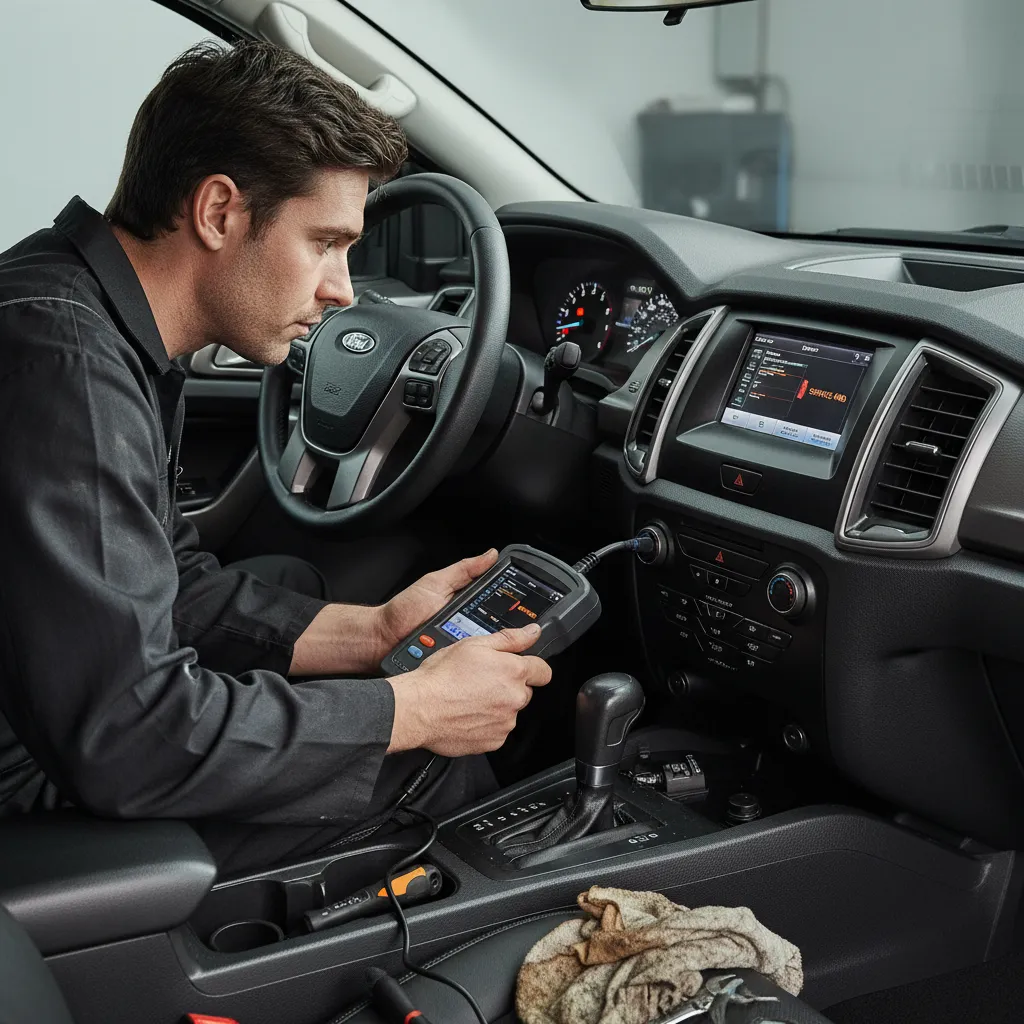
4WD Actuator & Transfer Case Repairs
A Ford Ranger 4WD not engaging is typically caused by a faulty transfer case shift motor, vacuum leaks in the front hub locking system, or a damaged TCCM (Transfer Case Control Module). In New Zealand conditions, water ingress through factory breathers often corrodes internal actuator components, preventing the shift from 2H to 4H or 4L.
There are few situations more frustrating for a Kiwi ute owner than turning the dial to 4H, only to be met with a flashing dashboard light and a vehicle that refuses to find traction. Whether you are towing a boat out of the Hauraki Gulf or navigating a high-country station track, a Ford Ranger with a non-functional 4WD system is essentially just a heavy rear-wheel-drive truck.
The Ford Ranger, particularly the PX series (T6), is a robust machine, but the electronic shift-on-the-fly system is a known weak point as the vehicle ages. Understanding the interplay between the transfer case motor, the vacuum lines, and the control modules is essential for diagnosis. This guide provides authoritative technical advice on diagnosing and repairing these issues, with a specific focus on genuine parts and New Zealand driving conditions.
Initial Diagnosis: Why is My 4WD Light Flashing?
When you rotate the selector switch from 2H to 4H or 4L, the vehicle initiates a complex sequence of electronic and mechanical checks. If the 4WD icon on your dashboard flashes continuously without staying solid, or if a “Check 4WD” or “Service 4WD” message appears, the system has detected a fault and aborted the shift to protect the drivetrain.
Before tearing into the mechanical components, perform these preliminary checks:
- Listen for the Click: With the engine off but ignition on (engine not running), have someone rotate the dial. You should hear a distinct mechanical whirring and clicking from underneath the vehicle (roughly under the driver’s seat area). Silence usually indicates an electrical fault or a seized motor.
- Check the Fuses: Inspect the fuse box for any blown fuses related to the 4WD control module.
- Scan for Codes: A standard OBDII scanner can often retrieve specific manufacturer codes (P-codes). Common codes like P1867 (Transfer Case Contact Plate Power Circuit Failure) point directly to the shift motor assembly.
Understanding the System: Vacuum Hubs vs. Electronic Actuators
To fix the problem, you must identify which generation of 4WD system your Ranger utilizes. Ford has evolved the technology significantly between the PJ/PK models and the modern PX (T6) platform.
The Vacuum Hub System (Older Models & Specific Configurations)
Older Rangers and some specific international variants utilized a vacuum-operated hub system. In this setup, the default position of the front hubs is “unlocked.” When 4WD is selected, a vacuum solenoid opens, applying suction to the hubs to lock them to the axle shafts.
Common Failure Points:
- Cracked Vacuum Lines: Rubber hoses become brittle over time. A single hairline crack destroys the vacuum seal, preventing the hubs from locking.
- Solenoid Failure: The electric solenoid that controls the vacuum flow can fail due to corrosion or electrical shorts.
- Hub Seal Leaks: If the seals on the wheel hubs are worn, they cannot hold a vacuum.
The Electronic Actuator System (PX/T6 Ranger)
The modern Ford Ranger (PX1, PX2, PX3) primarily uses an electronic transfer case shift motor. This is a “shift-on-the-fly” system. The front hubs are permanently splined or engaged via a simpler mechanism, and the actual connection of power to the front driveshaft happens inside the transfer case, controlled by an electric motor.
While this removes the headache of vacuum lines, it introduces the issue of the Transfer Case Shift Motor. This component lives on the back of the transfer case, exposed to mud, water, and road debris. It is the single most common cause of a Ford Ranger 4WD not engaging.
The Common Culprit: Transfer Case Shift Motor Failure
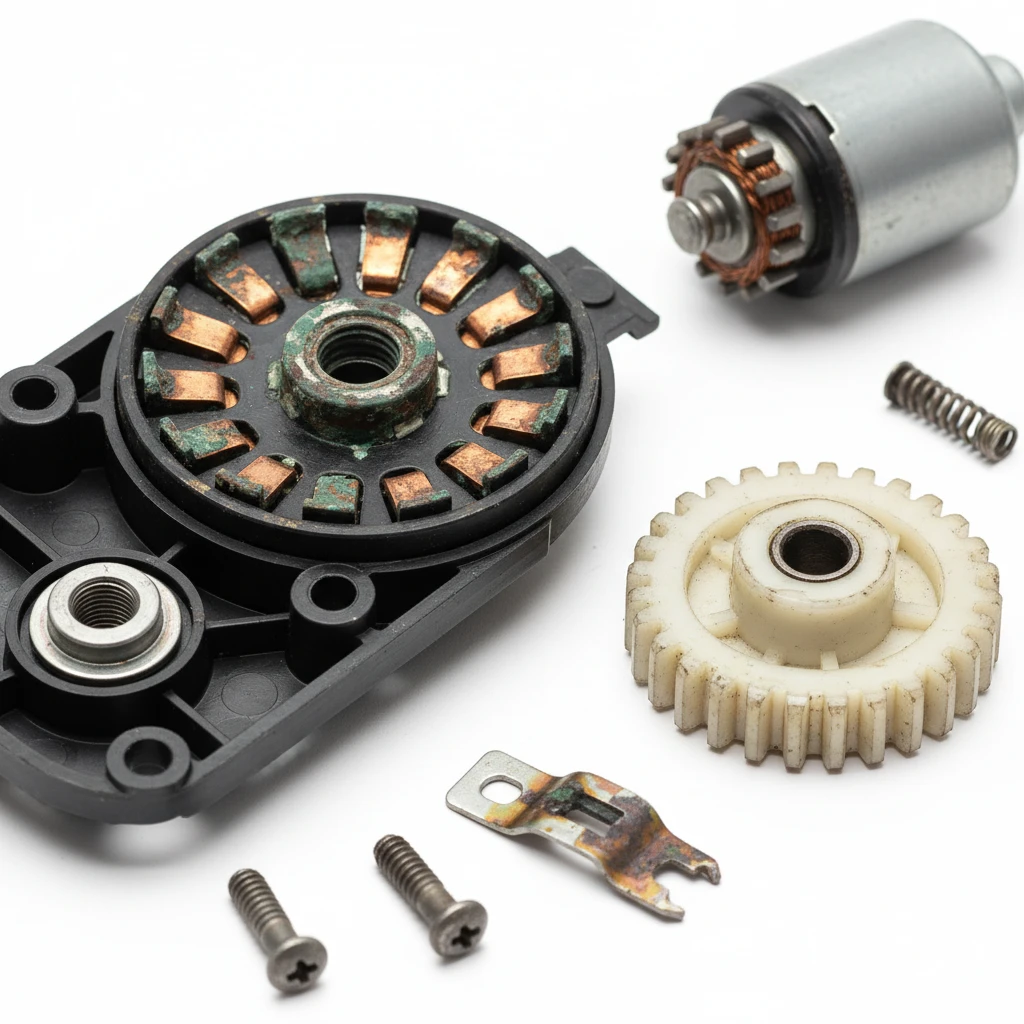
The transfer case shift motor is a small electric motor equipped with a position sensor (encoder). Its job is to physically rotate a shaft inside the transfer case to move forks that engage the gears for 4H or 4L.
Why Do They Fail?
In New Zealand, where our Rangers are often subjected to river crossings and coastal salt spray, these motors are vulnerable.
- Water Ingress: The factory sealing is adequate for rain, but submersion can lead to water entering the motor housing. This corrodes the brushes and the position sensor contacts.
- Position Sensor Wear: The internal encoder tells the TCCM exactly where the motor is. If the contact tracks wear out (common on high-mileage vehicles), the computer loses track of the transfer case position and disables the system.
- Plastic Gear Stripping: Inside the actuator housing, there are reduction gears. In some aftermarket or worn units, these gears can strip, resulting in the motor spinning but not actually moving the transfer case internals.
How to Replace the Transfer Case Motor
If you have diagnosed the shift motor as the fault, replacement is a straightforward task for a competent DIY mechanic. However, precision is key to ensuring the new unit calibrates correctly.
Tools Required
- 10mm and 12mm sockets
- Ratchet and extension bar
- Flathead screwdriver (for electrical connector clips)
- Wire brush (to clean the mounting surface)
- Dielectric grease
The Replacement Process
- Safety First: Ensure the vehicle is on a level surface. Chock the wheels. Disconnect the negative battery terminal to reset the TCCM.
- Locate the Motor: It is bolted to the rear of the transfer case. You may need to remove a skid plate for better access.
- Remove the Dampener: Some models have a vibration dampener (a heavy weight) attached near the motor. Remove this to access the mounting bolts.
- Disconnect Wiring: Unclip the electrical harness. Inspect the plug for green corrosion (verdigris). If corrosion is present on the harness side, you must clean it thoroughly or the new motor will not work.
- Unbolt the Motor: Remove the mounting bolts (usually three or four). Wiggle the motor off the transfer case spline.
- Match the Position: CRITICAL STEP. Ensure the transfer case is in 2H. Ensure your new motor is also in the 2H position. If they are misaligned, do not force the motor on. You can manually turn the transfer case shaft with pliers to match the motor, or plug the motor in (hanging loose) and use the dash switch to rotate it to the correct position before installation.
- Install and Seal: Apply a small amount of RTV sealant to the mating surface if required, though most genuine units come with a gasket. Bolt the new motor in place.
- Test: Reconnect the battery. Turn the ignition on. Cycle from 2H to 4H. Listen for engagement.

Prevention: The Importance of Front Diff Breather Kits
If you are frequently replacing actuators or dealing with contaminated diff oil, the root cause is likely the lack of adequate breathers. This is especially pertinent for the “Market Niche” of New Zealand off-roading.
The Physics of Suction
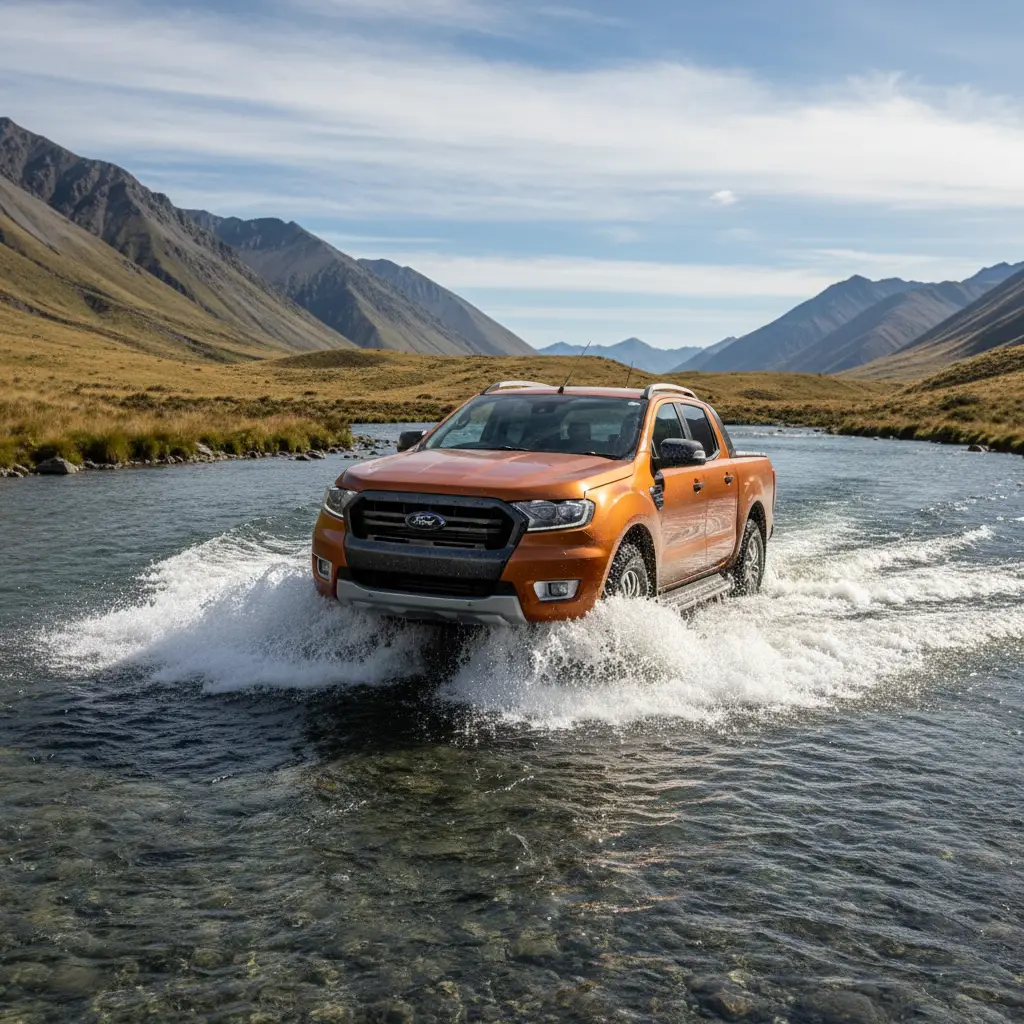
When you drive your Ranger, the differentials and transfer case heat up. The air inside expands and escapes through the factory breather valve. When you plunge that hot drivetrain into a cold NZ river crossing, the unit cools rapidly. The air inside contracts, creating a vacuum.
If the factory breather valve is submerged (which they often are, as they are frequently mounted low on the chassis), the vacuum will suck water past the oil seals and into the mechanical components. This water mixes with the oil to create a corrosive “milkshake” that destroys bearings, electronic actuators, and gears.
The Solution
Installing a Remote Breather Kit moves the breathing point from the chassis rail to the highest point in the engine bay (usually the firewall). This simple upgrade ensures that when the drivetrain cools rapidly in water, it draws in clean, dry air from the engine bay rather than silty river water.
Why Genuine Parts Matter in NZ Conditions
When sourcing a replacement Transfer Case Motor or 4WD actuator, the market is flooded with cheap aftermarket options. While the price difference can be tempting, the longevity gap is significant.
Genuine Ford Parts (OEM) are manufactured to specific tolerances regarding water resistance (IP ratings) and electronic signal precision. The TCCM in a Ford Ranger is highly sensitive to resistance values. Aftermarket motors often have slightly different resistance values in their position sensors. This can lead to intermittent faults where the 4WD system works in the driveway but fails under load or vibration.
Furthermore, genuine actuators typically use higher-grade polymers for the internal gears and superior potting compounds for the electronics, offering better protection against the thermal cycling and moisture common in New Zealand’s variable climate.
People Also Ask
How do I reset my Ford Ranger 4WD module?
To reset the Transfer Case Control Module (TCCM), disconnect the negative battery terminal for at least 15 minutes. This clears the “Keep Alive Memory” and any temporary fault codes. Reconnect the battery and cycle the ignition. If the fault persists, the hard code indicates a permanent mechanical or electrical failure requiring repair.
What does the wrench light mean on a Ford Ranger when in 4WD?
The powertrain warning lamp (wrench icon) appearing during 4WD engagement usually indicates a discrepancy between the requested gear and the actual position of the transfer case. It often signifies a seized shift motor or a fault in the transmission output speed sensor.
Can I drive my Ranger if the 4WD actuator is broken?
Yes, provided the vehicle is stuck in 2H (Two-Wheel Drive High). You can drive normally on sealed roads. However, if the actuator has failed while the vehicle is in 4L (Low Range), you should not drive on tarmac as this will cause “wind-up” in the drivetrain and potentially shatter the transfer case or differentials.
How much does it cost to replace a Ford Ranger transfer case motor?
In New Zealand, a genuine Ford transfer case motor typically costs between $600 and $900 NZD depending on the supplier. Labour for installation is usually 1-2 hours. Be wary of units costing significantly less, as they are likely inferior aftermarket copies that may fail prematurely.
Why is my Ranger stuck in 4WD Low?
Being stuck in 4L is usually caused by the shift motor binding or the “contact plate” inside the motor failing to send the correct signal to the computer. You can sometimes temporarily fix this by tapping the motor with a rubber mallet while a helper switches the dial, which may free the brushes enough to shift back to 2H.
Do Ford Rangers have locking hubs?
Modern PX/T6 Ford Rangers do not have manual locking hubs. They use a live axle setup with a disconnect system managed by the transfer case and vacuum/electronic aids. Older PJ/PK models utilized vacuum-operated locking hubs which are prone to vacuum leaks.