
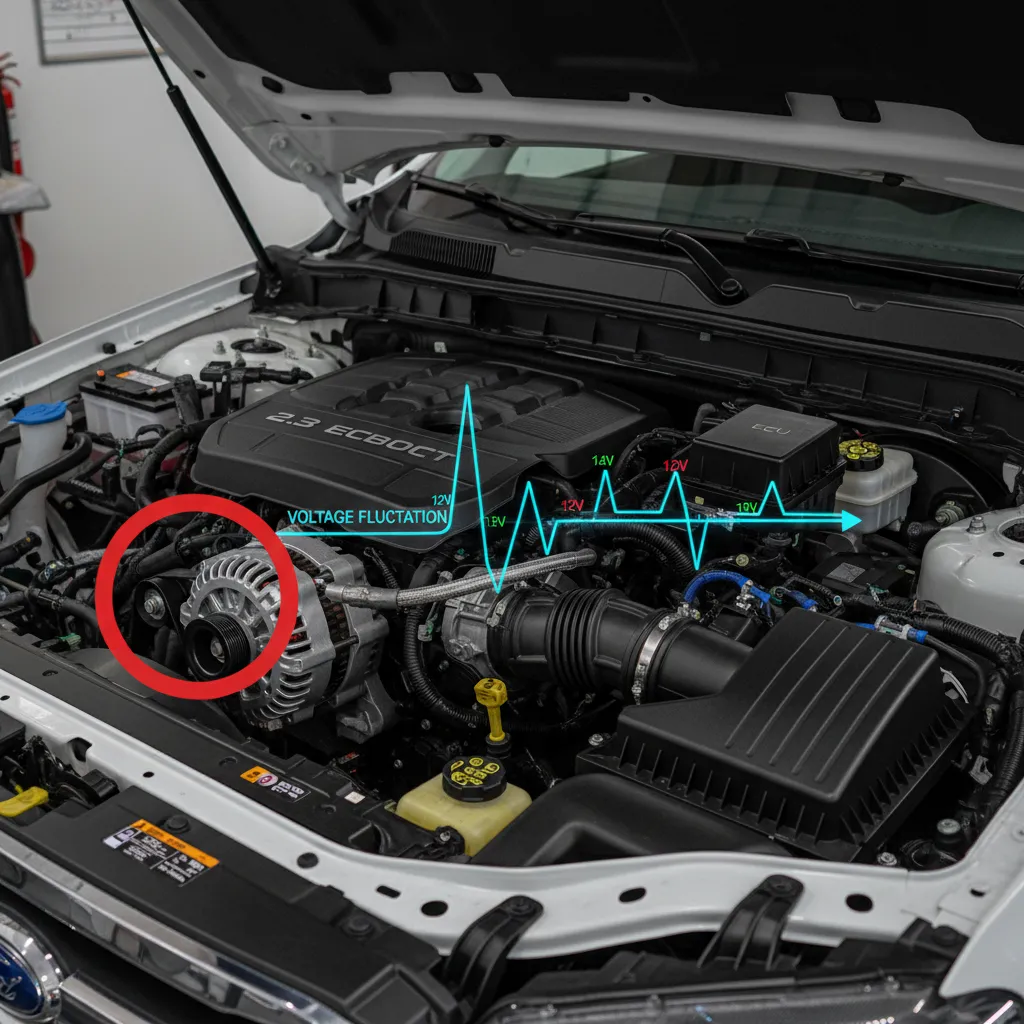
Alternator & Battery Issues
The Ford Ranger Smart Charge system is an ECU-controlled regenerative charging technology that varies alternator output between 12.3V and 15.5V based on driving conditions, battery temperature, and electrical load. Unlike traditional fixed-voltage alternators, it optimizes fuel efficiency and emissions by reducing alternator drag during acceleration and increasing voltage during deceleration to recover energy.
What is the Ford Ranger Smart Charge System?
For decades, vehicle charging systems were relatively simple. An alternator would spin and output a fixed voltage—usually around 13.8V to 14.4V—controlled by an internal voltage regulator. However, modern emission standards and the demand for improved fuel economy in vehicles like the Ford Ranger (specifically the PX, PX2, and PX3 models) necessitated a more intelligent approach. This gave rise to the Smart Charge system.
In a Ford Ranger, the alternator is no longer a standalone entity. It is a “slave” unit controlled directly by the Powertrain Control Module (PCM). The PCM monitors the electrical demand via the Battery Monitoring System (BMS) sensor located on the negative battery terminal. Based on this data, the PCM sends a Pulse Width Modulation (PWM) signal to the alternator to command a specific voltage output.
The Logic Behind Variable Voltage
The primary goal of this system is to reduce the parasitic load on the engine. The alternator is a significant drag on the crankshaft. By manipulating when and how hard the alternator works, Ford engineers can squeeze out better efficiency numbers.
- Acceleration: When you press the accelerator, the PCM may drop the alternator voltage to as low as 12.2V-12.5V. This effectively “turns off” the alternator’s magnetic field, reducing mechanical resistance on the engine and allowing more power to go to the wheels.
- Deceleration (Regenerative Charging): When you lift off the throttle or apply the brakes, the PCM commands a voltage spike, often up to 15.5V or higher. This uses the vehicle’s momentum to rapidly charge the battery, acting as a form of regenerative braking.
- Cruising: During steady-state driving, the system aims to keep the battery at a specific State of Charge (SOC), usually around 80%, rather than 100%. This leaves “room” in the battery to accept the high-voltage charge during the next deceleration event.
Why Does the Smart Charge System Cause Issues?
While the engineering logic is sound for a stock vehicle in a testing facility, it often presents challenges for Ford Ranger owners in New Zealand who use their trucks for touring, towing, or off-roading. The system’s behavior can mimic alternator failure, leading to confusion and unnecessary parts replacement.
The “Flat Battery” Perception
Because the system is designed to maintain the battery at roughly 80% capacity to allow for regenerative charging, owners often find their resting voltage is lower than they are used to. If the vehicle is driven on short trips where the engine never enters the deceleration phase long enough to top up the battery, the state of charge can gradually decline, especially in colder climates where battery efficiency drops.
Incompatible Accessories
Many aftermarket accessories, such as older fridges or lighting systems, have low-voltage cutouts set for traditional charging systems (e.g., 12.7V). When the Ranger’s smart alternator drops the system voltage to 12.3V during highway driving to save fuel, these accessories may mistakenly detect a dead battery and shut down to protect themselves, resulting in warm beer or dark campsites.
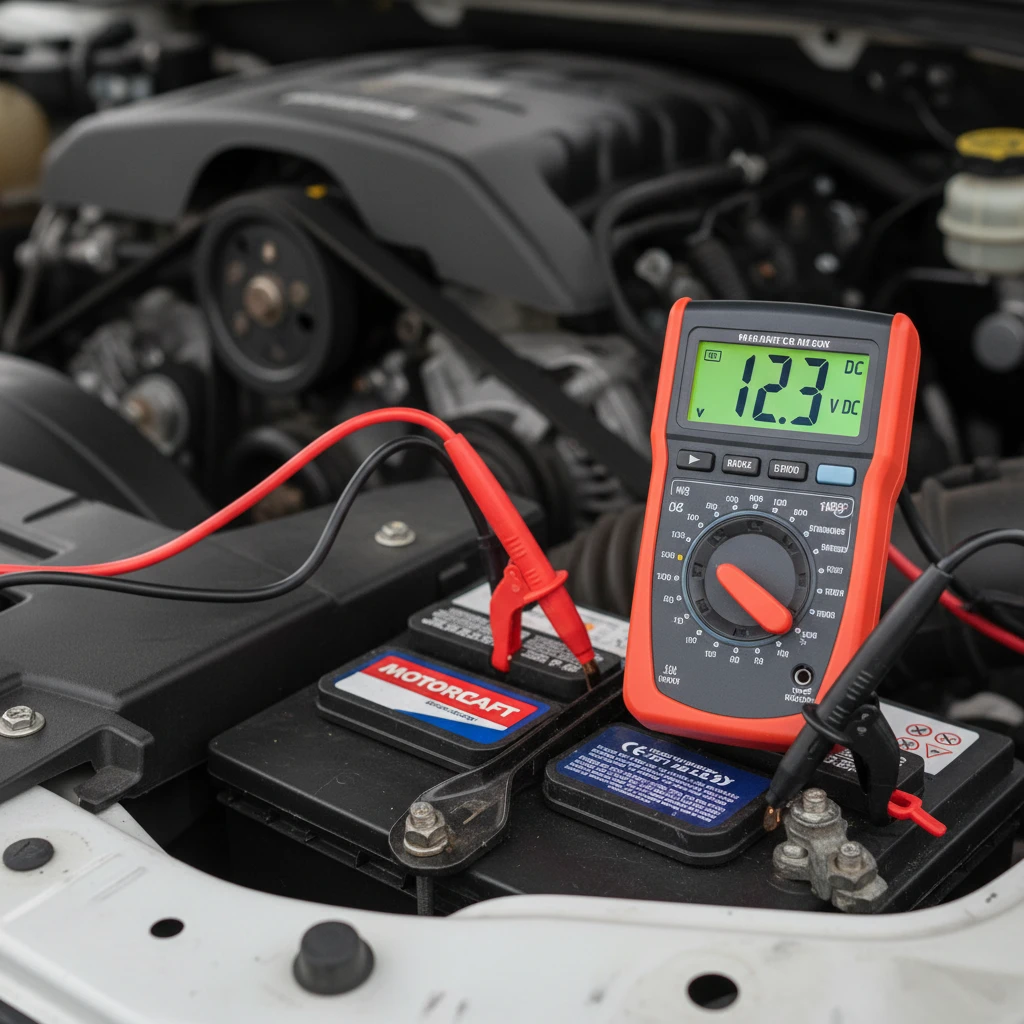
Dual Battery Integration: The VSR vs. DC-DC Debate
This is the single most common query regarding the Ford Ranger smart charge system. In older vehicles, a simple Voltage Sensitive Relay (VSR) was used to connect the start battery to the auxiliary battery. The VSR would close (connect) when it detected 13.3V and open (disconnect) when it dropped below 12.8V.
Why VSRs Fail in Ford Rangers
In a Smart Charge Ranger, a VSR is practically useless. Because the alternator frequently drops voltage below 12.7V while driving, a VSR will constantly open and close (chatter). Worse, it will often disconnect the auxiliary battery while you are driving, meaning your secondary battery is not getting charged despite the engine running.
The Solution: DC-DC Chargers
To successfully install a dual battery system in a Ford Ranger, a DC-DC charger is mandatory. A DC-DC charger acts as a separate battery charger powered by the alternator. It boosts the variable input voltage (whether it’s 12.2V or 15V) to a stable charging profile (e.g., 14.4V bulk charge) required by your auxiliary battery.
Crucial Installation Note: When installing a DC-DC charger in a Ranger, you must use an ignition trigger wire. Unlike standard setups that rely on voltage sensing to turn on, the DC-DC charger needs to know the engine is running even if the voltage is low. This bypasses the smart alternator’s low-voltage periods and ensures your auxiliary battery charges 100% of the time the engine is on.
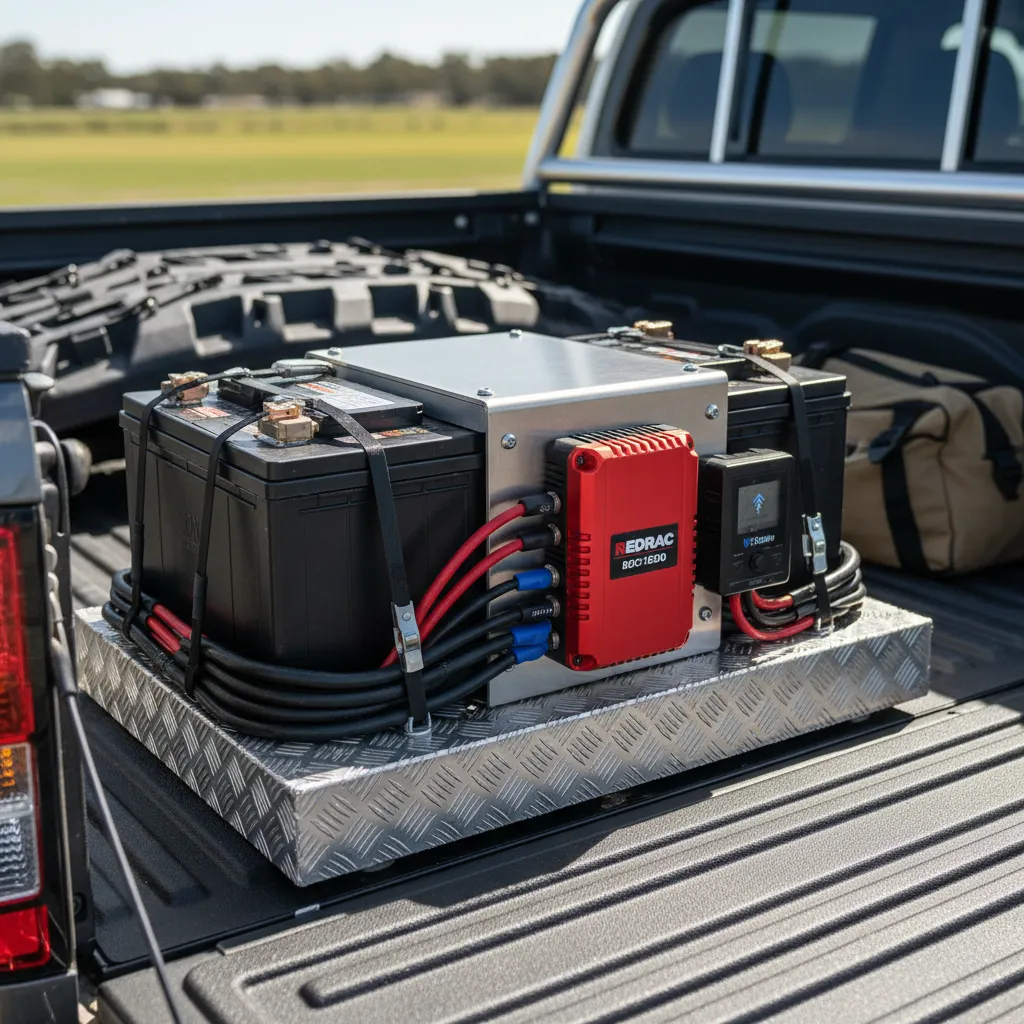
The Critical Role of the BMS Sensor
The Battery Monitoring System (BMS) sensor is a small module attached to the negative terminal of the cranking battery. It measures current flow in and out of the battery to calculate the State of Charge (SOC). The PCM relies entirely on this data to control the alternator.
The Golden Rule of Ranger Wiring: Never connect accessory negative (earth) wires directly to the negative battery terminal. If you connect a winch, spotlight, or amplifier ground directly to the terminal, you are bypassing the BMS sensor. The PCM will not “see” that power being used. Consequently, it will think the battery is fuller than it actually is and will undercharge the system, leading to a flat start battery.
Always connect accessory grounds to the vehicle chassis or the dedicated body earth point after the BMS sensor flow path.
High-Output Alternator Upgrades
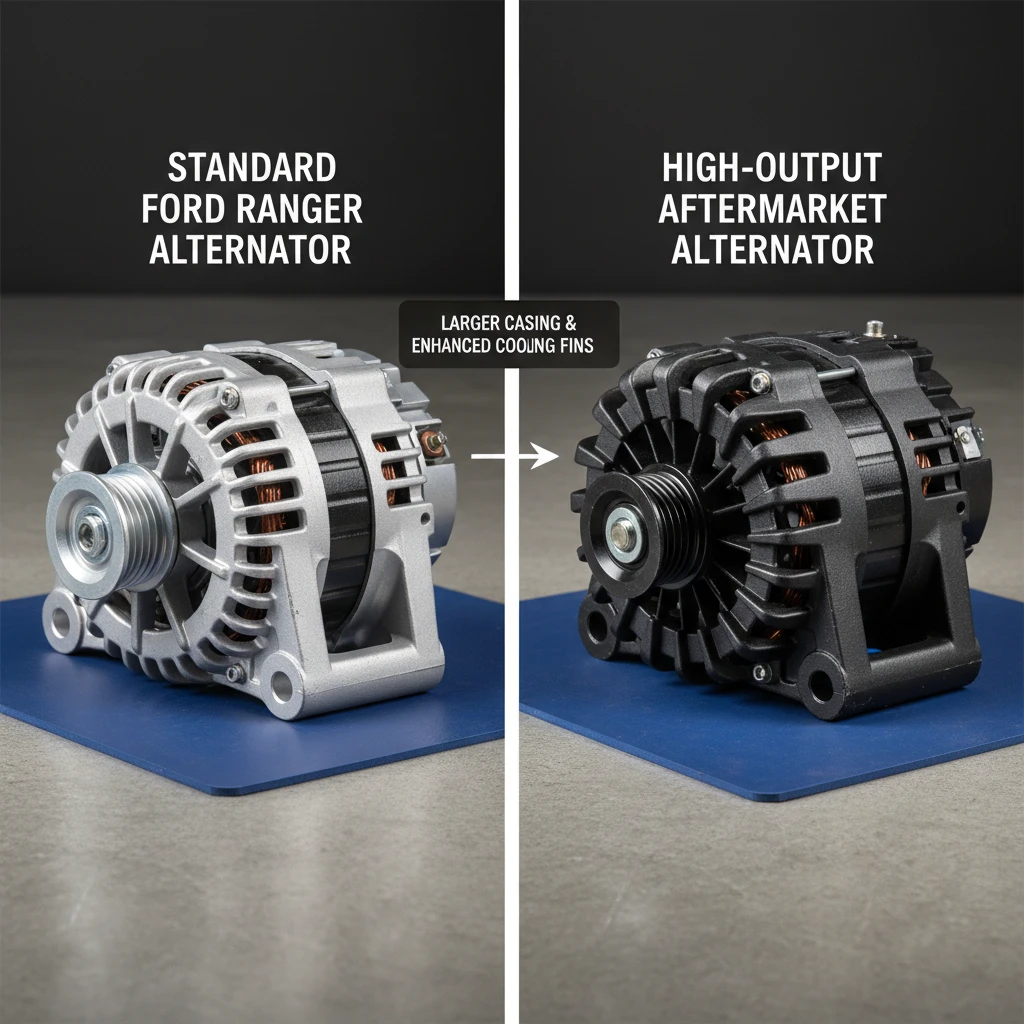
The stock alternator on most PX Ford Rangers is rated between 110A and 150A, depending on the specific model and trim. For a standard vehicle, this is sufficient. However, for a fully rigged touring vehicle, it may be the weak link.
When Do You Need an Upgrade?
If you are running a DC-DC charger (drawing 40A-50A), driving lights, a winch, and an inverter, you can easily exceed the stock alternator’s continuous duty cycle. While the stock unit can peak at 150A, it cannot sustain that output without overheating. Smart Charge systems can exacerbate this by pushing the alternator hard during regenerative braking phases.
Upgrading to a high-output alternator (typically 200A to 250A) provides more headroom. These units often feature better winding cooling and heavy-duty rectifiers. However, simply bolting on a high-output alternator does not disable the Smart Charge system. The PCM will still control the voltage. The benefit lies in the amperage capacity—the ability to supply current without voltage sag or overheating.
Maintenance & BMS Reset Procedures
Proper maintenance of the Smart Charge system extends beyond just checking belt tension. Because the system is software-driven, the “memory” of the battery state is crucial.
Why You Must Reset the BMS
When you replace the battery in a Ford Ranger, you must perform a BMS reset. Over time, the BMS adapts its charging strategy to account for an aging battery (which has higher internal resistance). If you put a new battery in but don’t reset the system, the PCM will treat the new battery like the old, degraded one. This can result in aggressive overcharging (shortening the new battery’s life) or chronic undercharging.
How to Reset the BMS (Manual Method for PX2/PX3):
- Switch the ignition on (do not start the engine).
- Flash the high beam headlights 5 times.
- Press the brake pedal 3 times.
- Wait for the battery light on the dashboard to flash 3 times.
- The BMS is now reset.
This simple procedure ensures your Smart Charge system recalibrates to the fresh battery, restoring optimal charging profiles and protecting your investment.
Frequently Asked Questions
Can I disable the Ford Ranger Smart Charge system?
Yes, it can be disabled by a dealer or via FORScan software, which reverts the alternator to a traditional fixed-voltage output. However, this is generally not recommended as it affects fuel economy and may impact other vehicle systems that rely on load shedding data.
What type of battery does the Ford Ranger require?
Ford Rangers with Smart Charge systems typically require Silver Calcium or AGM batteries. These chemistries can withstand the higher charging voltages (up to 16V) that the system generates. Using a standard lead-acid battery may result in boiling the electrolyte.
Why are my headlights dimming when I stop?
This is a characteristic of the Smart Charge system. As the engine returns to idle, the alternator output may drop to reduce load, causing a slight dimming of halogen lights. If the dimming is severe, check the battery health and BMS sensor connection.
Does a Smart Charge system charge the battery to 100%?
Rarely. The system targets an approximate 80% State of Charge (SOC) to leave capacity available for regenerative charging (energy recovery) during braking. This is why a DC-DC charger is essential for auxiliary batteries that need a 100% charge.
Where is the BMS sensor located on a Ford Ranger?
The BMS sensor is located directly on the negative battery terminal clamp. It looks like a small black box with a plug connector. Ensure this area is clean and the connector is secure.
What size DC-DC charger do I need for a Ranger?
For most setups, a 25A to 40A DC-DC charger is ideal. A 25A unit is sufficient for a standard 100Ah auxiliary battery, while a 40A unit is better for larger battery banks or lithium setups, provided the wiring gauge is sufficient.