
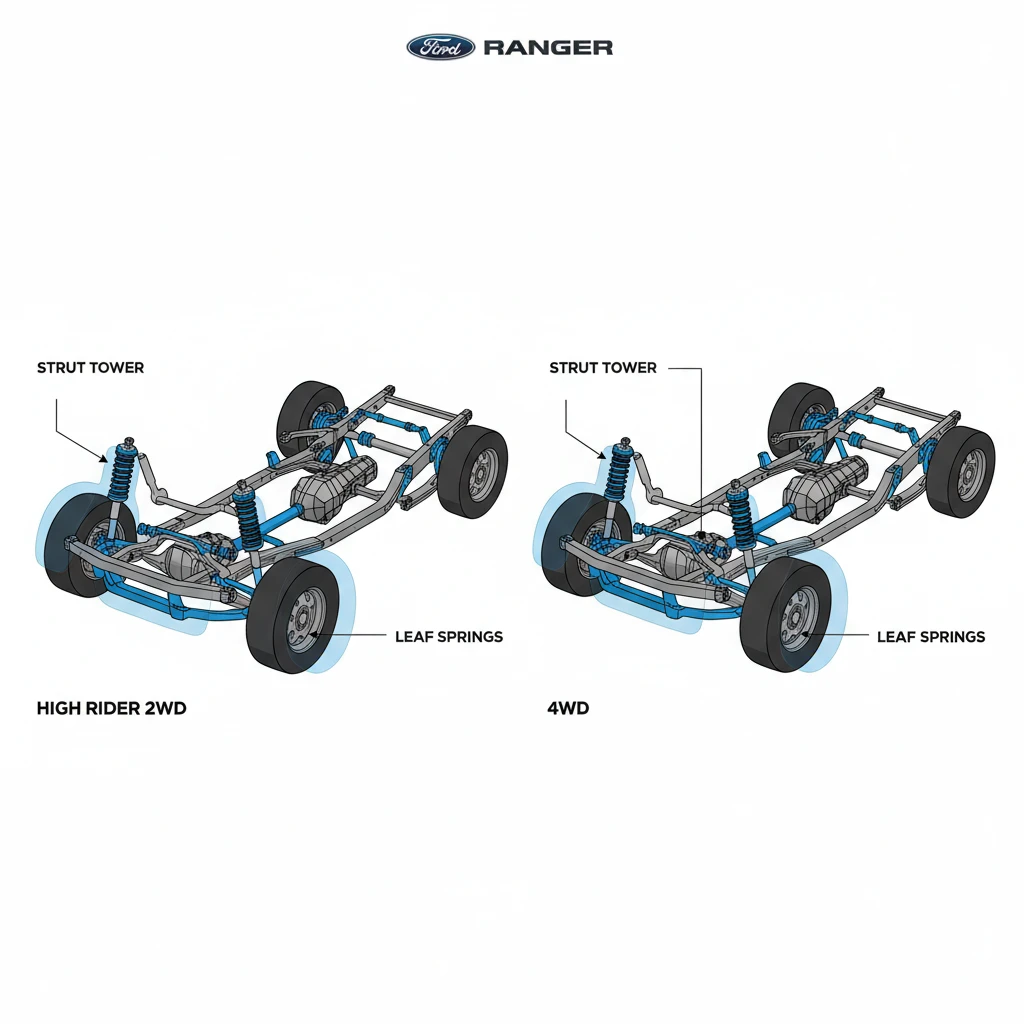
Chassis & Suspension Variations
Ford Ranger suspension parts in NZ encompass a comprehensive range of components designed to withstand New Zealand’s diverse terrain, including shock absorbers, leaf springs, control arms, and polyurethane bush kits. Whether maintaining a PX series or upgrading a Next-Gen model, selecting high-quality genuine or aftermarket replacements is critical for restoring handling, ensuring WOF compliance, and maintaining load-carrying capacity across 2WD and 4WD chassis configurations.
Understanding Chassis Variations: 2WD vs 4WD
When sourcing Ford Ranger suspension parts NZ, the first technical hurdle is correctly identifying the chassis configuration. The Ford Ranger platform, particularly the PX series (2011–2022), utilizes a sophisticated chassis strategy that blurs the line between traditional 2WD and 4WD setups. Understanding these nuances is essential for mechanics and owners to avoid ordering incompatible components.
The “High Rider” Phenomenon
In the New Zealand market, a significant portion of 2WD Rangers are “Hi-Rider” models. Technically, these vehicles utilize the 4WD chassis frame and suspension geometry, despite lacking a front differential and transfer case. This means that for suspension purposes—lift kits, shock absorbers, and control arms—parts listed for a 4WD Ranger are often compatible with a 2WD Hi-Rider.
However, the “Low Rider” 2WD models (often utilized as fleet runners or urban workhorses) feature a distinct suspension geometry. These sit lower to the ground and require specific shock absorbers and coil springs that are shorter and valved differently to accommodate the reduced ride height and different center of gravity.
Key Differences in Front Suspension Geometry
The front suspension architecture varies significantly between generations and drive types:
- PJ/PK Models (2006-2011): These utilized torsion bar front suspension. Adjusting ride height involved cranking the torsion bars, which often stiffened the ride.
- PX Series (2011-2022): Shifted to a coil-over strut assembly. This provided superior ride comfort and handling. The 4WD and Hi-Rider 2WD share the same strut tower height, whereas the Low Rider has a different mounting orientation.
- Next-Gen (2022+): Features a wider track and outboard dampers, requiring entirely different part numbers from the PX series.
Critical Suspension Components for NZ Roads
New Zealand’s road network presents a unique challenge for the Ford Ranger. From the corrugated gravel roads of the South Island to the winding, cambered tarmac of the North, the suspension system is under constant stress. Sourcing the correct Ford Ranger suspension parts NZ is about matching the component to the environment.
Shock Absorbers and Struts
The factory shock absorbers on a Ford Ranger are designed for general-purpose use. However, for commercial applications carrying heavy loads or towing, the factory valving often results in “wallowing” or excessive body roll. Upgrading to nitrogen-gas-charged struts with a larger bore size (e.g., 35mm or 40mm) can significantly improve thermal stability, preventing shock fade during extended drives on corrugated roads.
Leaf Springs and Load Ratings
Rear sag is a common issue for Rangers equipped with canopies, drawer systems, or heavy tools. Standard leaf springs are rated for an unladen tub. When a constant load of 300kg+ is added, the springs flatten, reducing travel and causing the vehicle to hit the bump stops.
Replacement Options:
- Comfort Springs: Designed for unladen driving, offering a softer ride.
- Heavy Duty (0-300kg): Ideal for trade vehicles with tools always in the back.
- Extra Heavy Duty (300kg-GVM): Required for permanent heavy setups, such as service bodies.
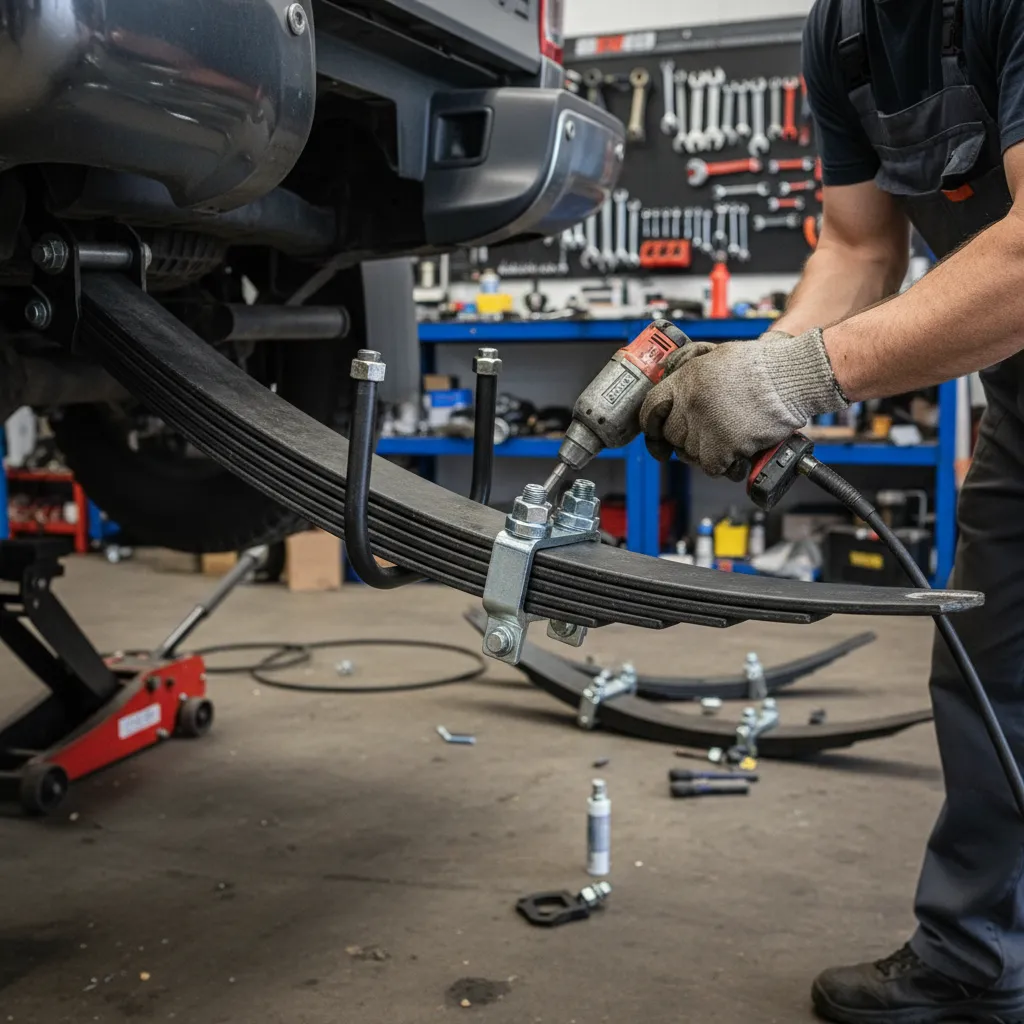
Bush Kits for High-Mileage PX Models
One of the most frequent failure points on the PX1, PX2, and PX3 Ford Ranger is the suspension bushing system. As these vehicles age and accumulate mileage, the factory rubber bushes deteriorate, leading to vague steering, knocking noises, and accelerated tyre wear.
The Lower Control Arm Bush Problem
The rear bush on the front lower control arm is notorious for failure. It is a hydraulic (fluid-filled) rubber bush designed for comfort. In NZ conditions, this fluid often leaks out after the rubber cracks, rendering the bush useless. This results in significant movement of the control arm under braking.
Solution: Polyurethane vs. Rubber
When replacing these, owners are faced with a choice:
- Genuine Rubber: Restores factory comfort but is prone to the same failure mode eventually.
- Polyurethane (e.g., SuperPro): These are solid synthetic bushes. They offer superior durability and sharper steering response. Modern polyurethane formulas have largely eliminated the harshness associated with older poly bushes. They are highly recommended for Rangers that see off-road use or heavy towing.
Pro Tip: When replacing control arm bushes, it is often more cost-effective to replace the entire Lower Control Arm (LCA) assembly, as this includes new ball joints and bushes already pressed in, saving on labour costs.
Wheel Bearing Replacement Guides
Wheel bearings are critical safety components that support the vehicle’s weight while allowing the wheels to rotate with minimal friction. On the Ford Ranger, the wheel bearing configuration changes depending on the model year and drive type.
Integrated Hub Assemblies vs. Press-In Bearings
On the PX Ranger 4WD and Hi-Rider models, the front wheel bearing is typically an integrated hub assembly unit. This means the bearing, hub, and ABS tone ring come as a single, pre-assembled part. This design simplifies replacement as it bolts directly onto the steering knuckle, eliminating the need for a hydraulic press.
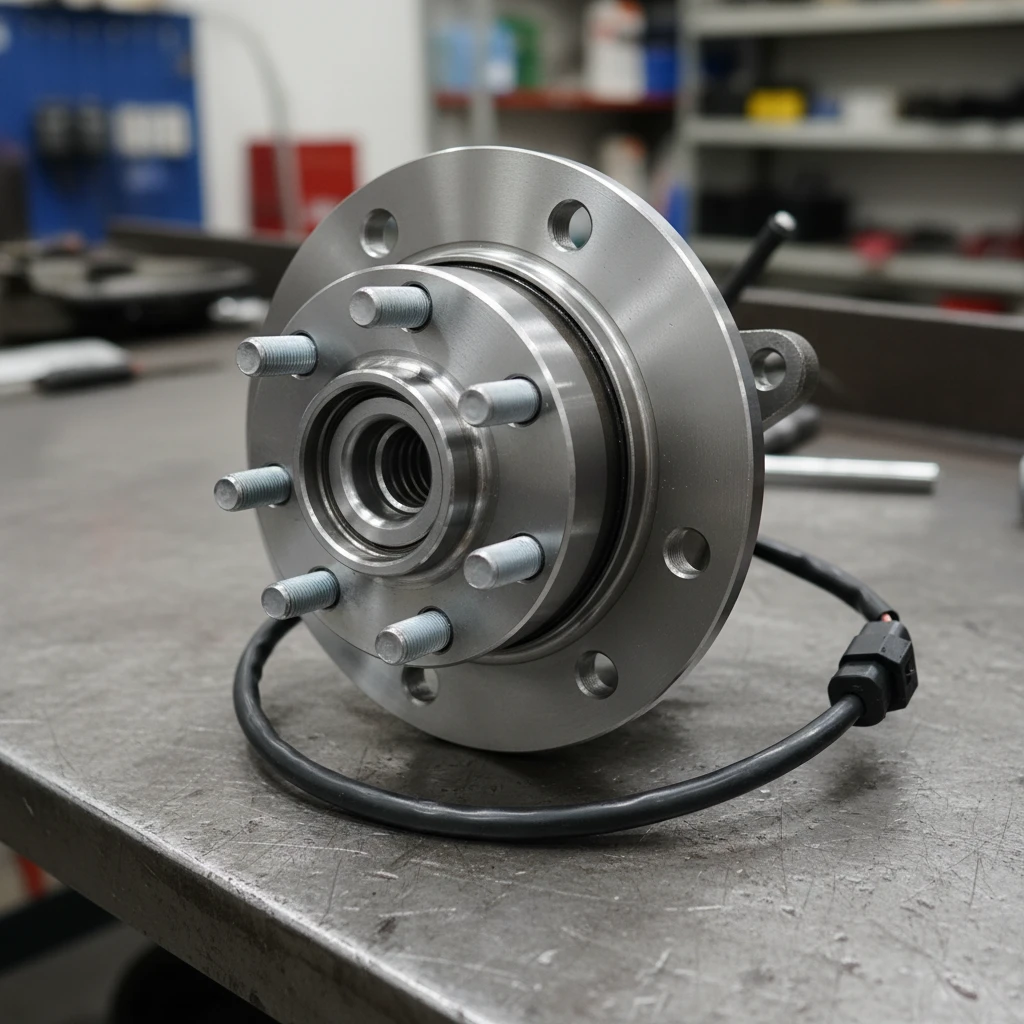
Step-by-Step Replacement Overview (PX 4WD Front)
While we always recommend professional installation, understanding the process helps in assessing repair quotes:
- Preparation: Lift the vehicle and remove the wheel. Remove the brake caliper and hang it aside (do not let it hang by the hose). Remove the brake rotor.
- Axle Nut: Remove the CV axle nut (usually 32mm). This requires high torque to remove.
- Hub Removal: Disconnect the ABS sensor. Remove the bolts securing the hub assembly to the knuckle.
- Extraction: The hub is often seized due to corrosion. A slide hammer or hub puller may be required to separate it from the knuckle and CV shaft.
- Installation: Clean the knuckle surface thoroughly. Install the new hub, torque bolts to manufacturer specs, and reconnect the ABS sensor.
Signs Your Ranger Suspension Needs Attention
Identifying worn Ford Ranger suspension parts NZ early can save you thousands in secondary damage to tyres and drivetrain components. Look out for these symptoms:
- Nose Diving: If the front of the Ranger dips significantly when braking, your front struts are likely worn.
- The “Ranger Lean”: It is common for Rangers to lean to one side (usually the driver’s side) due to the fuel tank and battery placement. However, excessive lean indicates a collapsed spring.
- Inner Tyre Wear: This is a classic sign of worn lower control arm bushes or ball joints affecting the wheel alignment (camber/toe).
- Clunking over Bumps: Usually indicates worn sway bar links or D-bushes.
Buying Guide: Genuine vs Aftermarket
The New Zealand market is flooded with suspension options. Making the right choice depends on your usage.
Genuine Ford Parts
Pros: Guaranteed fitment, maintains factory warranty, designed for standard comfort.
Cons: Can be expensive, may not be robust enough for heavy off-roading or constant heavy loads.
Aftermarket Upgrades (e.g., Dobinsons, ARB, EFS)
Pros: Tailored to specific weights (e.g., bullbar compliant), lift capability for ground clearance, often serviceable/rebuildable.
Cons: Requires certification (LVVTA) if the lift exceeds 50mm or suspension geometry is significantly altered.
For the average Kiwi trade vehicle, a high-quality aftermarket upgrade that keeps the vehicle at legal height but increases load capacity is often the best investment.
Frequently Asked Questions
What is the difference between PX1, PX2, and PX3 suspension?
While the chassis fundamentals remained similar across the PX range (2011-2022), the front sway bar mounting points and spring rates changed. Specifically, the PX2 introduced a different front bump stop setup and revised spring rates for better comfort compared to the stiffer PX1.
Do I need a certification (LVV) for a suspension lift in NZ?
In New Zealand, a suspension lift of up to 50mm usually does not require LVV certification, provided it does not require modification to other components (like steering shafts or brake lines) to fit. Lifts over 50mm generally require certification.
How long do Ford Ranger shock absorbers last?
Factory shock absorbers typically last between 80,000km and 100,000km depending on usage. If the vehicle is used frequently for towing or on gravel roads, efficiency can drop significantly after 60,000km.
Can I put 4WD suspension on a 2WD Ranger?
Only if your 2WD is a “Hi-Rider” model. Hi-Rider Rangers share the same chassis and suspension geometry as the 4WD models. Low-rider 2WD models use different suspension components and are not compatible.
What causes the Ford Ranger driveshaft vibration after a lift?
Lifting the suspension changes the angle of the driveline. On Rangers, this can cause a shudder on take-off due to the center bearing angle. A center bearing spacer kit or wedge plates for the leaf springs are common fixes.
Are polyurethane bushes better than rubber for Rangers?
Polyurethane bushes are far more durable and resistant to oil and contaminants than rubber. They offer better handling but can transmit slightly more road vibration. For NZ’s rough roads, they are generally considered a superior upgrade for longevity.