
Cooling System Overhaul (Radiators/Hoses)
A Ford Ranger radiator replacement involves draining the engine coolant, disconnecting the transmission cooler lines (on automatic models), removing the fan shroud assembly, and unbolting the radiator core support. This critical maintenance task is essential for preventing catastrophic engine failure in 2.2L and 3.2L Duratorq diesel engines, particularly when frequent towing or off-road driving places high thermal stress on the cooling system.
For New Zealand Ford Ranger owners, the cooling system is the lifeline of the vehicle. Whether you are towing a boat up the Kaimai Ranges or navigating the dusty backroads of the South Island, the thermal management of your 3.2L or 2.0L Bi-Turbo engine is non-negotiable. A compromised cooling system doesn’t just mean a breakdown; it often results in a cracked cylinder head or a seized engine. This comprehensive guide covers everything from a complete Ford Ranger radiator replacement to identifying common hose split locations and testing your viscous fan hub.
Signs Your Ford Ranger Needs a Radiator Replacement
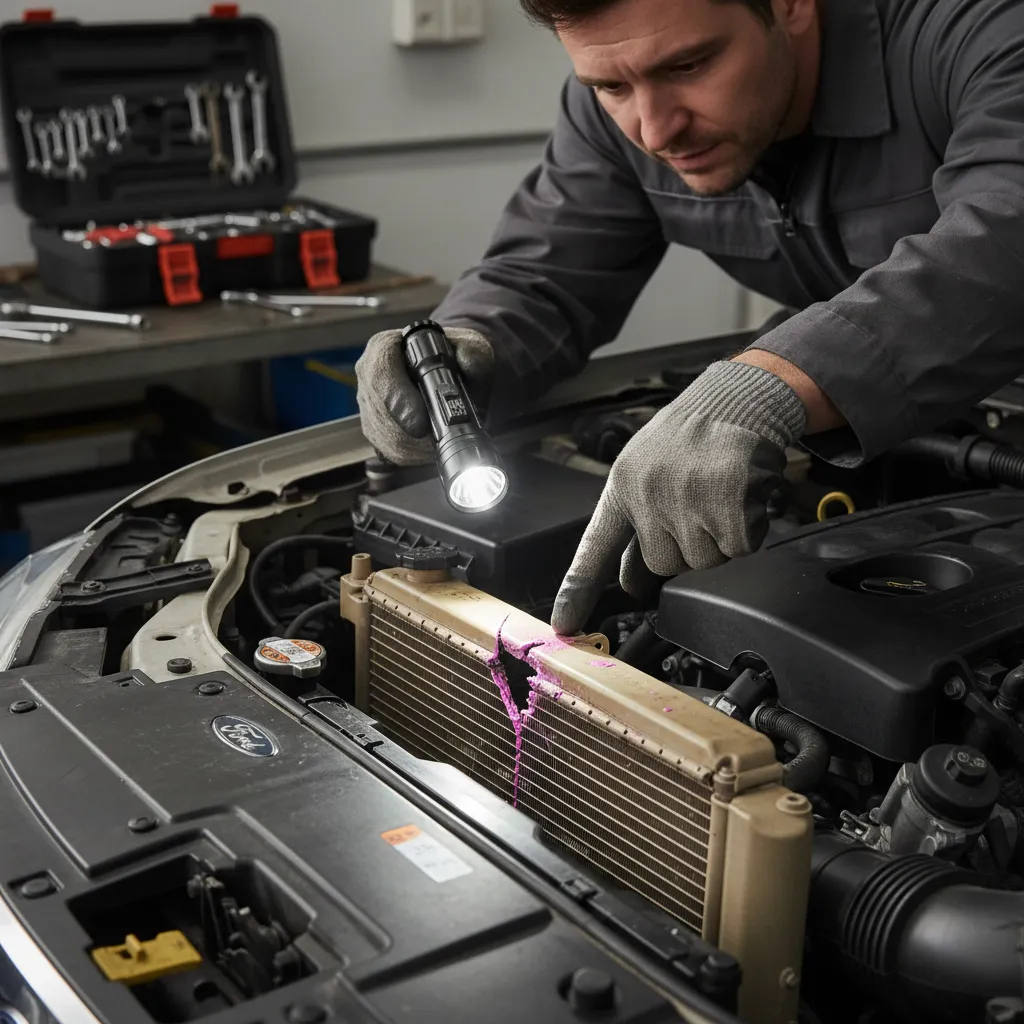
Before tearing down the front end of your ute, it is crucial to confirm that the radiator is indeed the culprit. The Ford Ranger PX series (PX1, PX2, and PX3) is robust, but the factory radiators utilize plastic end tanks crimped onto an aluminum core. Over time, heat cycles cause this plastic to become brittle and crack, or the crimp seals to fail.
Look for these primary indicators:
- Sweet Smell of Coolant: If you smell hot maple syrup outside the vehicle after a drive, you have a leak.
- Visible Crust or Stains: Pink or orange residue (depending on the coolant type used) around the radiator seams indicates slow seepage.
- Fluctuating Temperature Gauge: If the needle creeps up while idling or under load, the radiator may be clogged internally or externally.
- Transmission Issues: In automatic models, the transmission fluid cooler is integrated into the radiator. Internal failure can mix coolant with transmission fluid (the dreaded “strawberry milkshake”), destroying the gearbox.
Tools and Preparation for the Job
Performing a Ford Ranger radiator replacement is a moderate-to-advanced DIY task. It requires patience and the right equipment. Attempting this without the proper tools can result in stripped bolts or damaged intercooler pipes.
Required Tools
- Socket Set: 8mm, 10mm, 12mm, and 13mm sockets with extensions.
- Hose Clamp Pliers: Essential for the spring-style clamps Ford uses.
- Drain Pan: Large capacity (at least 10 liters).
- Fan Clutch Spanner: Specific for removing the viscous fan.
- Coolant Vacuum Filler (Recommended): Eliminates airlocks during refilling.
Safety First
Never attempt to open the cooling system while the engine is hot. The system is under high pressure, and scalding coolant can cause severe burns. Allow the vehicle to cool completely, preferably overnight.
Step-by-Step: Ford Ranger Radiator Replacement
This procedure generally applies to the PX series Ford Ranger (2011+), specifically the 3.2L and 2.2L diesel variants. Always consult the specific workshop manual for your year model.
1. Drain the System
Locate the drain petcock at the bottom of the radiator. Place your catch pan underneath and open the valve. Remove the expansion tank cap to increase flow. Note: It is environmentally irresponsible and illegal to dump coolant into storm drains. Dispose of it at a recycling facility.
2. Remove Intake and Shrouds
To access the radiator, you must remove the air intake ducting and the upper radiator cover. Unclip the MAF sensor and remove the airbox lid if necessary for clearance. Remove the plastic fasteners holding the top radiator cover to expose the mounting brackets.
3. Disconnect Hoses and Fan
Using your hose clamp pliers, disconnect the upper and lower radiator hoses. Be prepared for residual coolant to spill. If your Ranger is an automatic, disconnect the transmission cooler lines and plug them immediately to prevent fluid loss and contamination.
The Fan Assembly: This is often the most difficult step. Use the fan clutch spanner to loosen the viscous fan nut (usually a left-hand thread, but verify for your specific model year). Once loose, spin the fan off and remove it along with the fan shroud.
4. Remove and Replace the Radiator
Unbolt the radiator mounting brackets. Tilt the radiator back slightly to clear the AC condenser (do not disconnect AC lines) and the intercooler. Carefully lift the radiator straight up and out of the engine bay. Transfer any rubber mounting bushes to the new genuine Ford radiator.
5. Installation and Refilling
Lower the new unit into place, ensuring the locating pegs seat correctly in the rubber bushes. Reverse the removal steps. When refilling, use Ford-specification coolant. This is where a vacuum filler is invaluable; it draws a vacuum on the system to suck new coolant in, ensuring no air pockets remain in the heater core or cylinder head.
Critical Inspection: Common Hose Split Locations
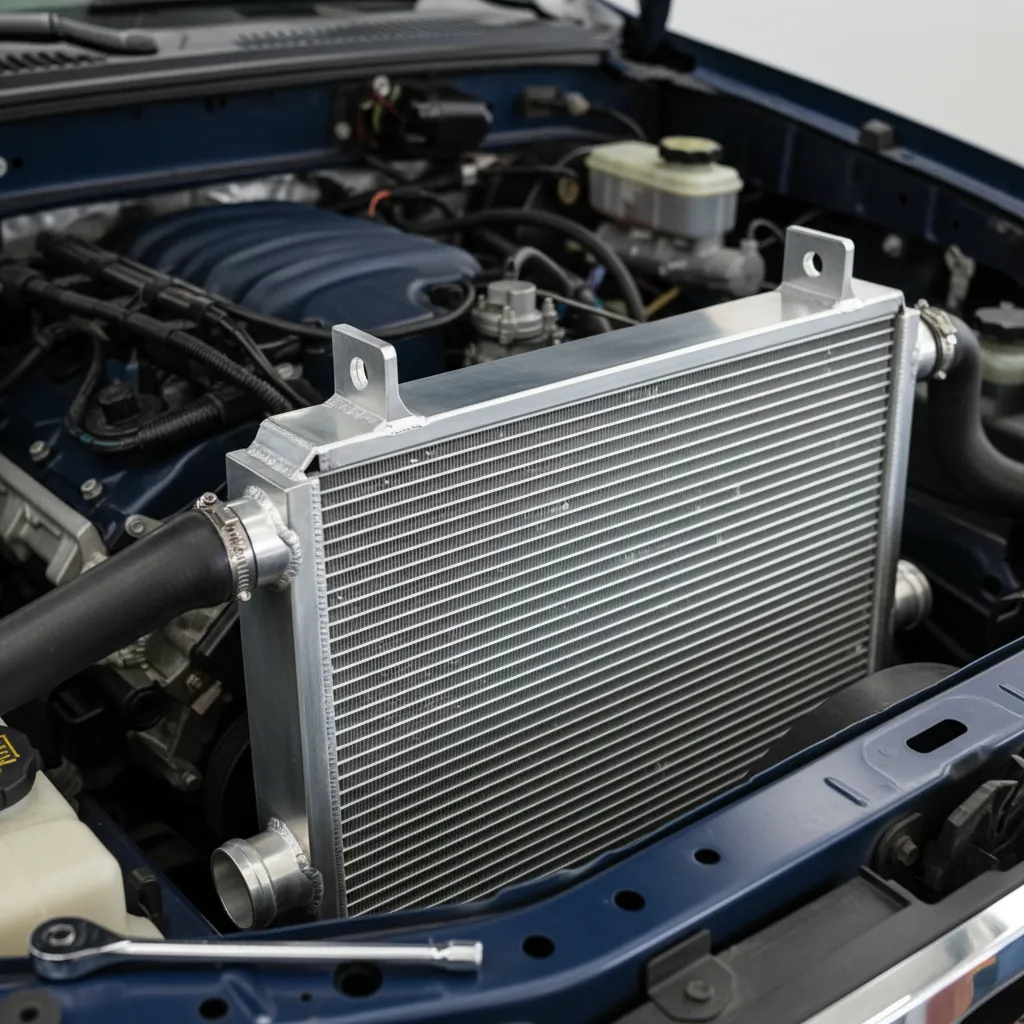
A radiator replacement is wasted if you ignore the hoses. Rubber degrades over time, and the high boost pressures and heat of the Ranger engine bay accelerate this process.
The “Octopus” Hose
On many 3.2L models, there is a complex multi-way hose assembly often referred to as the “octopus.” This hose connects the radiator, engine, and oil cooler. The plastic joiners within this hose assembly are notorious for becoming brittle and snapping, causing instant coolant loss.
Lower Radiator Hose Abrasion
Inspect the lower radiator hose carefully. On some models, it sits dangerously close to the chassis rail or steering components. Engine vibration can cause the hose to rub against metal, slowly wearing through the rubber until it bursts under pressure.
Heater Hoses
The hoses running to the firewall for the heater core are often overlooked. Check the connections at the firewall for signs of white or pink crusting, indicating a leak at the clamp.
The Weak Point: Thermostat Housing Leaks
While you have the system drained for a Ford Ranger radiator replacement, you must inspect the thermostat housing. This is widely considered a weak link in the Duratorq engine’s cooling system.
Why They Fail
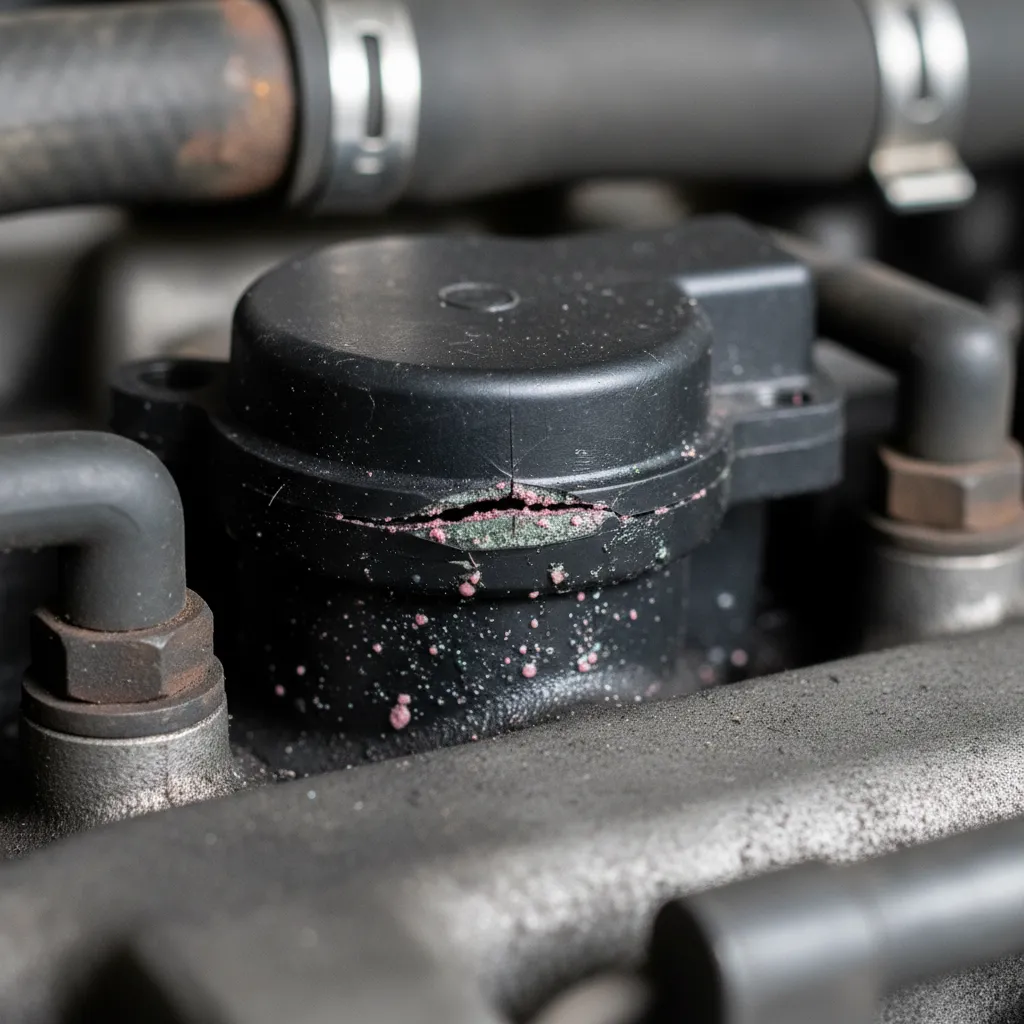
The thermostat housing is made of a composite plastic material. Over thousands of heating and cooling cycles, the plastic fatigues. A common failure mode is a hairline crack developing along the molded seam of the housing. This leak can be subtle at first—coolant evaporates on the hot engine block before hitting the ground—making it hard to detect until the reservoir is empty.
Replacement Strategy
Do not simply replace the thermostat valve. Replace the entire housing assembly. Using a Genuine Ford housing is highly recommended here, as some aftermarket castings have poor tolerance control, leading to leaks at the mating surface.
Viscous Fan Hub Testing and Diagnosis
The viscous fan hub is responsible for drawing air through the radiator when the vehicle is stationary or moving slowly. If this fails, your new radiator won’t be able to cool the engine in traffic or while off-roading.
How to Test a Viscous Fan Hub?
To test a viscous fan hub, perform the “spin test.” With the engine cold and off, the fan should spin with some resistance but not freewheel more than one or two turns. If it spins freely like a bicycle wheel, the clutch fluid has leaked out. Conversely, if it is locked solid when cold, it is seized.
The “Newspaper Test” (Proceed with Caution)
With the engine at operating temperature, the fan should be engaged and roaring. A traditional (though risky) test involves rolling up a newspaper and attempting to stop the fan while the engine is idling. If the fan stops easily with the newspaper while the engine is hot, the clutch is slipping and needs replacement. If the newspaper is shredded, the clutch is holding. Note: Be extremely careful of your hands and loose clothing.
Genuine Parts vs. Aftermarket: What NZ Owners Need to Know
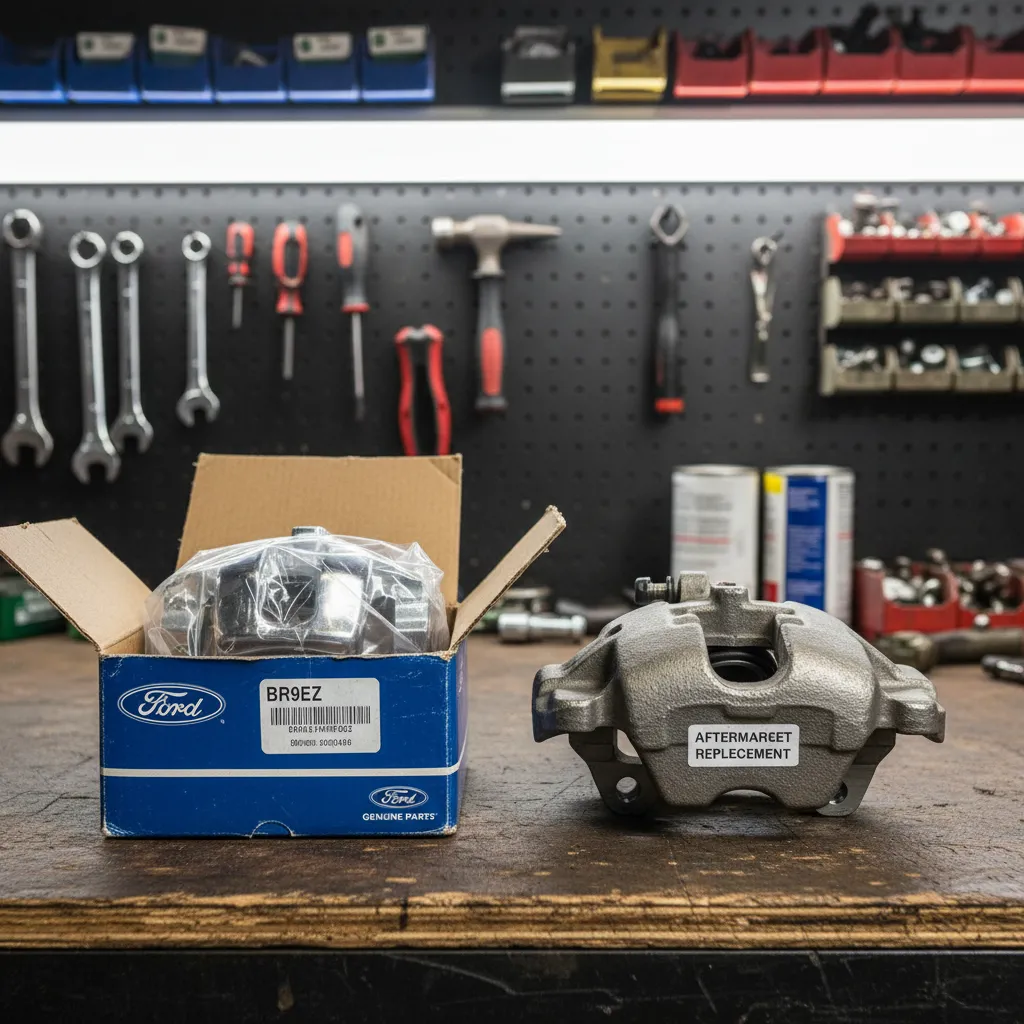
In the New Zealand market, the debate between Genuine Ford Parts and aftermarket alternatives is significant. For cooling system components, the stakes are high.
The Case for Genuine Parts
Genuine Ford radiators and hoses are engineered to specific thermal dissipation ratings required for the Ranger’s towing capacity (3500kg). They fit perfectly without modification. Cheap aftermarket radiators often reduce the core thickness or use lower-grade aluminum, which reduces cooling efficiency. In a country with steep mountain passes and heavy towing requirements, an undersized radiator is a recipe for overheating.
When to Use Aftermarket
There are high-performance aftermarket brands (like heavy-duty fully aluminum radiators) that exceed OEM specifications. These are excellent for dedicated off-road rigs or heavy tow vehicles. However, avoid the “budget” replacement parts found on general auction sites, as they rarely meet the longevity requirements of a working ute.
Conclusion: Protecting Your Investment
A Ford Ranger radiator replacement is more than just swapping out a leaking part; it is an opportunity to overhaul the entire cooling ecosystem of your vehicle. By addressing the radiator, hoses, thermostat housing, and fan hub simultaneously, you ensure that your Ranger remains reliable for the long haul. Using genuine parts and following proper bleeding procedures will prevent future headaches and keep your temperature gauge exactly where it belongs—right in the middle.
How much does a Ford Ranger radiator replacement cost?
In New Zealand, a professional radiator replacement typically costs between $600 and $1,200 NZD. This includes the cost of a genuine or high-quality aftermarket radiator, new coolant, and approximately 2-3 hours of labor. Prices vary depending on whether hoses and the thermostat are also replaced.
Can I drive my Ford Ranger with a leaking radiator?
No, it is not recommended. Driving with a leaking radiator prevents the cooling system from pressurizing, which lowers the boiling point of the coolant. This can lead to rapid overheating, warped cylinder heads, and complete engine failure, especially in diesel engines like the 3.2L Duratorq.
How often should I change the coolant in my Ford Ranger?
Ford generally recommends changing the coolant every 10 years or 200,000 km for modern Rangers using the orange long-life coolant. However, many mechanics in NZ recommend a flush and change every 5 years or 100,000 km, especially if the vehicle is used for towing or off-roading.
What is the best coolant for a Ford Ranger?
You must use a coolant that meets Ford specification WSS-M97B44-D. Typically, this is an OAT (Organic Acid Technology) coolant, often orange or pink in color. Do not mix different types of coolant (e.g., green and orange) as this can cause sludge to form and block the radiator.
How do I bleed the air out of a Ford Ranger cooling system?
To bleed the system, park on a slight upward incline. Fill the reservoir to the max line. Run the engine with the heater on full hot. Locate the bleed valve (often on a heater hose or near the EGR) and open it until a steady stream of coolant flows without bubbles. Rev the engine lightly to circulate fluid. A vacuum filler tool is the most effective method.
Does the timing belt need to be removed to change the water pump?
On the 3.2L and 2.2L Duratorq engines, the water pump is not driven by the timing belt; it is driven by the accessory serpentine belt. However, replacing the water pump is a good preventative measure during a major cooling system overhaul if the vehicle has high mileage.