
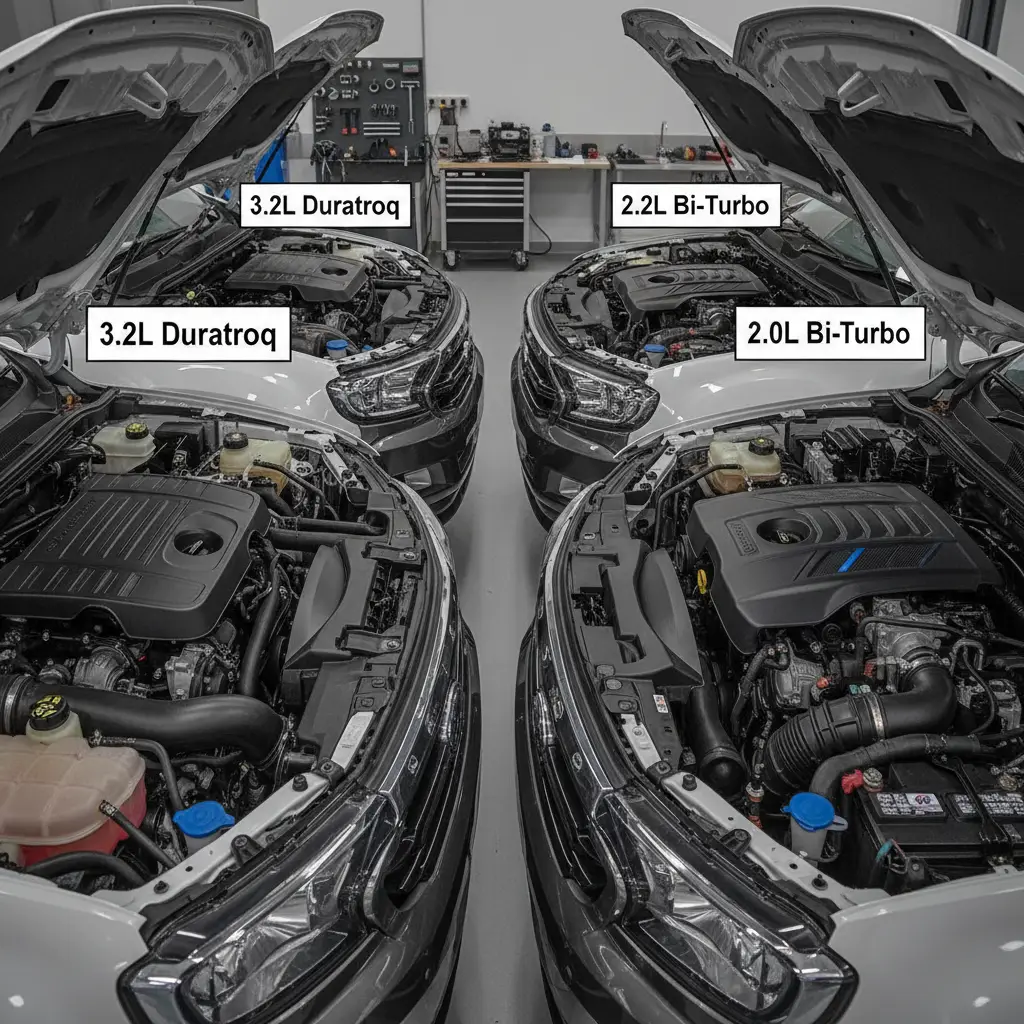
Engine Identification: 2.2L vs 3.2L vs 2.0L
The primary Ford Ranger engine types in New Zealand are the 3.2L Duratorq (Puma) 5-cylinder, the 2.2L Duratorq 4-cylinder, and the newer 2.0L Panther (Single and Bi-Turbo) diesel engines. Identifying your specific engine code is critical for selecting the correct oil viscosity, service parts, and understanding towing capacities for NZ roads.
How to Identify Your Ford Ranger Engine
For New Zealand Ford Ranger owners, understanding exactly what beats beneath the bonnet of your ute is the first step in proper maintenance. Since the introduction of the T6 platform in 2011, through the PX1, PX2, PX3, and now the Next-Gen models, Ford has utilized three primary diesel powerplants. While they may look similar to the untrained eye, the differences in parts, oil requirements, and performance are massive.
The confusion often lies in the transition periods, particularly around 2018-2019 when the PX3 was introduced, offering both the traditional 3.2L and the new 2.0L Bi-Turbo options simultaneously. Knowing your engine code ensures you don’t pour 5W-30 oil into an engine requiring 0W-30, a mistake that can be catastrophic for wet belts and turbos.
Visual Identification Cues
If you cannot access your VIN plate immediately, you can often identify the engine by looking at the physical layout:
- 3.2L Duratorq (5-Cylinder): Look for five distinct fuel injector pipes on the rail. The engine cover is usually large and silver/grey on older models, often labeled “3.2”. The engine block is physically longer due to the extra cylinder.
- 2.2L Duratorq (4-Cylinder): Visually similar architecture to the 3.2L but shorter. It has four injector pipes. This is the standard fleet engine found in many XL and XLT Hi-Rider models.
- 2.0L Panther (4-Cylinder): This engine looks significantly different. The oil filter is often located in a more accessible cartridge housing near the top front (depending on the specific variation). The engine cover is usually black foam rather than hard plastic on newer models. The Bi-Turbo variant has a complex turbo plumbing setup visible on the exhaust side.
The Duratorq Legacy: 3.2L and 2.2L Explained
For nearly a decade, the “Puma” Duratorq engines were the backbone of the New Zealand ute market. They established the Ranger’s reputation for towing capability and ruggedness.
What is the 3.2L Duratorq (P5AT)?
The 3.2-liter TDCi Duratorq is a straight-five engine that became legendary in NZ for its towing prowess. Producing 147kW of power and 470Nm of torque, it offers a lazy, grumbly delivery of power that feels substantial when hauling a boat or caravan.
Technically, this engine uses a chain-driven timing system, which many mechanics prefer for longevity. It is paired with either a 6-speed manual (MT82) or the 6-speed automatic (6R80). Its 5-cylinder configuration gives it a unique firing order and sound, reducing the “drone” often associated with 4-cylinder diesels at highway speeds.
What is the 2.2L Duratorq (P4AT)?
The 2.2-liter variant is essentially the 3.2L’s little brother, missing one cylinder. It was designed for efficiency and fleet use. While it produces less power (typically 118kW and 385Nm in high-output tunes), it is incredibly robust. In New Zealand, these are commonly found in 2WD Hi-Rider models and commercial 4WDs used by forestry and civil infrastructure companies.

The Panther Revolution: 2.0L Single & Bi-Turbo
Introduced largely with the Ranger Raptor and subsequently the PX3 Wildtrak and XLT, the “Panther” engine family marked a shift toward technology, efficiency, and emissions compliance (Euro 5/6).
What is the 2.0L Bi-Turbo (Bi-Turbo)?
The Bi-Turbo is the flagship of the Panther range. Despite the smaller displacement, it outperforms the 3.2L on paper, producing 157kW and 500Nm of torque. It achieves this through sequential turbocharging: a small high-pressure turbo works at low RPMs for immediate response, and a larger low-pressure turbo takes over at higher RPMs for peak power.
This engine is almost exclusively paired with the 10R80 10-speed automatic transmission. This combination keeps the engine in its optimal torque band, making it feel faster and more responsive than the 3.2L, albeit without the “big engine” feel.
What is the 2.0L Single Turbo?
The Single Turbo variant serves as the entry-to-mid-level replacement for the 2.2L Duratorq. It usually outputs around 125kW and 405Nm. It is a highly efficient unit, designed to lower Road User Charges (RUCs) through better fuel economy while maintaining respectable towing capabilities.

Detailed Specifications & Oil Capacities
Using the correct fluids is non-negotiable. The 2.0L Panther engines require a specific low-viscosity oil to protect the wet-belt system (where applicable) and tight tolerances of the turbos. The 3.2L is more forgiving but still demands high-quality synthetic oil.
| Feature | 3.2L Duratorq (P5AT) | 2.2L Duratorq (P4AT) | 2.0L Bi-Turbo (Panther) |
|---|---|---|---|
| Cylinders | Inline 5 | Inline 4 | Inline 4 |
| Power | 147 kW | 118 kW | 157 kW |
| Torque | 470 Nm | 385 Nm | 500 Nm |
| Timing System | Chain | Chain | Belt (Oil Pump Belt varies) |
| Oil Capacity (Approx) | 9.8L (PX1/2) / 8.6L (PX3) | 8.6L | 7.0L – 7.2L |
| Oil Spec | 5W-30 (WSS-M2C913-D) | 5W-30 (WSS-M2C913-D) | 0W-30 (WSS-M2C950-A) |
| AdBlue Required? | No (Most NZ Models) | No | Yes (Some late models/Next-Gen) |
Note: Oil capacities can vary slightly based on the specific sump fitted and whether the filter is changed. Always fill to the dipstick, not just the spec sheet.
Common Failure Points & Reliability
Every engine has its weak spots. Being aware of these allows NZ owners to perform preventative maintenance.
Common Faults with the 3.2L Duratorq
While legendary, the 3.2L is not bulletproof. The most common issues we see in New Zealand workshops include:
- EGR Cooler Split: The Exhaust Gas Recirculation cooler can split internally, leaking coolant into the exhaust or engine. If you notice a slow drop in coolant levels, check this immediately.
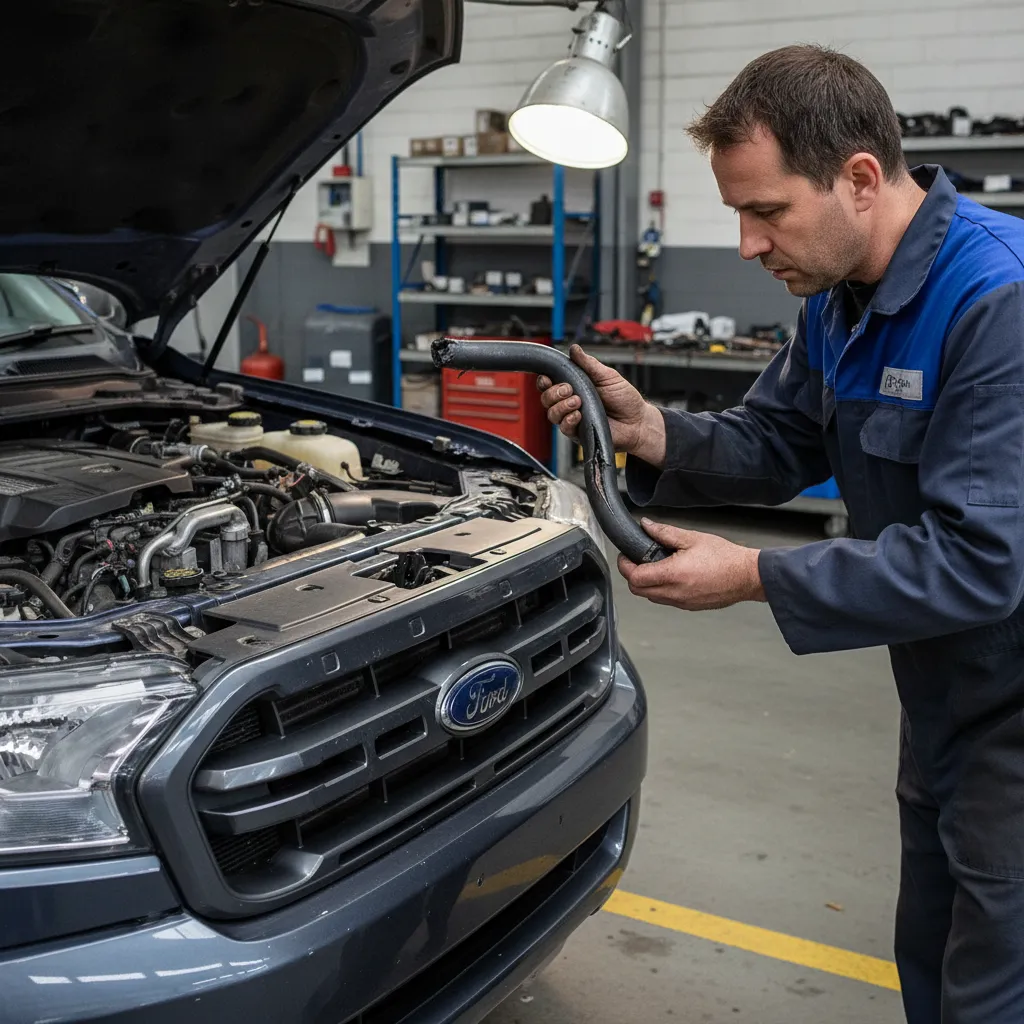
- Split Intercooler Hoses: The factory rubber hoses are prone to splitting under boost, leading to a “whooshing” noise and loss of power (limp mode). Upgrading to silicone hoses is a common NZ fix.
- Oil Pump Priming: If the oil is drained for too long (more than 10 minutes) during a service, the variable displacement oil pump can lose its prime, leading to catastrophic engine failure upon restart. Mechanics must be fast or use a priming procedure.
Common Faults with the 2.0L Panther
The Panther engine is newer, but patterns have emerged:
- Timing Belt Intervals: Unlike the chain-driven 3.2L, the 2.0L uses a timing belt. It is critical to adhere to the replacement interval (typically 10 years or 240,000km, though many NZ mechanics recommend doing it sooner, around 150,000km, for safety).
- Injector Issues: Early models experienced some injector failures, leading to rough idling or knocking sounds.
- 10-Speed Transmission Hunting: While not an engine fault, the 10R80 transmission can sometimes “hunt” for gears or clunk when cold. Software updates from Ford often resolve this.
Maintenance for NZ Conditions
New Zealand conditions are considered “severe” by many manufacturers due to our high humidity, coastal salt air, and mountainous terrain. Whether you are driving a 2.2L fleet vehicle or a 3.2L Wildtrak, standard service intervals may be too long.
Oil Changes: Ford suggests 15,000km intervals. However, for Rangers towing boats, horse floats, or seeing heavy off-road use, we strongly recommend an intermediate oil change every 7,500km or 10,000km. Fresh oil is the cheapest insurance for turbochargers.
Fuel Filters: NZ diesel quality is generally good, but contamination happens. Change your fuel filter every service (not every second service) to protect the high-pressure fuel pump and injectors, especially on the sensitive 2.0L Bi-Turbo.
Frequently Asked Questions
Is the Ford Ranger 2.0L engine better than the 3.2L?
The 2.0L Bi-Turbo is technically superior in performance, offering more power (157kW vs 147kW) and torque (500Nm vs 470Nm), along with better fuel economy. However, the 3.2L is preferred by many for its simpler design, chain-driven timing, and proven longevity in heavy towing applications. “Better” depends on whether you value tech and efficiency or displacement and simplicity.
Does the Ford Ranger 2.0L have a timing belt or chain?
The Ford Ranger 2.0L Panther engine utilizes a timing belt. This is a key difference from the 3.2L and 2.2L Duratorq engines, which use timing chains. Owners must budget for a timing belt replacement, typically recommended at 240,000km or 10 years, though earlier replacement is advised for severe use.
How much oil does a Ford Ranger 3.2L take?
The oil capacity for the 3.2L Ranger varies by model year. PX1 and PX2 models typically require roughly 9.8 liters. However, the PX3 update (late 2018 onwards) saw a change in the sump design, reducing capacity to approximately 8.6 liters. Always check the dipstick level after filling.
What is the difference between Single Turbo and Bi-Turbo Ranger engines?
The Single Turbo 2.0L uses one variable-geometry turbocharger and is tuned for economy (approx 125kW). The Bi-Turbo 2.0L uses two turbos (one small, one large) working sequentially to reduce lag and increase top-end power (157kW). The Bi-Turbo is usually paired with the 10-speed auto, while the Single Turbo may come with a 6-speed or 10-speed depending on the year.
Why does my Ford Ranger go into limp mode?
Limp mode in a Ford Ranger is often triggered by boost leaks (split intercooler hoses), EGR valve malfunctions, or transmission overheating. On the 3.2L, a split intercooler hose is the most common culprit, causing the ECU to detect a mismatch in air pressure and restrict power to protect the engine.
Which Ford Ranger engine is best for towing?
Both the 3.2L and 2.0L Bi-Turbo are rated to tow 3,500kg. The 3.2L is often favored for towing because its larger displacement provides better engine braking and a more relaxed feel under load. However, the 2.0L Bi-Turbo’s 10-speed transmission manages heavy loads exceptionally well by keeping the engine in the peak torque band.