
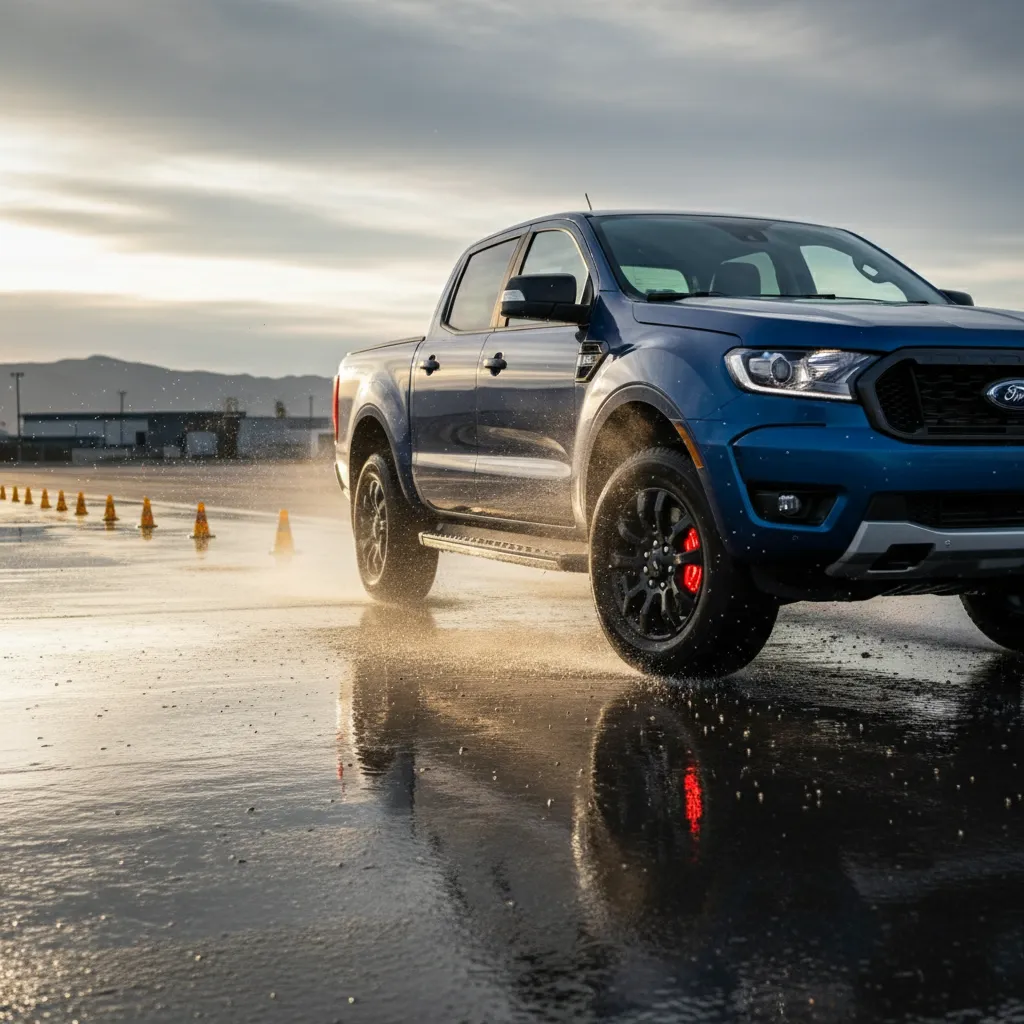
Genuine Ford Brake Components
Genuine Ford Ranger brake pads are OEM-specified friction components designed specifically for the Ford Ranger’s gross vehicle mass and towing capacity. Unlike generic aftermarket alternatives, they guarantee precise fitment, optimal stopping distances under heavy load, and full integration with the vehicle’s ABS and stability control systems, ensuring maximum safety for New Zealand driving conditions.
When piloting a vehicle as capable and substantial as the Ford Ranger, the margin for error in your braking system is non-existent. Whether you are navigating the steep gradients of the Rimutaka Hill, towing a heavy boat to the Coromandel, or managing a payload of trade tools through Auckland traffic, your braking system is the single most critical safety feature you possess. While the market is flooded with aftermarket options claiming to offer equal performance for a lower price, the technical reality often paints a different picture. This guide explores the engineering superiority of Genuine Ford Ranger brake pads and why they remain the only logical choice for owners who value safety, longevity, and performance.
Why do OEM stopping distances matter for the Ford Ranger?
The primary metric for any braking component is its ability to bring the vehicle to a halt safely and predictably. Genuine Ford Ranger brake pads are not developed in isolation; they are engineered as part of a holistic braking ecosystem that includes the calipers, master cylinder, and electronic stability programs.
Ford engineers conduct thousands of hours of testing to determine the precise coefficient of friction required to stop a fully laden Ranger. Aftermarket pads often use a generic friction compound designed to fit multiple vehicle makes and models. While they may physically fit the caliper, they often lack the specific thermal properties required to handle the kinetic energy generated by a Ranger at maximum GVM (Gross Vehicle Mass).
Thermal Dissipation and Brake Fade
One of the most critical aspects of OEM stopping power is resistance to brake fade. When you are descending a long, winding New Zealand road with a trailer, your brakes generate immense heat. Genuine Ford pads utilize high-quality bonding agents and friction materials that maintain structural integrity at high temperatures. Cheaper alternatives often suffer from “glazing” or “gassing out” when overheated, leading to a sudden and terrifying loss of braking power known as brake fade. Genuine parts ensure that the stopping distance remains consistent from the first stop of the day to the last.
Are there low-dust genuine pad options available?
A common misconception is that genuine pads generate excessive dust compared to aftermarket ceramic options. However, Ford’s latest generation of friction materials for the Ranger lineup (including PX2, PX3, and the Next-Gen Ranger) has made significant strides in balancing stopping power with cleanliness.
The engineering challenge lies in the trade-off. Extremely hard ceramic pads produce very little dust but often lack the “initial bite” required for a heavy utility vehicle, especially when cold. Conversely, soft organic pads offer great feel but create black dust. Genuine Ford Ranger brake pads now utilize advanced semi-metallic and hybrid-ceramic formulations. These compounds are specifically designed to:
- Minimize Wheel Soiling: The dust particles produced are less adhesive, meaning they wash off alloy wheels easier than the sticky residue from cheap semi-metallic pads.
- Optimize Cold Bite: Ensuring immediate braking response on frosty NZ mornings without needing heat to build up in the system.
- Extend Rotor Life: A pad that is too hard (often sold as “low dust”) will act like a lathe tool, cutting into your brake rotors and necessitating expensive replacements sooner than necessary.
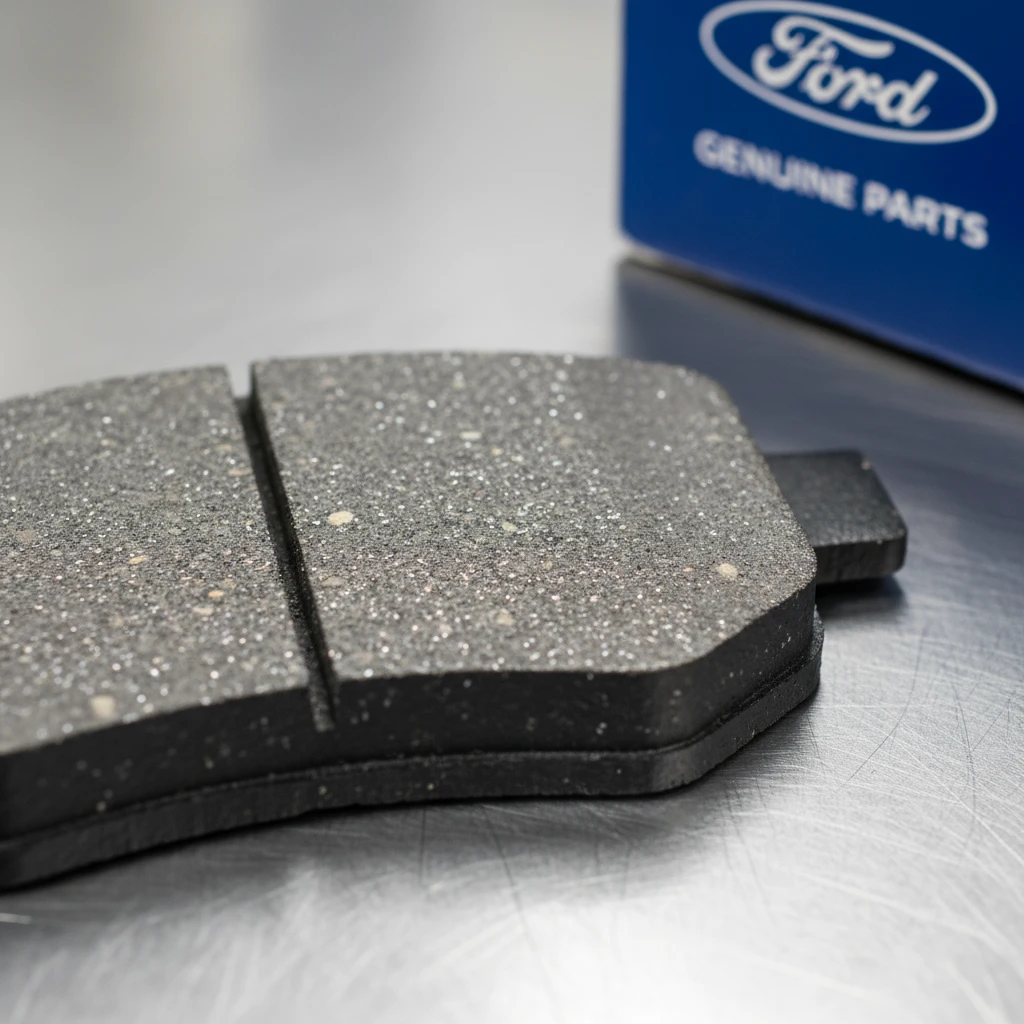
How does aftermarket equipment affect brake wear sensor compatibility?
Modern Ford Rangers are equipped with sophisticated electronics, including brake wear sensors that alert the driver when pad thickness reaches a critical level. This is not a simple mechanical squealer; it is an electronic circuit integrated into the vehicle’s monitoring system.
The Risks of Aftermarket Sensors
Genuine Ford Ranger brake pads come with the correct sensor clips and wire harnesses pre-configured for the specific model year. Aftermarket pads often require you to reuse old sensors (which are usually brittle and break upon removal) or provide generic sensors with incorrect resistance values.
If the resistance value of a brake sensor does not match the ECU’s parameters, it can trigger false warning lights on your dashboard or, worse, fail to alert you when your brakes are dangerously low. Furthermore, the physical fitment of the sensor into the pad backing plate is precise. Loose aftermarket sensors can rattle or dislodge, leading to annoying dashboard errors and potential wire damage.
What is NVH and why does it impact brake choice?
NVH stands for Noise, Vibration, and Harshness. Ford invests heavily in NVH engineering to ensure the Ranger drives with the refinement of a passenger car despite its rugged capabilities. The brake system is a major contributor to NVH if not properly tuned.
Genuine Ford pads feature:
- Chamfered Edges: Precision-cut angles on the pad edges to prevent squealing during light braking.
- Shims and Insulators: Multi-layered shims bonded to the backing plate to dampen high-frequency vibrations that cause squealing.
- Backing Plate Rigidity: High-tensile steel backing plates that do not flex under pressure, ensuring a firm pedal feel.
Cheap aftermarket pads often skip these expensive manufacturing steps, resulting in the dreaded “brake squeal” at traffic lights or a spongy feeling under the foot.
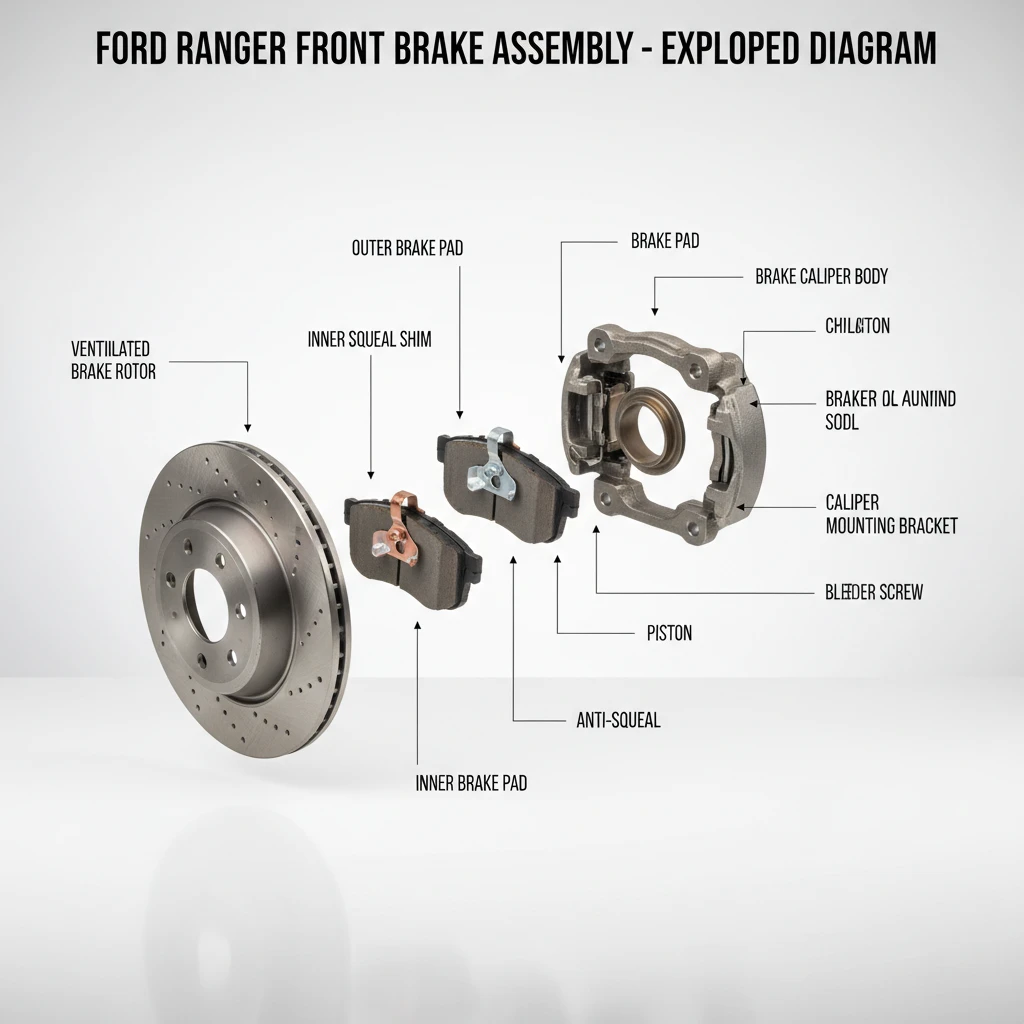
How do genuine pads protect your brake rotors?
Braking is a destructive process; it works by converting kinetic energy into heat through friction. This process wears down both the pad and the rotor (disc). However, the rate of wear should be biased toward the pad, which is a consumable item, rather than the rotor, which is a structural component.
Genuine Ford Ranger brake pads are formulated to be “rotor-friendly.” They provide the necessary friction without being abrasive. Many aftermarket “heavy-duty” pads use aggressive metallic compounds to increase stopping power. While these might stop the truck effectively, they can chew through a set of rotors in half the expected lifespan. By sticking with Genuine Ford parts, you maintain the factory-designed balance of wear, ensuring your service intervals remain predictable and your long-term maintenance costs are minimized.
Why are genuine parts better for New Zealand driving conditions?
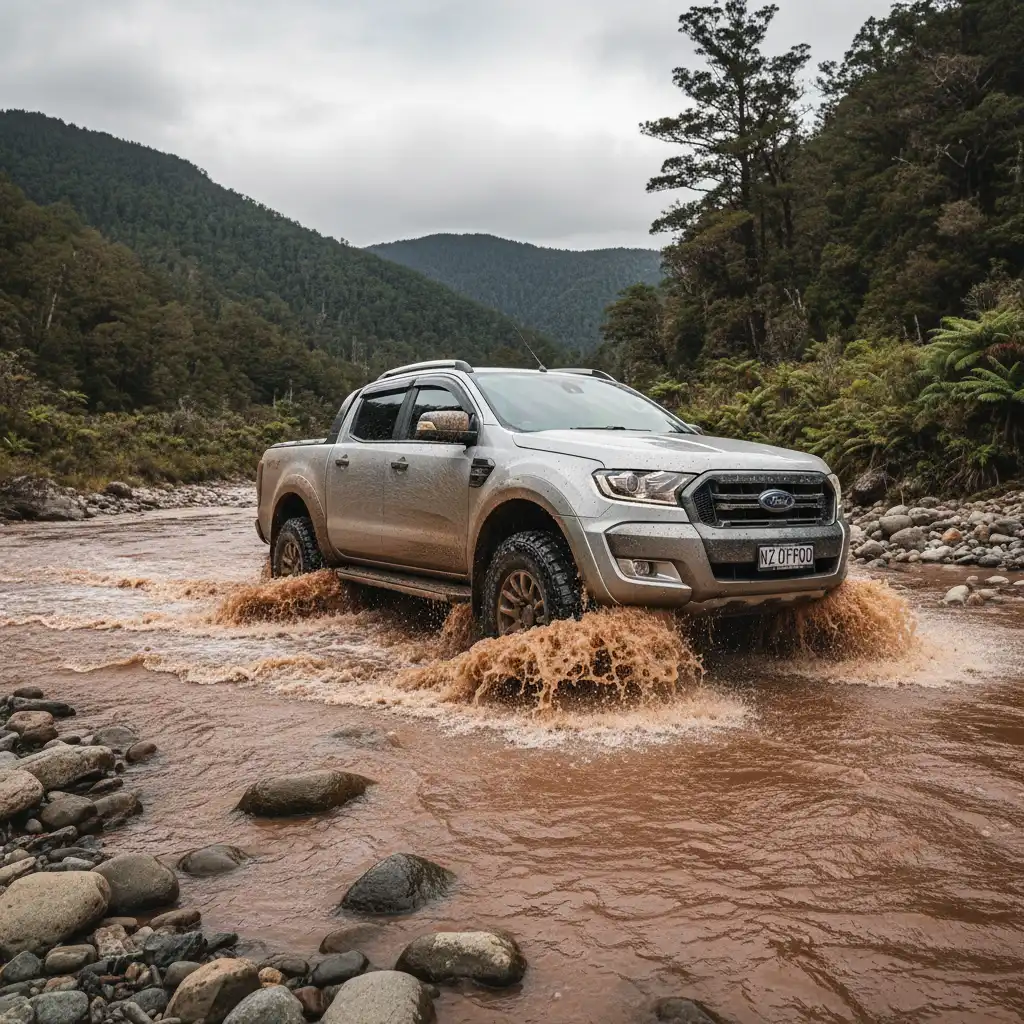
New Zealand offers a unique and challenging environment for vehicles. We have high humidity, coastal salt spray, abrasive volcanic road grit, and significant alpine elevation changes. Genuine Ford parts distributed in the NZ market are engineered to withstand these specific environmental stressors.
Corrosion Resistance
The backing plates on Genuine Ford pads are treated with high-grade anti-corrosion coatings. In coastal areas, untreated aftermarket backing plates can rust, causing the friction material to delaminate (separate) from the steel plate. This is a catastrophic failure mode that results in total brake loss. Ford’s stringent quality control ensures the bond between the friction material and the backing plate can withstand years of exposure to NZ’s wet and salty roads.
Installation and Bedding-In Procedures
Even the best brake pads in the world will fail if not installed and bedded in correctly. When upgrading to new Genuine Ford Ranger brake pads, follow these critical steps:
- Clean the Hardware: Ensure the caliper slide pins are cleaned and lubricated with the correct caliper grease. Seized pins are a leading cause of uneven pad wear.
- Check the Rotors: Never install new pads on heavily grooved or undersized rotors. If in doubt, machine or replace the rotors.
- The Bedding-In Process: This is vital. Once installed, perform a series of moderate stops from 50km/h to 10km/h without coming to a complete stop, allowing the brakes to cool slightly between applications. This transfers a thin layer of friction material onto the rotor surface, establishing the mating relationship and maximizing stopping power.
People Also Ask
How long do Genuine Ford Ranger brake pads last?
On average, Genuine Ford Ranger brake pads last between 40,000km and 70,000km. However, this varies significantly based on driving habits, towing frequency, and terrain. Heavy towing and city driving will accelerate wear, while highway driving extends lifespan.
Can I install Ford Ranger brake pads myself?
Yes, if you have mechanical competency and the correct tools. However, braking systems are safety-critical. If you are unsure about the procedure, specifically regarding the electronic wear sensors or ABS sensors, it is highly recommended to have them installed by a qualified Ford technician.
Are ceramic pads better than Genuine Ford pads for the Ranger?
Not necessarily. While ceramic pads produce less dust, they often lack the cold-bite stopping power required for a heavy vehicle like the Ranger. Genuine Ford pads are a semi-metallic hybrid designed to balance stopping power under load with reasonable dust control and noise suppression.
Do Genuine Ford brake pads come with a warranty?
Yes, Genuine Ford Parts purchased and installed at an authorized dealer typically carry a warranty (often 12 months or 20,000km in NZ, though terms can vary). This covers manufacturing defects, providing peace of mind that aftermarket parts cannot match.
How do I know if my Ford Ranger brake pads are worn out?
Signs include a squealing noise (wear indicator), a grinding sound (metal-on-metal), the brake warning light on the dashboard illuminating, or a noticeable increase in stopping distance. Visual inspection through the wheel spokes can also reveal thin pad material.
Why are Genuine Ford brake pads more expensive than aftermarket?
The price reflects the R&D, higher quality materials, anti-noise shims, and rigorous testing standards required by Ford. While the upfront cost is higher, the value lies in safety, perfect fitment, and extended rotor life, often making them cheaper in the long run.