
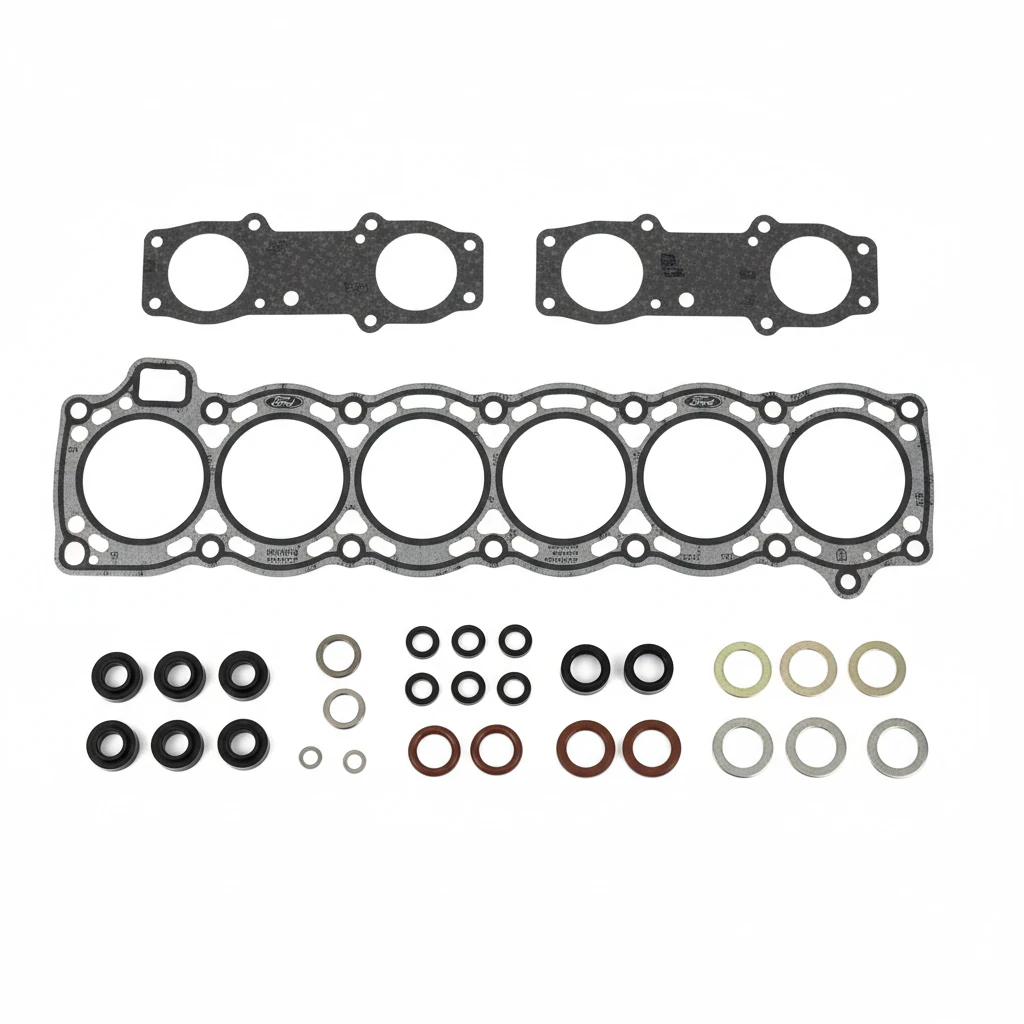
Genuine Ford Gasket Sets
A Genuine Ford Ranger head gasket kit is a comprehensive sealing solution designed specifically for Ford Duratorq 2.2L and 3.2L diesel engines. These kits typically include a graded Multi-Layer Steel (MLS) head gasket, exhaust and intake manifold gaskets, valve stem seals, and necessary O-rings to ensure a factory-specification seal that withstands high compression and thermal cycling.
When your Ford Ranger begins to show signs of internal engine distress—whether it is the dreaded white smoke, coolant loss, or pressurization of the expansion tank—securing the correct sealing components is not just a repair; it is an investment in the longevity of your vehicle. In the demanding New Zealand terrain, where Rangers are often subjected to heavy towing and rugged off-road use, the integrity of your engine’s seals is paramount.
What is Included in a Genuine Ford Ranger Head Gasket Kit?
When sourcing a Ford Ranger head gasket kit, particularly for the PX1, PX2, and PX3 models equipped with the 3.2L 5-cylinder or 2.2L 4-cylinder engines, specificity is key. A genuine kit is not merely a single sheet of metal; it is a curated collection of seals required to reassemble the top end of the engine correctly.
The core component is the Multi-Layer Steel (MLS) head gasket. Unlike older composite gaskets, MLS gaskets are constructed from multiple sheets of spring steel, coated in Viton rubber. This design allows the gasket to accommodate the different expansion rates of the aluminum cylinder head and the cast-iron block—a critical feature for modern diesel engines.
Beyond the head gasket itself, a comprehensive top-end kit (often referred to as a VRS kit in the trade) generally includes:
- Exhaust Manifold Gaskets: Multi-layered steel to withstand extreme turbo temperatures.
- Intake Manifold Gaskets: Molded rubber profiles that seal the plastic manifold to the head.
- Valve Stem Seals: Critical for preventing oil consumption and blue smoke.
- Camshaft Oil Seals: To prevent leaks at the front of the engine.
- Injector Copper Washers and O-rings: Essential for resealing the fuel system, which must be removed to access the head.
- Turbo Gaskets: Interface gaskets for the turbocharger connection.
Signs Your Ford Ranger Head Gasket Has Failed
Early detection of head gasket failure can save you thousands of dollars in cylinder head machining or complete engine replacement. The Ford Ranger 3.2L engine is robust, but like any common rail diesel, it is susceptible to thermal stress.
Common symptoms include:
- Coolant Pressurization: If your coolant hoses feel rock hard or the expansion tank cap hisses violently when opened (even after cooling down), combustion gases are likely leaking into the water jacket.
- Coolant Loss with No Visible Leaks: If you are topping up the reservoir weekly but see no puddles, the engine is likely consuming the coolant.
- Rough Idle on Cold Start: Coolant leaking into a cylinder overnight can cause a misfire for the first few seconds of operation.
- Overheating Under Load: The temperature gauge rising when towing up a hill is a classic sign that the cooling system is compromised by combustion gases.
Understanding Head Gasket Thickness and Grading Notches
One of the most critical technical aspects of purchasing a Ford Ranger head gasket kit is selecting the correct thickness. Diesel engines use graded gaskets to ensure the correct piston-to-valve clearance and compression ratio.
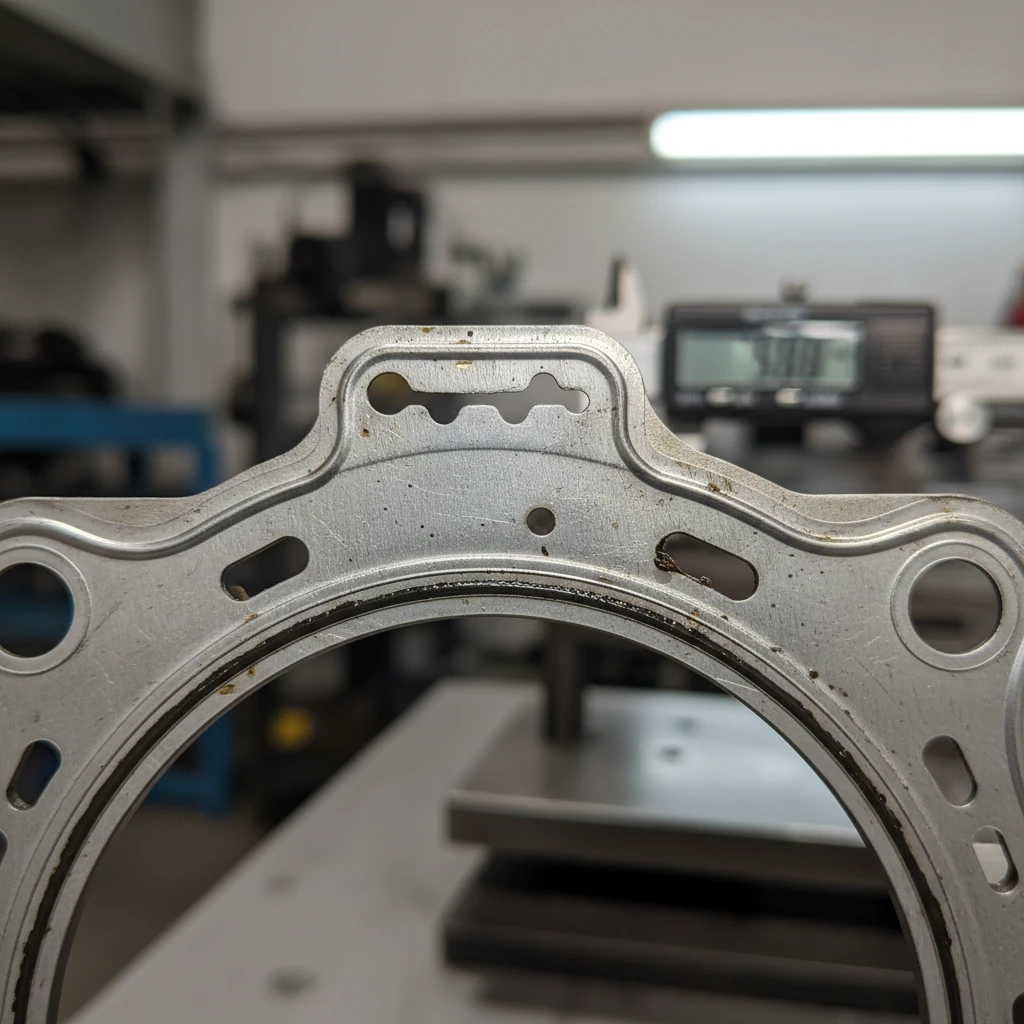
Ford uses a “Notch” or “Hole” system to identify thickness. You cannot simply buy a “standard” gasket. You must match the grade to the piston protrusion height.
How to Identify Your Grade
Look at the tab protruding from the side of your existing head gasket (usually visible near the rear of the engine on the exhaust side without dismantling). You will see a series of holes or notches:
- 1 Notch/Hole: Thin grade (typically for lower piston protrusion).
- 2 Notches/Holes: Medium grade.
- 3 Notches/Holes: Thick grade (often used if the block has been decked or skimmed).
Technical Note: If you are machining the cylinder block face, you must measure the piston protrusion above the deck height to select the correct gasket. Installing a gasket that is too thin can result in catastrophic piston-to-valve contact.
Solving Rocker Cover Gasket Leaks
While the head gasket is the heart of the seal, the rocker cover (or valve cover) gasket is the most common source of external oil leaks on the Ford Ranger PX series. These leaks often manifest as oil dripping down the back of the engine, leading owners to incorrectly suspect a rear main seal failure.
The Injector Seal Issue
On the 3.2L and 2.2L Duratorq engines, the rocker cover gasket is not just a perimeter seal; it includes seals for the fuel injectors which pass through the cover. If these seals fail, oil can fill the injector wells, or conversely, combustion blow-by can pressurize the crankcase if the copper washer at the base of the injector fails.
When replacing the rocker cover gasket, it is mandatory to replace the injector copper washers and the clamp bolts. Genuine Ford rocker cover gaskets are made from high-grade Viton which resists the hardening effects of heat cycles better than cheap silicone alternatives found in budget aftermarket kits.
When Do You Need a Full Engine Overhaul Gasket Set?
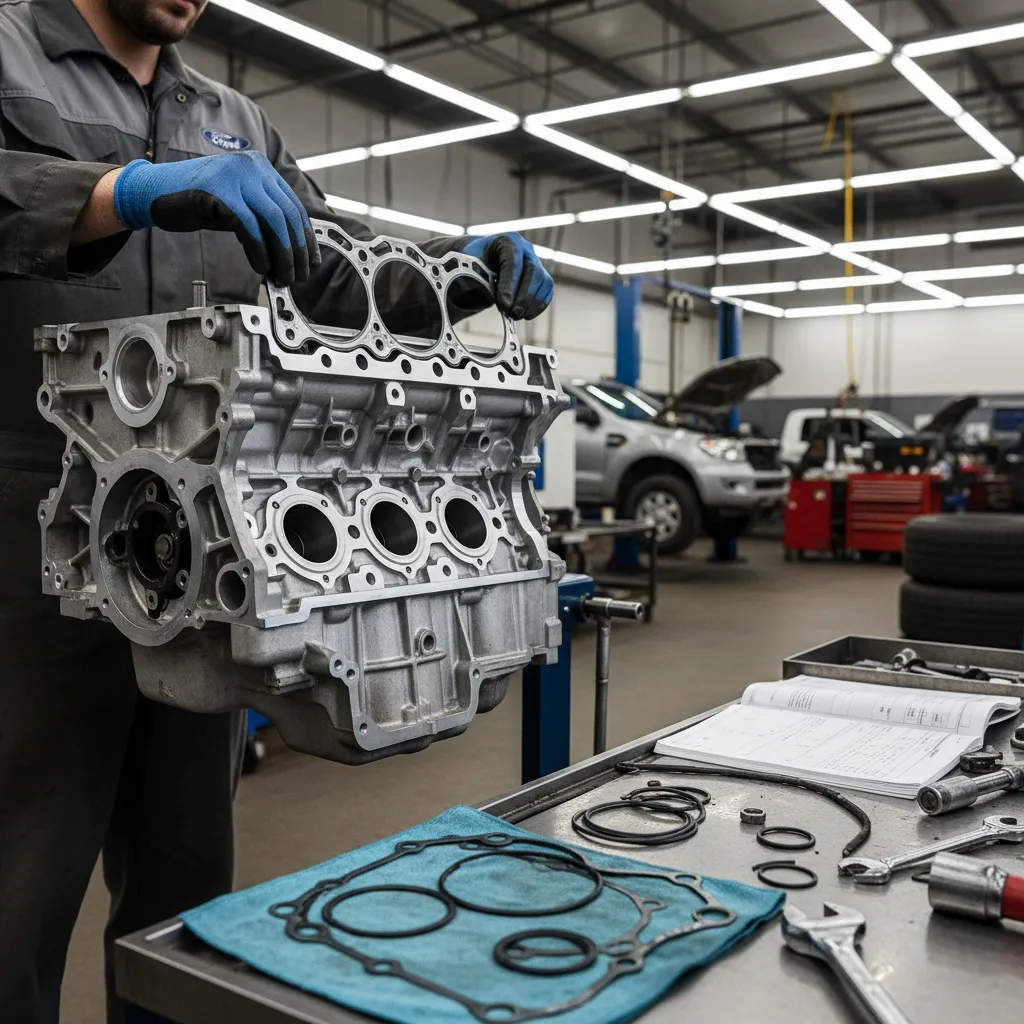
A full engine overhaul gasket kit is distinct from a head gasket kit. While the head set covers the “top end,” a full overhaul set covers the entire engine, bottom to top. This is the required purchase for a complete engine rebuild, typically following a spun bearing or a cracked piston.
A Full Overhaul Kit typically adds:
- Sump (Oil Pan) Gasket or Silicone Sealant: Ford Rangers often use a specific RTV sealant for the sump, but some kits include specific seals for the pickup tube.
- Front and Rear Crankshaft Seals: Essential for sealing the rotating assembly.
- Oil Cooler Gaskets: The oil cooler is a common leak point; these O-rings are vital.
- Timing Cover Seals: To seal the front case where the timing chain/belt resides.
- Water Pump Gasket: Usually a metal or paper composite seal.
The Critical Importance of Rear Main Seal Replacement
The rear main seal is located behind the flywheel or flexplate. Replacing it requires removing the transmission, making it a labor-intensive job. Consequently, if you are performing a clutch replacement or an engine rebuild, replacing the rear main seal is a non-negotiable preventative measure.
Installation Depth Matters
Genuine Ford rear main seals often come with a plastic installation sleeve. This sleeve is designed to guide the delicate lip of the seal over the crankshaft flange without folding it back. A folded lip will result in an immediate and severe oil leak.
Furthermore, the depth of installation is critical. If the crankshaft has a wear groove from the old seal, the new seal should be positioned slightly differently (if the design allows) or a repair sleeve (Speedi-Sleeve) may be required. Genuine seals are designed with specific dust lips to prevent grit from entering the sealing area, a feature often missing on budget variants.
Why Choose Genuine Ford Parts Over Aftermarket?
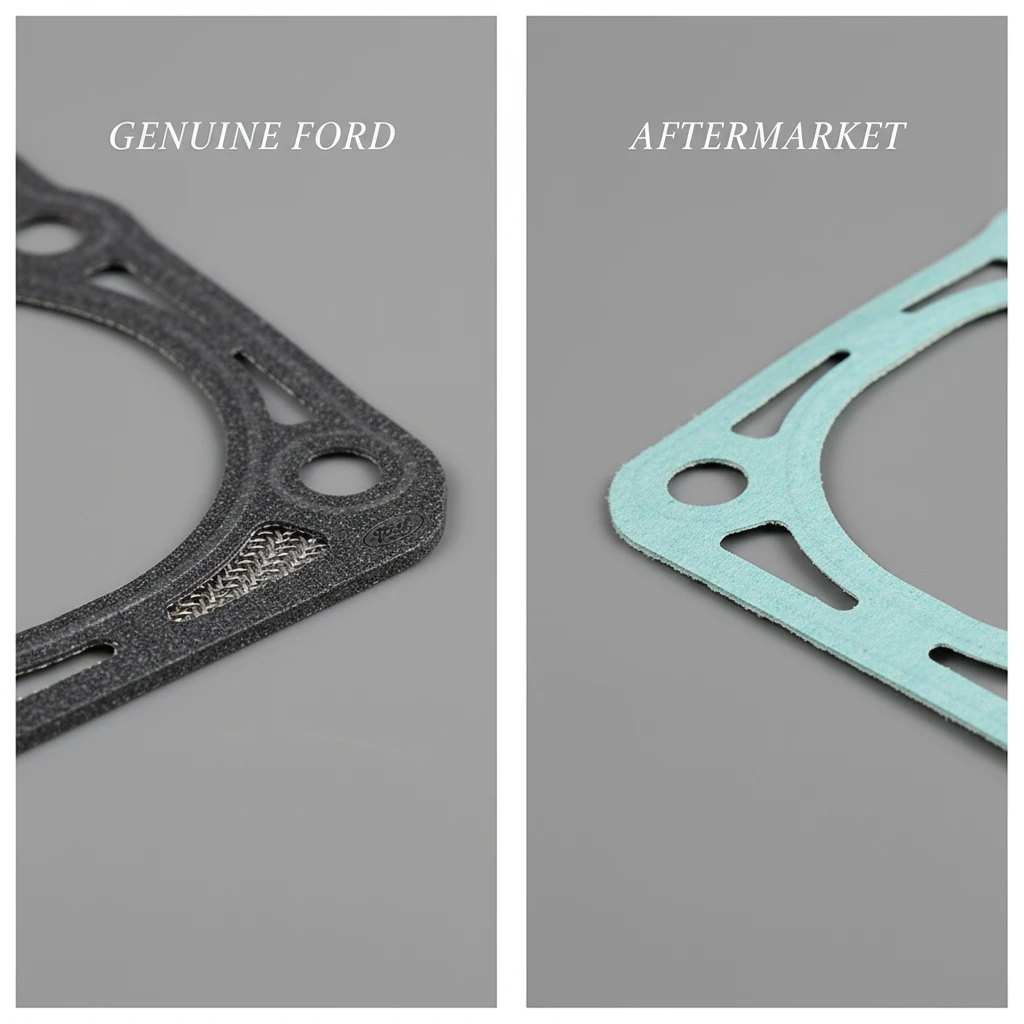
In the world of engine gaskets, the phrase “you get what you pay for” is practically a physical law. The price difference between a Genuine Ford Ranger head gasket kit and a generic aftermarket copy can be significant, but the cost of failure is far higher.
Material Science Differences
1. Viton vs. Standard Rubber: Genuine Ford gaskets utilize high-grade Viton for O-rings and seals. Viton maintains its elasticity at temperatures exceeding 200°C. Cheaper rubber hardens and becomes brittle, leading to leaks within 12-24 months.
2. MLS Coating Quality: The black coating on an MLS head gasket is a micro-sealant. On genuine parts, this coating is applied precisely to fill surface imperfections on the block and head. On low-quality parts, this coating often flakes off or is applied unevenly, leading to coolant migration.
3. Precise Tolerances: A graded head gasket with 2 notches from Ford is manufactured to an exact micron tolerance. An aftermarket “2 notch” gasket may vary slightly in compressed thickness. In a high-compression diesel engine, this variance can alter combustion efficiency or risk valve contact.
Technical Installation Tips for Ford Ranger Gaskets
To ensure your Ford Ranger head gasket kit performs as intended, follow these professional installation protocols:
- Surface Finish (Ra): The cylinder head and block surface must be smooth. For MLS gaskets, a surface finish of 30-60 Ra is recommended. If the surface is too rough, the gasket cannot seal combustion gases.
- Clean Threads: Always clean the head bolt threads in the block. Debris or oil in the holes can create a “hydraulic lock,” giving a false torque reading while leaving the head loose.
- New Head Bolts: Ford Ranger cylinder head bolts are “Torque-to-Yield” (TTY). They stretch permanently when torqued. You must use new bolts every time. Reusing old bolts will lead to gasket failure.
- Torque Sequence: Follow the specific tightening sequence (usually a spiral pattern from the center out) and the multi-stage torque specs (e.g., Torque, then 90 degrees, then another 90 degrees).
People Also Ask
How much does a Ford Ranger head gasket repair cost?
In New Zealand, a professional head gasket repair for a Ford Ranger typically costs between $3,500 and $6,000 NZD. This price includes the Genuine Ford gasket kit, cylinder head machining (or replacement if cracked), new head bolts, fluids, and significant labor hours (usually 15-20 hours).
Can you reuse a Ford Ranger head gasket?
No, you cannot reuse a Ford Ranger head gasket. Once the head bolts are torqued, the Multi-Layer Steel (MLS) gasket crushes to form a seal. If the tension is released, the gasket loses its ability to seal again. Always install a new Genuine Ford gasket kit.
What causes head gasket failure in Ford Ranger 3.2 diesel?
The most common cause is EGR cooler failure, which leaks coolant into the cylinders, or general overheating due to a blocked radiator or failed thermostat. The 3.2L engine runs hot, and thermal expansion can eventually breach the gasket seal if the cooling system is not maintained.
Do I need to replace head bolts when changing the gasket?
Yes, absolutely. Ford Ranger head bolts are Torque-to-Yield (TTY) bolts. They are designed to stretch during installation to provide consistent clamping force. Once stretched, they cannot return to their original length and will snap or fail to hold torque if reused.
How do I know which thickness head gasket to buy for my Ranger?
You must check the “notches” or “holes” on the tab of your old head gasket. These indicate the thickness grade (1, 2, or 3 notches). If you are replacing the engine block or rotating assembly, you must measure piston protrusion to calculate the correct grade required.
Is it better to buy a VRS kit or individual gaskets?
Buying a VRS (Valve Regrind Set) or head gasket kit is significantly more cost-effective and safer. It ensures you have every seal required for the job, including manifold gaskets and valve stem seals, which should always be replaced when the head is removed.