
Genuine Ford Sensors (MAF, MAP, O2)
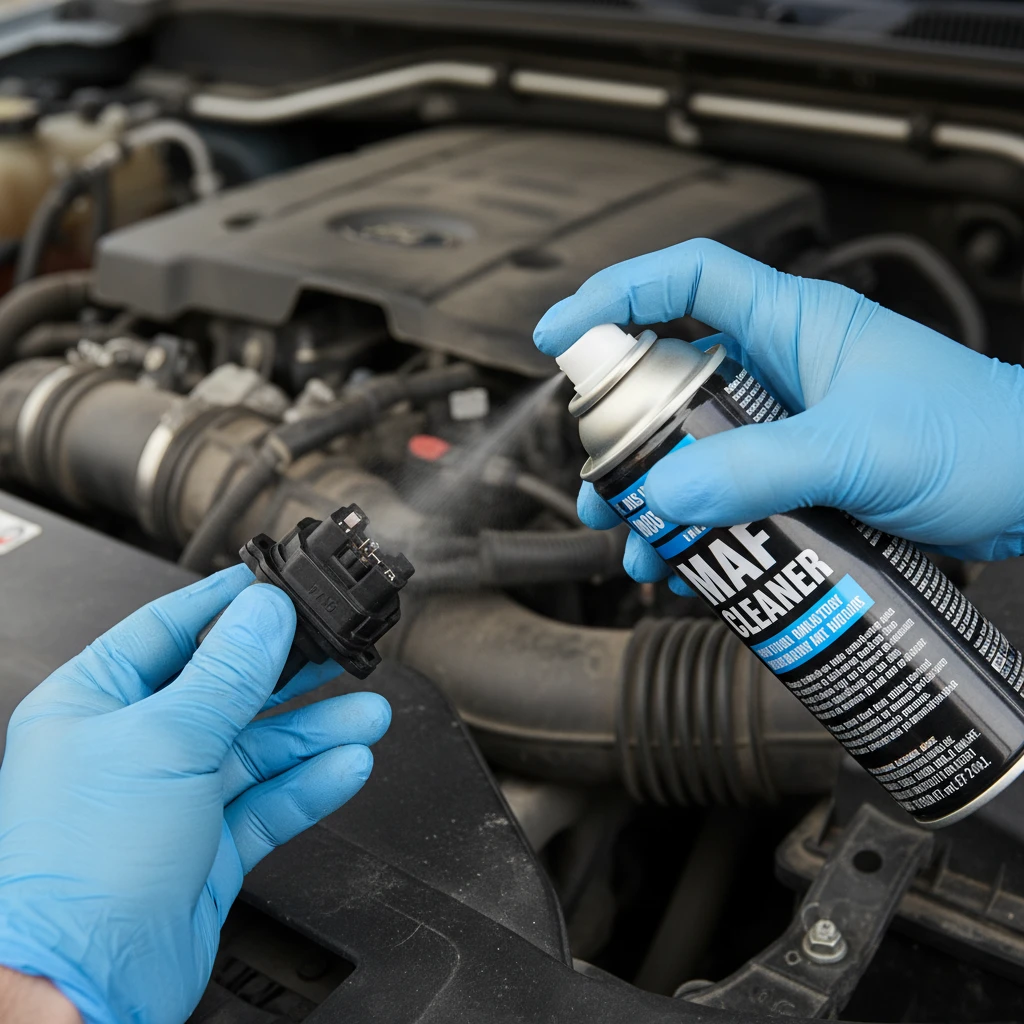
To clean a Ford Ranger MAF sensor, first disconnect the battery and locate the sensor on the air intake box. Remove the two Torx screws and carefully pull the sensor out. Spray the delicate wire element generously with specialized Mass Air Flow Sensor Cleaner (do not touch it). Let it dry completely for 20 minutes before reinstalling to resolve rough idling and fuel efficiency issues.
For Ford Ranger owners in New Zealand, dealing with a rough idle, hesitation under acceleration, or the dreaded Check Engine Light is often a rite of passage. While the Ford Ranger (specifically the PX1, PX2, and PX3 models) is built tough for our terrain, its engine management system relies on highly sensitive electronics. The Mass Air Flow (MAF) sensor is frequently the culprit, but it is just one part of a triad of critical components including the Manifold Absolute Pressure (MAP) and Oxygen (O2) sensors.
Step-by-Step: Ford Ranger MAF Sensor Clean Guide
Before assuming you need to spend money on parts, cleaning the MAF sensor is a logical first step. The Ford Ranger 3.2L and 2.2L diesel engines breathe in a significant amount of air, and despite the air filter, fine dust and oil vapor from the PCV system can coat the MAF sensor element. This coating insulates the sensor, causing it to send sluggish or incorrect data to the Powertrain Control Module (PCM).
Required Tools:
- T-20 Security Torx Bit (or standard Torx depending on the model year).
- Can of specific Mass Air Flow Sensor Cleaner (Do not use brake cleaner or carburetor cleaner as these can melt the plastic housing or damage the coating on the wire).
- Clean shop towel.
The Cleaning Process
- Safety First: Ensure the engine is cool and the ignition is off. It is best practice to disconnect the negative terminal of the battery to reset the ECU learning values while you work.
- Locate the Sensor: On the Ford Ranger, the MAF is located on the airbox lid, just after the air filter and before the intake pipe turns toward the turbo.
- Disconnect Wiring: Depress the tab on the electrical connector and wiggle it off gently. Do not pull by the wires.
- Remove Hardware: Unscrew the two Torx screws holding the sensor into the housing.
- Extraction: Pull the sensor straight up. You will see a small bulb (thermistor) and wire filaments inside a plastic cage.
- Apply Cleaner: Hold the sensor over a rag. Spray the cleaner liberally onto the wire elements and the amber-colored bulb. Spray from multiple angles to remove the black soot or grey dust. CRITICAL: Never touch the wires with a brush, pick, or your fingers. They are microscopic and will snap.
- Drying Time: This is the most skipped step. Allow the sensor to air dry for at least 15 to 20 minutes. Any liquid remaining can cause a short circuit when power is reapplied.
- Reassembly: Reinstall the sensor, tighten screws (do not overtighten as the plastic cracks easily), and reconnect the harness.
Cleaning vs. Replacing: When is Cleaning Not Enough?
Cleaning the MAF sensor is maintenance, not a miracle cure. While it can resolve issues caused by contamination (dust, oil, pollen), it cannot fix an electronic failure. Understanding the distinction is vital for New Zealand Ranger owners who may be miles from the nearest service station.
When Cleaning Works
Cleaning is effective when the sensor is “drifted” but functional. This means the sensor is reading air flow, but the reading is slightly skewed due to insulation from dirt. Symptoms usually include a slight decrease in fuel economy (L/100km increasing) or a minor hesitation when taking off from traffic lights.
When You Must Replace
If the internal circuitry of the sensor has failed, no amount of cleaner will fix it. Signs that you need a replacement include:
- Permanent Fault Codes: Codes that return immediately after clearing.
- Zero Reading: Using an OBDII scanner, the MAF reads 0 g/s while the engine is running.
- Limp Mode: The vehicle refuses to rev past 2500 RPM or lacks boost entirely.
- Physical Damage: If the wire filament is broken or the plastic housing is cracked.
Why Aftermarket Sensors Cause Fault Codes
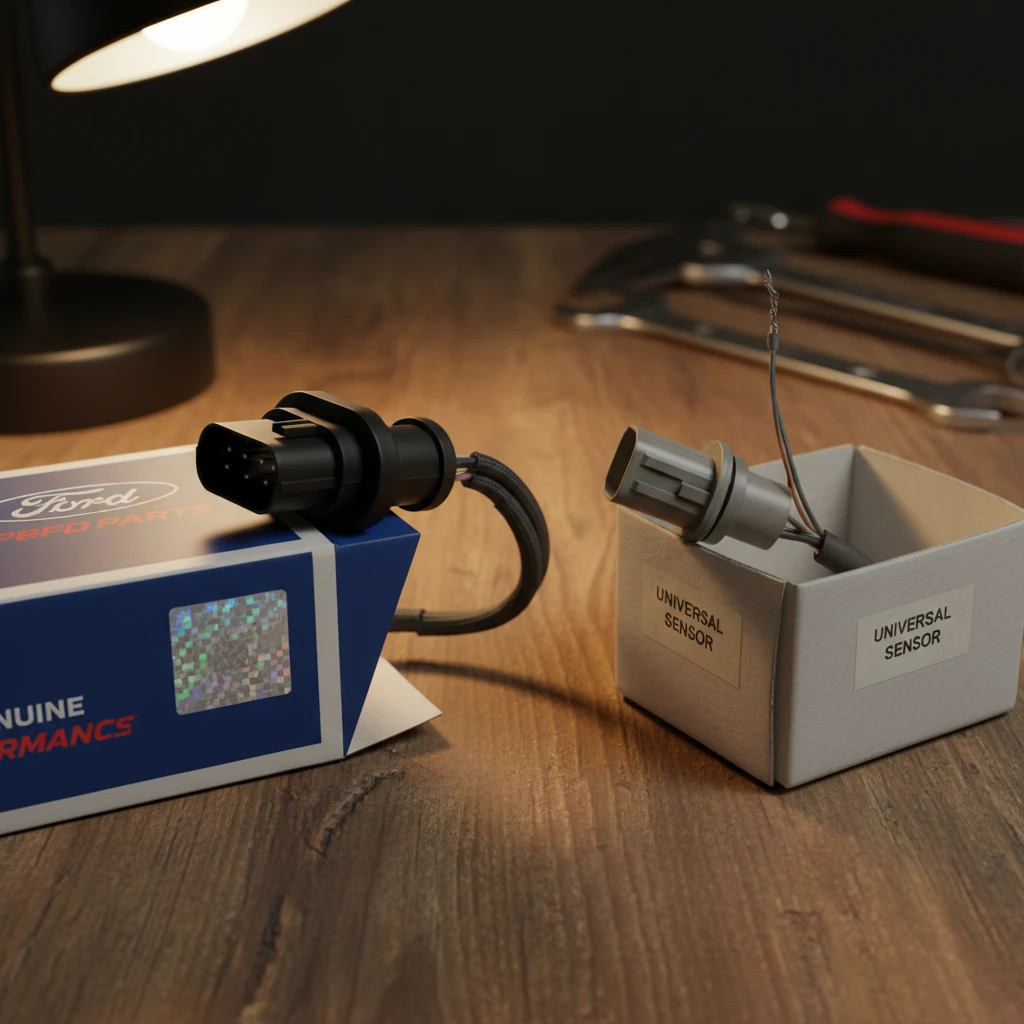
In the New Zealand market, there is a flood of cheap, “white box” sensors available online. While the price difference between a $40 aftermarket sensor and a Genuine Ford sensor is tempting, it is often a false economy, particularly for the Ranger.
The Voltage Tolerance Issue
The Ford Ranger PCM (Powertrain Control Module) operates with extremely tight voltage tolerances. A Genuine Ford MAF sensor might operate on a specific frequency or voltage curve that corresponds exactly to the airflow. Aftermarket sensors often use cheaper resistors and circuit boards that provide a signal that is “close enough” for some cars, but not for the Ranger.
If the PCM expects 1.2V at idle and the aftermarket sensor sends 1.4V, the computer assumes more air is entering the engine. It adds more fuel, causing the engine to run rich, smoke, and eventually clog the DPF (Diesel Particulate Filter). This can lead to repair bills in the thousands, all to save $100 on a sensor.
Durability in NZ Conditions
New Zealand driving conditions involve high humidity, coastal salt spray, and dusty metal roads. Genuine Ford sensors are tested to withstand these thermal cycles and vibrations. Cheap knock-offs often fail due to solder fatigue on the internal circuit boards when subjected to the vibration of a diesel engine.
Location Guide: MAF, MAP, and O2 Sensors
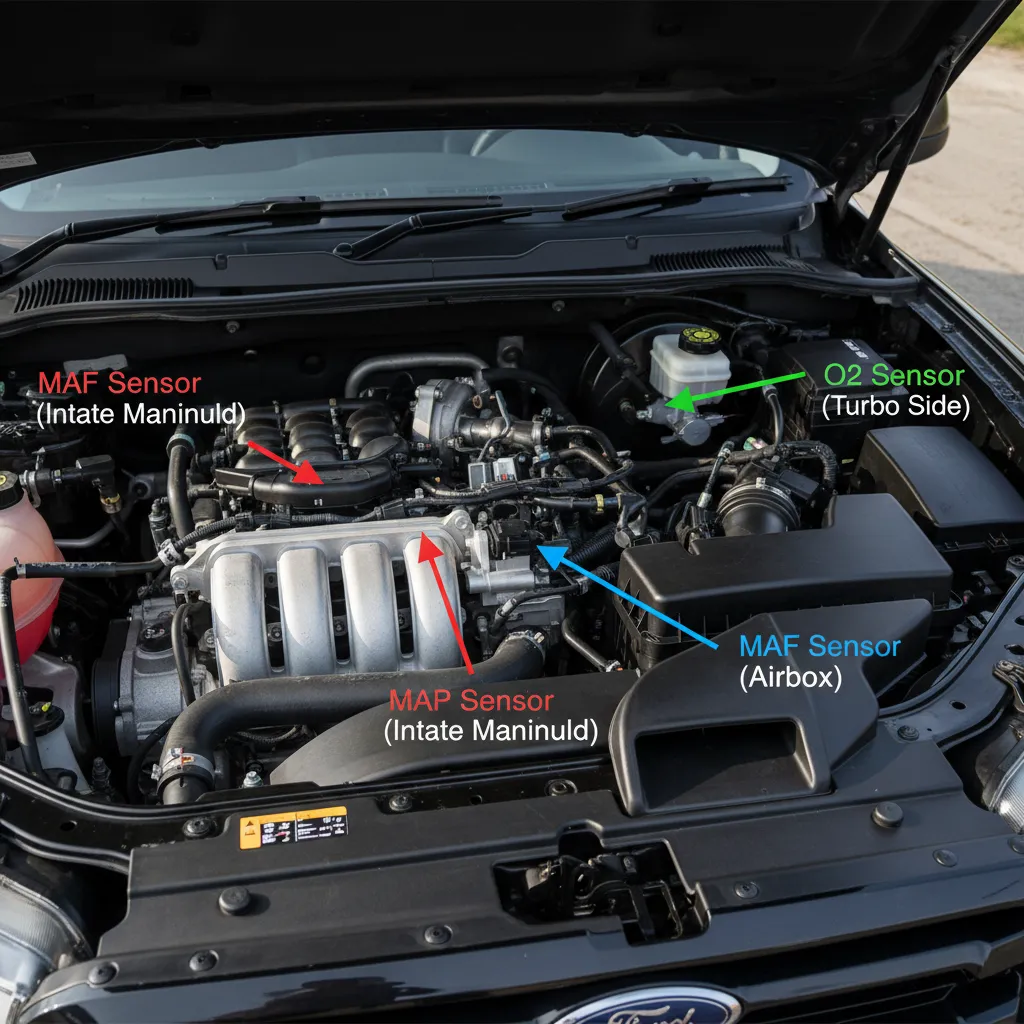
To maintain your Ranger, you need to know where these components are located. The 3.2L Duratorq and 2.0L Bi-Turbo engines have slightly different layouts, but the general principles remain the same.
1. Mass Air Flow (MAF) Sensor
Location: Attached to the lid of the air filter box on the passenger side (NZ RHD models) of the engine bay.
Function: Measures the mass of air entering the intake to calculate fuel injection quantity.
2. Manifold Absolute Pressure (MAP) Sensor
Location: Usually located on the top of the intake manifold, near the back of the engine, or on the hard plastic intercooler piping coming from the intercooler to the engine intake.
Function: Measures boost pressure and intake temperature. If this is clogged with soot from the EGR system, the turbo may not spool correctly.
3. Oxygen (O2) / Lambda Sensor
Location: Screwed into the exhaust system. The primary sensor (upstream) is located in the dump pipe immediately after the turbocharger but before the catalytic converter/DPF.
Function: Measures the oxygen content in the exhaust to determine if the engine is running rich or lean.
Technical Deep Dive: How These Sensors Govern Your Ranger
Understanding the physics behind these genuine parts highlights why precision is required.
The Hot Wire Principle (MAF)
The MAF sensor in a Ford Ranger uses a “hot wire” mechanism. The sensor electrically heats a tiny wire filament to a constant temperature above the ambient air temperature. As air flows past the wire, it cools it down. The sensor must increase the electrical current to maintain the wire’s temperature. The ECU measures this current change to calculate exactly how much air is entering the engine. Cheap sensors often have inconsistent heating elements, leading to erratic airflow data.
The Impact of Soot on MAP Sensors
Because modern Rangers use Exhaust Gas Recirculation (EGR), exhaust soot enters the intake manifold. This soot mixes with oil vapor from the crankcase ventilation to form a sticky sludge. The MAP sensor often gets caked in this sludge. Unlike the MAF, the MAP sensor can be carefully cleaned if the port is blocked, but extreme care must be taken not to poke the pressure diaphragm inside.
Wideband O2 Sensors
The upstream O2 sensor in a Ranger is typically a “wideband” sensor (Air/Fuel Ratio sensor). Unlike older narrowband sensors that just switched between rich and lean, a wideband sensor tells the ECU exactly how rich or lean the mixture is. This is critical for DPF regeneration. If the O2 sensor is faulty, the DPF may fail to regenerate, blocking the exhaust.
Troubleshooting Common Fault Codes
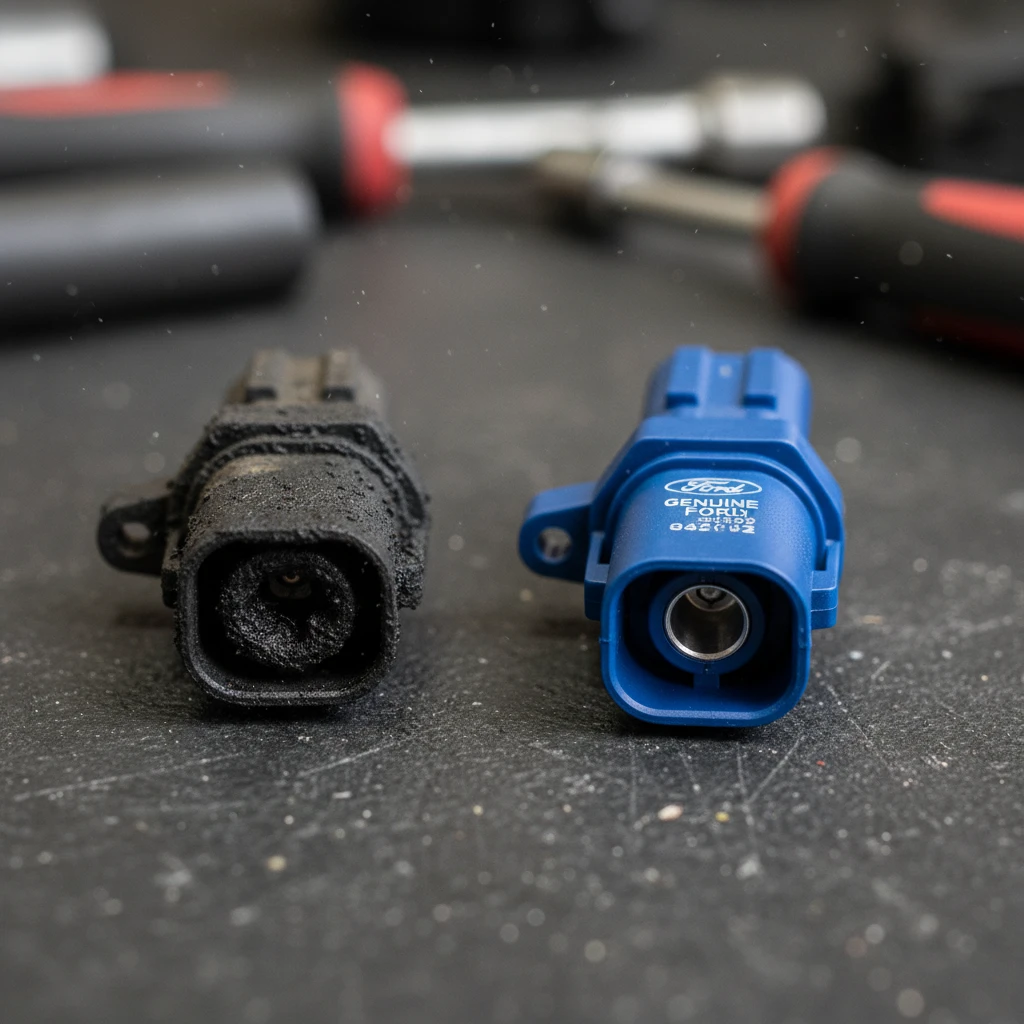
When your Ranger throws a fit, it usually communicates via DTCs (Diagnostic Trouble Codes). Here are the most common codes related to these sensors:
- P0101 – Mass or Volume Air Flow Circuit Range/Performance: The sensor is working, but the data doesn’t make sense compared to engine RPM and throttle position. Usually indicates a dirty sensor or a vacuum leak.
- P0102 – Mass or Volume Air Flow Circuit Low Input: The signal is too low. Check for a disconnected plug or broken wire.
- P0103 – Mass or Volume Air Flow Circuit High Input: The signal is too high. Often indicates a short to power or a failed aftermarket sensor.
- P0299 – Turbocharger Underboost: While this sounds like a turbo issue, it is often caused by a faulty MAP sensor reading lower pressure than actually exists.
- P0130/P0135 – O2 Sensor Circuit Malfunction: Indicates the heating element in the O2 sensor has failed or the sensor tip is fouled.
Conclusion
Your Ford Ranger is a sophisticated machine that relies on accurate data to perform in New Zealand’s rugged conditions. While learning how to clean a Ford Ranger MAF sensor is a valuable skill that can save you from a rough idle, recognizing when to replace the part is equally important. When replacement is necessary, opting for Genuine Ford sensors ensures that your ute retains its factory performance, fuel economy, and reliability. Do not risk your engine or DPF system with substandard aftermarket electronics.
How often should I clean my Ford Ranger MAF sensor?
It is recommended to clean the MAF sensor every time you change your air filter, typically every 15,000km to 20,000km. If you drive frequently on dusty metal roads or use an oiled aftermarket air filter (like K&N), you should clean it more frequently, perhaps every 10,000km.
Can I use brake cleaner to clean a MAF sensor?
No, absolutely not. Brake cleaner is too harsh and can melt the plastic housing and strip the protective coating off the delicate sensor wires. Always use a dedicated Mass Air Flow Sensor Cleaner which is designed to evaporate without leaving a residue.
What are the symptoms of a bad MAP sensor on a Ford Ranger?
Common symptoms include a lack of power (especially under load), black smoke from the exhaust, rough idling, and the engine going into “limp mode.” You may also see the check engine light with codes related to boost pressure.
Where is the O2 sensor located on a Ford Ranger PX2?
The primary (upstream) O2 sensor is located on the exhaust dump pipe, right after the turbocharger outlet. It is best accessed through the wheel arch (with the liner removed) or from underneath the vehicle.
Will disconnecting the battery reset the MAF sensor?
Disconnecting the battery for 15-30 minutes will reset the ECU’s “learned values” or fuel trims. This forces the computer to relearn the airflow data from the clean (or new) sensor. It is a recommended step after cleaning or replacing sensors.
Why does my Ranger have a rough idle after cleaning the MAF?
If the idle is rough immediately after cleaning, the sensor may not be completely dry, causing a short. Alternatively, you may have touched and damaged the wires, or there is a vacuum leak because the sensor O-ring was not seated correctly during reinstallation.