
Ford Ranger model differences are primarily categorized by chassis codes: PJ/PK (2006–2011), the Global T6 platform comprising PX1 (2011–2015), PX2 (2015–2018), and PX3 (2018–2022), and the Next-Gen RA (2022+). Identification relies on distinct front fascia designs, engine configurations (from the 3.2L Duratorq to the 2.0L Bi-Turbo), and specific VIN character sequences.
Introduction to Ford Ranger Taxonomy
For mechanics, enthusiasts, and fleet managers in New Zealand and Australia, the Ford Ranger is more than just a utility vehicle; it is a technical benchmark. However, the evolution of the Ranger—specifically the transition through the T6 “PX” series—has created a complex taxonomy that can confuse even seasoned professionals. Identifying the correct model code is not merely academic; it is critical for sourcing genuine parts, performing diagnostics, and understanding the mechanical capabilities of the specific unit in your bay.
While the badge may always say “Ranger,” the internal architecture has shifted radically from the mazda-shared platforms of the mid-2000s to the sophisticated, tech-heavy machines of the RA generation. This guide serves as the definitive technical resource for identifying Ford Ranger model differences, focusing on the Global T6 platform that dominates the ANZ market.
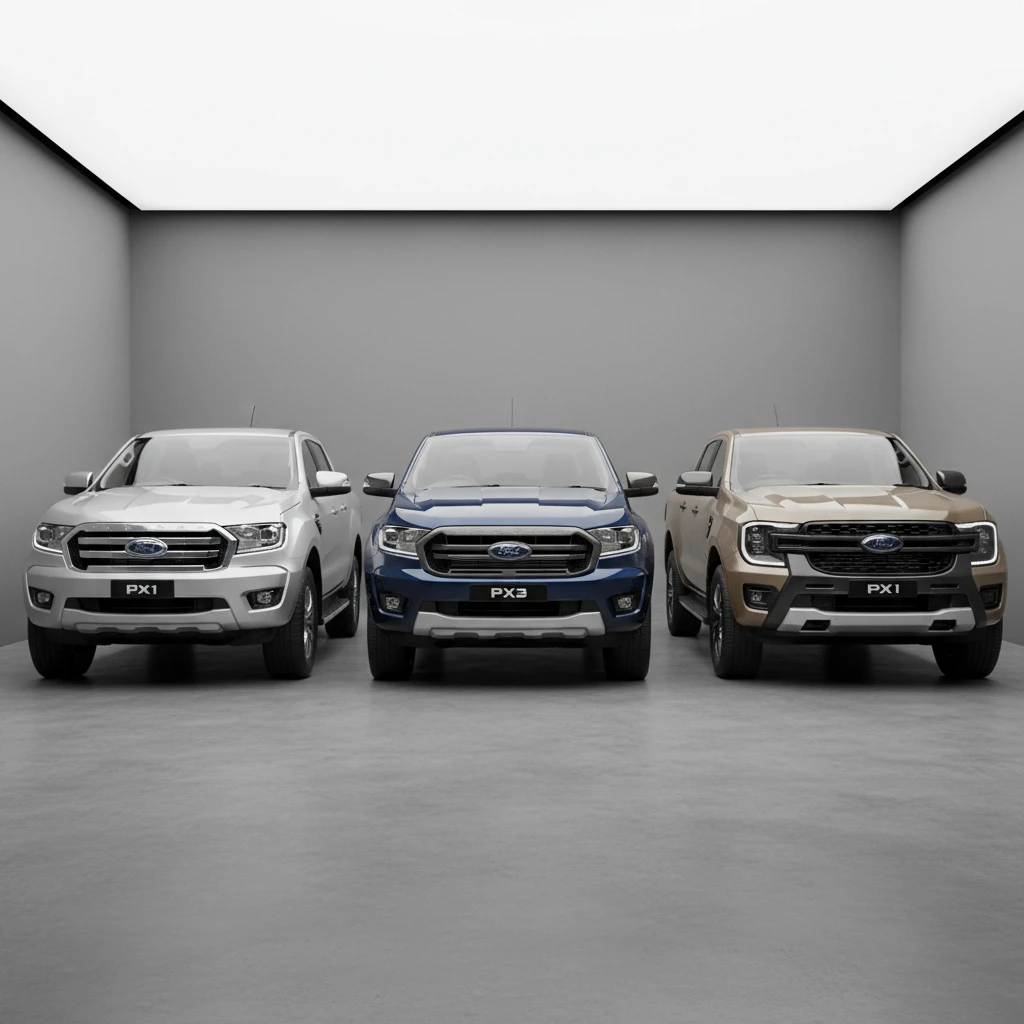
Visual Identification of Ranger Generations
The most immediate way to distinguish between Ranger models is through the front fascia. Ford’s design language evolved to reflect changing safety standards and aesthetic trends. Here is how to identify them at a glance.
The PJ & PK Series (2006 – 2011)
Before the T6 revolution, the Ranger was a mechanical twin to the Mazda BT-50. These trucks are smaller, boxier, and purely utilitarian.
- PJ (2006-2009): Characterized by a large, rectangular chrome grille with two horizontal bars. The headlights are large and square.
- PK (2009-2011): A facelift of the PJ. The grille became slightly more rounded with three horizontal bars, and the front bumper was redesigned for a more aggressive look. The tail lights on the PK also feature clear lenses compared to the PJ’s red/amber configuration.
The T6 Platform: PX1 (MkI) (2011 – 2015)
The introduction of the T6 platform marked the separation from Mazda and the beginning of the Ranger’s dominance. The PX1 is visually distinct from its successors.
- Headlights: Smaller, rectangular halogen units. They do not wrap around the fender as aggressively as later models.
- Grille: A wide, horizontal three-bar grille (often chrome on XLT/Wildtrak). The Ford oval is prominently centered.
- Fog Lights: Round fog lights set into a black plastic surround in the lower bumper.
- Interior: Features a smaller, dot-matrix display or a basic 4.2-inch color screen. The dashboard is utilitarian with many physical buttons.
The T6 Platform: PX2 (MkII) (2015 – 2018)
The PX2 was a major facelift that introduced significant technological upgrades, including Electric Power Assisted Steering (EPAS).
- Headlights: Much slimmer and more angular than the PX1. This generation introduced projector lenses in higher trims (XLT/Wildtrak) but retained halogens for lower trims.
- Grille: The grille shape changed to a hexagonal/trapezoidal design that connects directly to the headlights, creating a “smiling” or more integrated appearance.
- Interior: A massive leap forward with the introduction of the SYNC 2 and later SYNC 3 infotainment systems (8-inch touchscreen) and a dual-TFT instrument cluster in high-spec models.
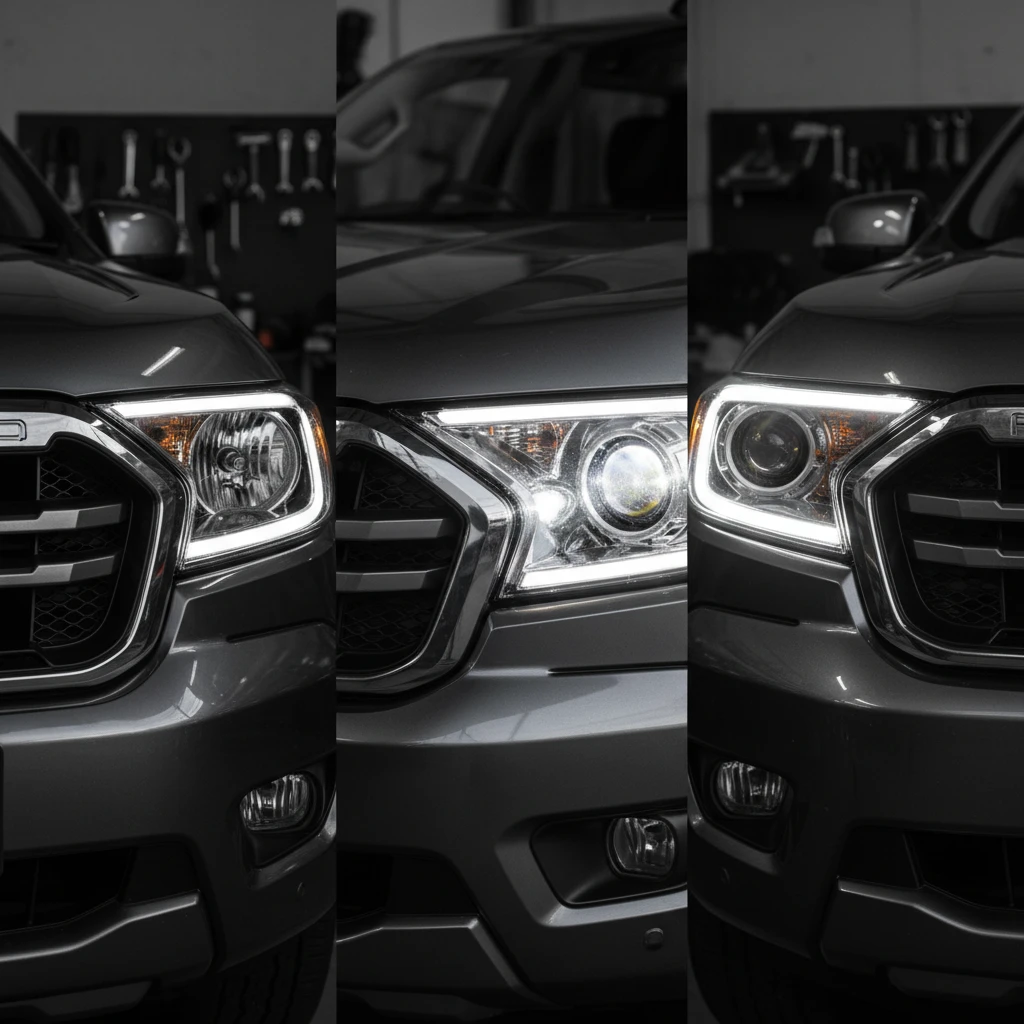
The T6 Platform: PX3 (MkIII) (2018 – 2022)
The final iteration of the T6 platform, the PX3, refined the aesthetic and introduced the Bi-Turbo engine option.
- Grille: The most obvious tell. The grille features a distinct “split” horizontal bar design. The center bar is often thinner and splits into two as it reaches the Ford badge.
- Headlights: High-spec models (Wildtrak/Raptor) feature HID or LED headlights with a distinct square LED Daytime Running Light (DRL) signature surrounding the projector.
- Bumper: The lower bumper intake is wider and more distinct, separating the fog lights further.
- Tailgate: Introduction of the “Easy Lift” tailgate (torsion bar assist) on many models.
Next-Gen RA (2022 – Present)
The RA Ranger shares the updated T6.2 chassis but looks completely different.
- C-Clamp Headlights: The signature design element. The LED DRLs form a “C” shape around the main beams.
- Boxy Stance: The truck is 50mm wider, giving it a squarer, more F-150-inspired look.
- V6 Badge: The presence of a side vent badge reading “V6” immediately identifies the new 3.0L diesel models.
Engine Code Variations by Year
Identifying the engine under the bonnet is crucial for ordering filters, injectors, and internal components. Ford’s engine nomenclature can be tricky, as displacements overlap between generations.
2.2L Duratorq TDCi (P4AT)
Found in: PX1, PX2, PX3 (XL/XLS trims)
The workhorse of the fleet market. This 4-cylinder turbo diesel is robust but saw changes in injection pressure and turbo geometry between PX1 and PX2.
- PX1 Output: 110kW / 375Nm. Uses a variable geometry turbo (VGT).
- PX2/3 Output: 118kW / 385Nm. Upgraded injectors and mapping for better efficiency.
- Identification: Look for the “Duratorq” cover. The oil filter is a cartridge element located near the front passenger side of the engine bay.
3.2L Duratorq TDCi (P5AT)
Found in: PX1, PX2, PX3
The engine that built the Ranger’s reputation. A 5-cylinder inline turbo diesel known for its towing torque.
- Specs: 147kW / 470Nm.
- Evolution: While the block remained largely the same, the fuel injection system and EGR cooler designs were revised in the PX2 update to meet Euro 5 standards. PX3 models saw further refinement to reduce NVH (Noise, Vibration, Harshness).
- Common Issues: Early PX1 models are known for variable oil pump failures. Techs should check if the pump has been updated to the vane-style pump found in later PX2/3 models.
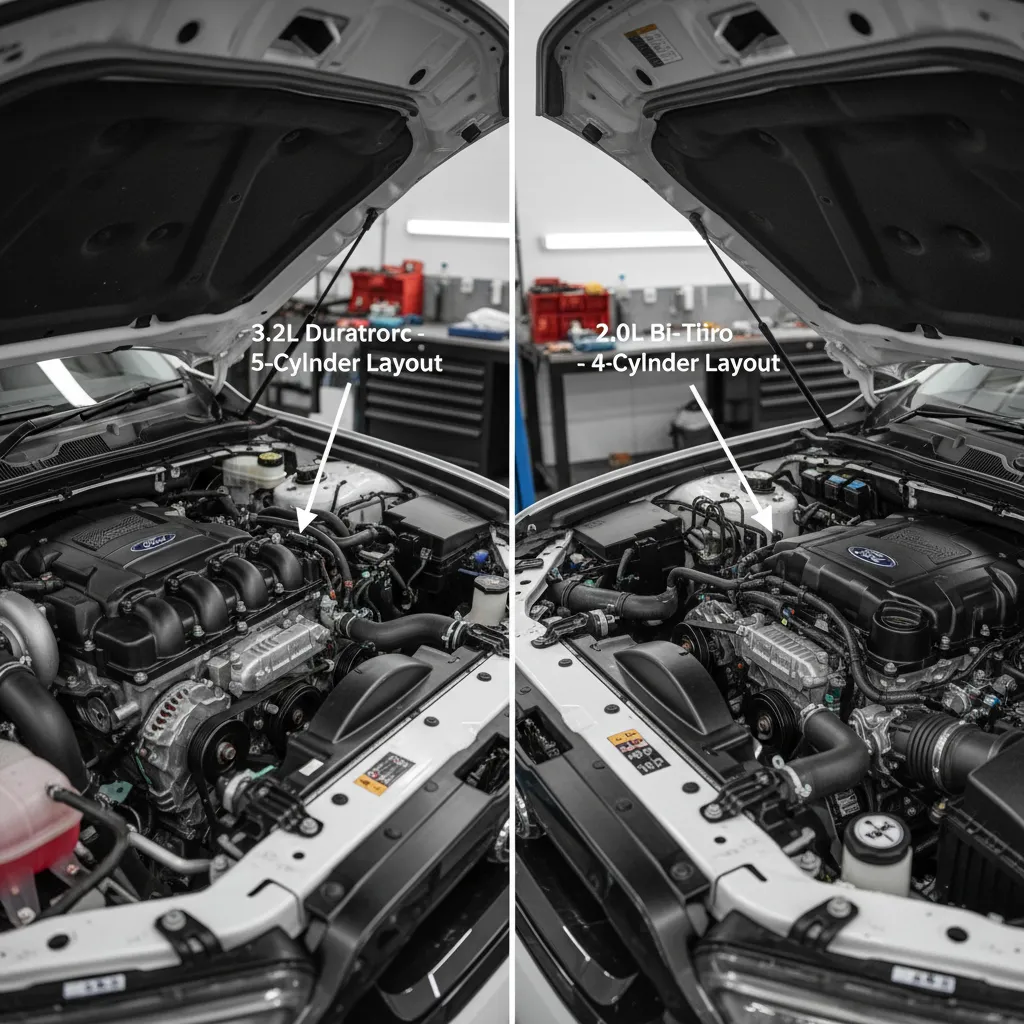
2.0L EcoBlue Bi-Turbo (Panther)
Found in: PX3 (Wildtrak/Raptor/XLT option), Next-Gen RA
Replacing the 3.2L as the flagship engine, this 4-cylinder uses sequential turbocharging.
- Specs: 157kW / 500Nm.
- Key Tech: Uses a high-pressure turbo for low RPM response and a low-pressure turbo for top-end power. Requires specific low-ash oil (0W-30) to protect the wet belt system and DPF.
- Identification: The engine cover is distinctively smaller and often labeled “Bi-Turbo.” The oil fill port is located differently compared to the Duratorq.
3.0L V6 Turbo Diesel (Lion/Power Stroke)
Found in: Next-Gen RA (Sport/Wildtrak/Platinum)
The new king of the range, adapted from the F-150 Power Stroke.
- Specs: 184kW / 600Nm.
- Note: This is a “V” configuration engine, distinct from the inline engines of the past. It utilizes a permanent 4WD system (4A) in most trims.
Chassis and Drivetrain Evolution
While the chassis rails look similar across the T6 lifespan, mounting points and suspension geometry have shifted.
Steering: Hydraulic vs. Electric
This is the most critical mechanical difference between PX1 and PX2.
- PX1: Uses a traditional Hydraulic Power Steering pump driven by the engine belt. Requires power steering fluid maintenance.
- PX2/PX3/RA: Uses EPAS (Electric Power Assisted Steering). There is no power steering pump or fluid reservoir. The rack is electronically controlled, allowing for features like Lane Keep Assist and Active Park Assist.
Transmission: 6R80 vs. 10R80
6-Speed Auto (6R80): Standard on PX1 and PX2 (3.2L/2.2L). Known for reliability but higher fuel consumption.
10-Speed Auto (10R80): Introduced on PX3 with the Bi-Turbo engine and carried over to the Next-Gen RA. This transmission skips gears under light acceleration and keeps the engine in a very narrow RPM band for efficiency.
Suspension Geometry
PX1: The front sway bar is mounted to the lower control arm via a link.
PX2/PX3: The front suspension was revised. The sway bar geometry changed to improve ride comfort and handling. The bump stops were also relocated.
Next-Gen RA: The rear dampers were moved outboard of the leaf springs (closer to the wheels) to provide better stability and ride control, a significant departure from the inboard setup of the previous generations.
Compatibility Charts for Cross-Generation Parts
One of the most common questions we receive at our parts counter is: “Will this fit my Ranger?” Here is a general compatibility guide for the T6 platform (PX1/2/3). Note that Next-Gen RA parts are almost exclusively non-interchangeable with previous generations.
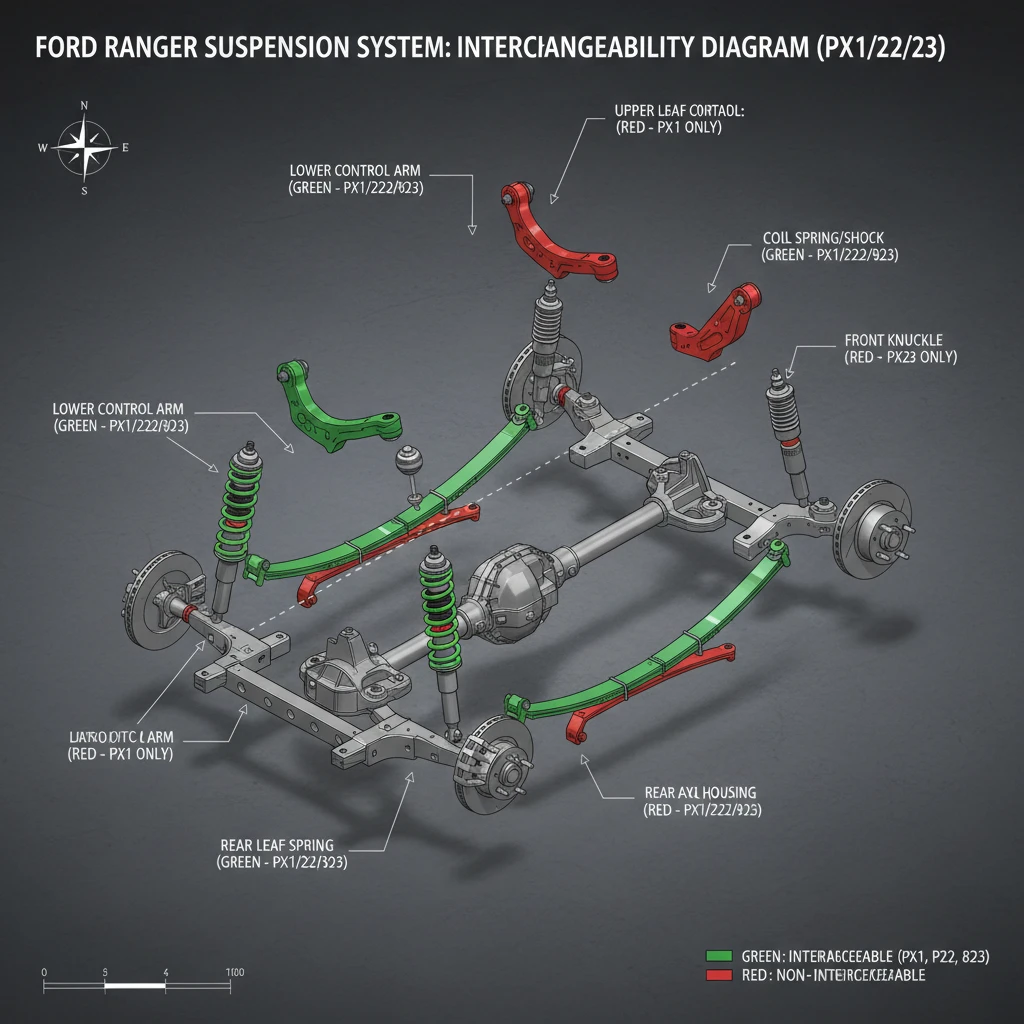
Body Panels & Cosmetics
| Part | Compatibility Notes |
|---|---|
| Tail Lights | Generally interchangeable between PX1, PX2, and PX3. However, wiring pinouts may differ slightly, requiring a harness adapter or pin swap. |
| Headlights | Not directly interchangeable. The shape of the fender and bumper cutout changed between PX1 and PX2. PX2 and PX3 share the same shape, but wiring for LED DRLs differs significantly. |
| Doors | The shell of the doors is largely identical across PX1, PX2, and PX3. Door cards (interior trim) differ significantly. |
| Tailgate | Physically interchangeable across PX series, but the mechanism for the torsion bar assist (PX3) requires specific mounting brackets not present on PX1 beds. |
Mechanical Components
| Part | Compatibility Notes |
|---|---|
| Wheels | PX1, PX2, and PX3 use the same 6×139.7 bolt pattern with a high positive offset (+55). Next-Gen RA uses the same pattern but allows for slightly more aggressive offsets due to the wider track. |
| Suspension (Lift Kits) | PX2 and PX3 kits are generally compatible. PX1 front struts have different lower mounts/spring rates compared to the later models. Always order specific to the Year Model. |
| Oil Filters | 2.2L and 3.2L Duratorq engines use the same filter element. The 2.0L Bi-Turbo uses a completely different filter. |
Conclusion
Understanding the taxonomy of the Ford Ranger is essential for maintaining the vehicle’s longevity and performance. Whether you are dealing with the raw mechanical nature of the PX1 3.2L or the sophisticated electronics of the Next-Gen RA V6, identifying the correct model ensures you purchase the right genuine parts every time. When in doubt, always refer to the VIN rather than the build date, as registration years can often lag behind the actual manufacturing updates.
Frequently Asked Questions (PAA)
How do I know if my Ranger is PX1, PX2, or PX3?
The easiest way is the front grille and headlights. PX1 (2011-2015) has small rectangular headlights and a horizontal bar grille. PX2 (2015-2018) has narrower, more angular headlights and a hexagonal grille. PX3 (2018-2022) features a split-bar grille design and often includes LED DRLs or HID headlights on higher trims. Inside, PX2/3 have the newer SYNC touchscreens compared to the PX1’s button-heavy dash.
Are Ford Ranger PX2 and PX3 parts the same?
Many mechanical parts are shared, especially regarding the chassis rails and rear suspension leaf springs. However, the front styling (bumper, grille), engine options (introduction of the 2.0L Bi-Turbo in PX3), and electronics (different SYNC versions and active safety modules) are different. Always check the VIN to confirm compatibility.
What is the best Ford Ranger engine?
The 3.2L Duratorq (5-cylinder) is widely regarded as the most robust for heavy towing due to its displacement and torque characteristics, making it a favorite in the PX1 and PX2 eras. However, the 2.0L Bi-Turbo offers superior fuel efficiency and equal or better torque (500Nm) mated to a 10-speed transmission, making it technically superior for daily driving and mixed use.
Can I put a PX3 grille on a PX2 Ranger?
Yes, but it is not a direct clip-on swap in all cases. The PX2 and PX3 share the same headlight shape and hood line, so the grille footprint is compatible. However, the bumper mounting points and the alignment with the lower bumper fascia may require modification or a complete bumper swap to look factory-correct.
What year did the Ford Ranger change body shape?
The major platform change occurred in late 2011 with the introduction of the T6 (PX1). The next major “body shape” change (new chassis platform) occurred in mid-2022 with the release of the Next-Gen Ranger (RA). Between 2011 and 2022, the changes were primarily facelifts (PX2 in 2015, PX3 in 2018) rather than full body shape changes.
Is the Ford Ranger T6 the same as the Mazda BT-50?
Only for the first generation of the T6 platform (2011-2020). During the PX1/PX2 era, the Mazda BT-50 shared the same chassis and engines (3.2L and 2.2L) but had different body panels and interiors. From 2020 onwards, the Mazda BT-50 moved to an Isuzu D-Max platform, ending the partnership with Ford.