

NZ Warranty-Safe Maintenance Guide
Owning a Ford in New Zealand, particularly the market-leading Ranger, comes with the responsibility of maintenance. A common misconception among Kiwi owners is that you remain beholden to the dealership network to maintain your factory warranty. This guide provides a definitive technical breakdown of your rights and obligations.
What are Ford NZ warranty service requirements?
Ford NZ warranty service requirements mandate that your vehicle is serviced strictly according to the manufacturer’s scheduled intervals (time or distance) using fluids and parts that meet or exceed Ford’s original engineering specifications. While servicing at an authorized dealer is not legally compulsory to preserve the warranty, verifiable proof of maintenance and the use of equivalent quality parts is required.
Consumer Guarantees Act vs. Manufacturer Warranty
In New Zealand, vehicle owners are protected by two distinct layers of coverage: the Ford Express New Vehicle Warranty and the Consumer Guarantees Act (CGA) 1993. Understanding the interplay between these two is vital for making informed maintenance decisions.
The Ford Express Warranty
This is a contractual agreement between you and Ford New Zealand. Typically covering 5 years or 150,000km (whichever comes first for newer models), it acts as a specific promise to repair defects in materials or workmanship. However, this contract comes with conditions. If a failure occurs because you skipped a service interval or used oil that sludged the engine, Ford is contractually entitled to decline the claim.
The Consumer Guarantees Act (CGA)
The CGA is statutory law that overrides contractual warranties. It states that goods must be of “acceptable quality” and last for a “reasonable time.” Importantly, the CGA does not expire the moment your 5-year warranty ends. If a transmission fails at 5 years and 1 month on a well-maintained vehicle, the CGA may still provide remedy.
Key Distinction: While the manufacturer’s warranty has strict rules about service schedules, the CGA looks at causation. If you service your vehicle at an independent garage, Ford cannot void your CGA rights unless that independent service caused the fault. However, to ensure smooth processing of any warranty claims, adhering to the factory schedule is the path of least resistance.
Using ‘Equivalent Quality’ Parts
One of the most contentious aspects of Ford NZ warranty service requirements is the selection of replacement parts. Under New Zealand commerce laws, manufacturers cannot force you to use their branded parts to maintain a warranty, provided the alternative parts are of “equivalent quality.”
Defining Equivalent Quality
“Equivalent quality” means the part meets the same engineering standards, flow rates, filtration efficiency, and material durability as the Genuine Ford part. This is often referred to as OEM (Original Equipment Manufacturer) quality.
- Genuine Parts: Branded Ford, in Ford packaging. Guaranteed to fit and perform perfectly.
- OEM Parts: Made by the same factory that makes the Ford part (e.g., Bosch, Denso, Mann-Filter) but sold under their own brand. These are safe for warranty.
- Aftermarket (Budget): Parts that may fit but do not meet the micron rating or flow specs. Using these can void your warranty if they fail or cause downstream damage.
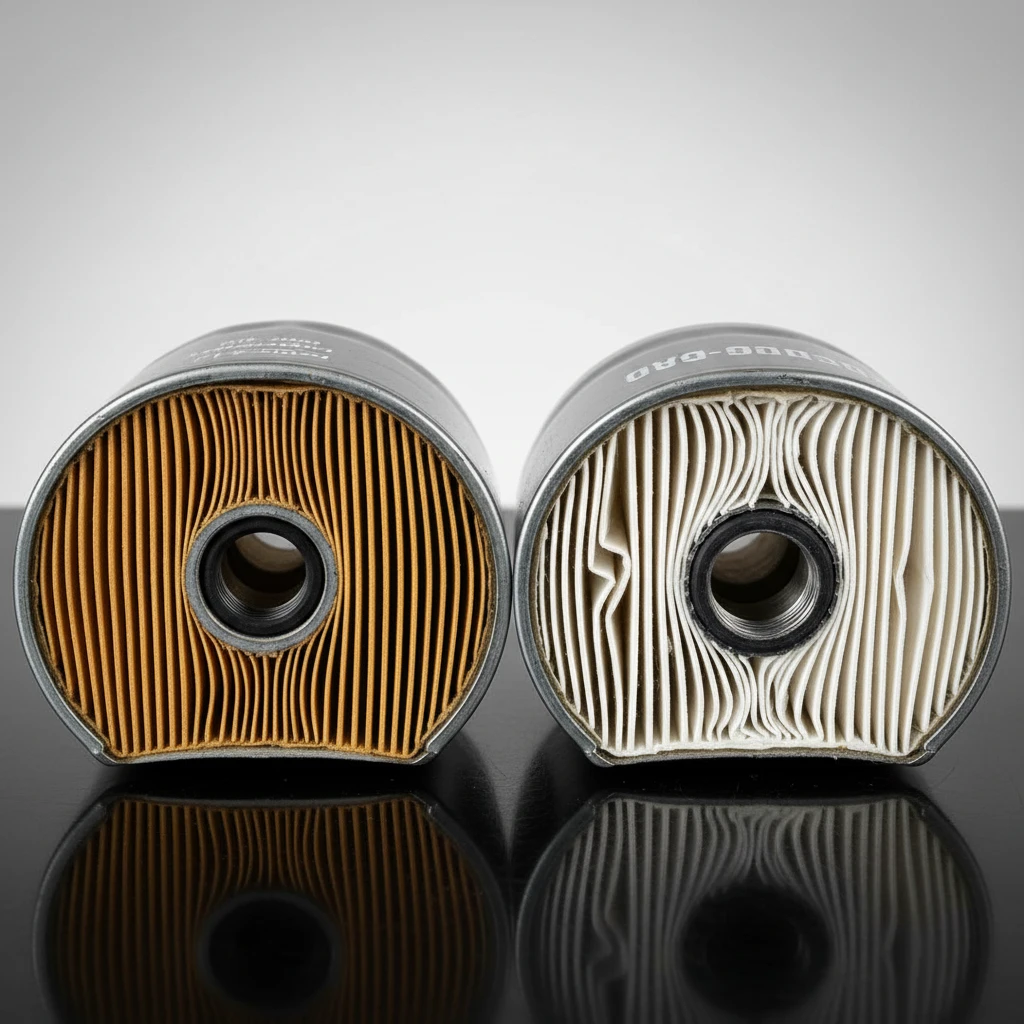
For the Ford Ranger, particularly the 2.0L Bi-Turbo and 3.0L V6 engines, filtration is critical. The tolerances in the high-pressure fuel system are microscopic. Using a non-genuine fuel filter that allows larger particles through can destroy injectors. In this scenario, if the injectors fail, Ford will analyze the fuel and the filter. If the filter is found to be sub-standard, the warranty claim on the injectors will be denied.
Record Keeping for DIY Maintenance
Can you service your own Ford Ranger in New Zealand and keep the warranty? Technically, yes, but the burden of proof shifts entirely to you. The Commerce Commission guidelines suggest that servicing should be done by a “competent person.” If you are a qualified mechanic or have significant experience, you may proceed, but documentation is non-negotiable.
The Essential Documentation Checklist
If you choose to perform maintenance yourself or use an independent mechanic, you must maintain a meticulous history file. If a catastrophic engine failure occurs, Ford NZ will ask for the following before approving a warranty replacement:
- Itemized Invoices: You must keep receipts for all parts and fluids. The receipt must clearly show the date, the part number, and the brand. A credit card slip for “Supercheap Auto” is not sufficient; you need the line-item detail showing you bought Castrol Magnatec Professional 0W-30 and a Ryco Filter.
- Dated Service Log: Fill out the service booklet in the glovebox or maintain a digital spreadsheet. Record the date, mileage, and specific operations performed (e.g., “Replaced engine oil, oil filter, sump plug washer, checked brake pad thickness”).
- Photographic Evidence: In the digital age, taking photos of the odometer, the old parts, and the new parts going in adds a layer of undeniable proof.
- Adherence to Schedule: You cannot delay servicing. If the schedule says 15,000km or 12 months, and you do it at 18,000km, you have given the manufacturer a loophole to deny coverage for oil-related failures.

Critical Fluid Specifications for Ford Rangers
The most common reason for warranty denial in New Zealand is the use of incorrect fluids. Modern Ford engines, especially the Ranger and Everest line-up, utilize wet-belt technologies and high-pressure turbos that demand specific chemical properties in the oil.
Engine Oil Specifications
You cannot simply use “5W-30 Diesel Oil.” You must check the owner’s manual for the Ford Material Specification (WSS). For example:
- 2.0L Bi-Turbo (Ranger/Everest): Requires 0W-30 oil meeting specification WSS-M2C950-A. Using a standard 5W-30 can affect the wet-belt longevity and turbo bearing lubrication.
- 3.2L 5-Cylinder: Generally uses 5W-30 meeting WSS-M2C913-D.
- 3.0L V6 Diesel: Requires specific low-ash formulations to protect the DPF (Diesel Particulate Filter).
If you or your mechanic uses a generic drum oil that does not meet these specific WSS codes, you are technically in breach of the Ford NZ warranty service requirements. If the engine fails due to lubrication issues, a simple oil sample analysis by the dealer will reveal the incorrect additive pack, and the claim will be declined.
Modifications and Warranty Impact
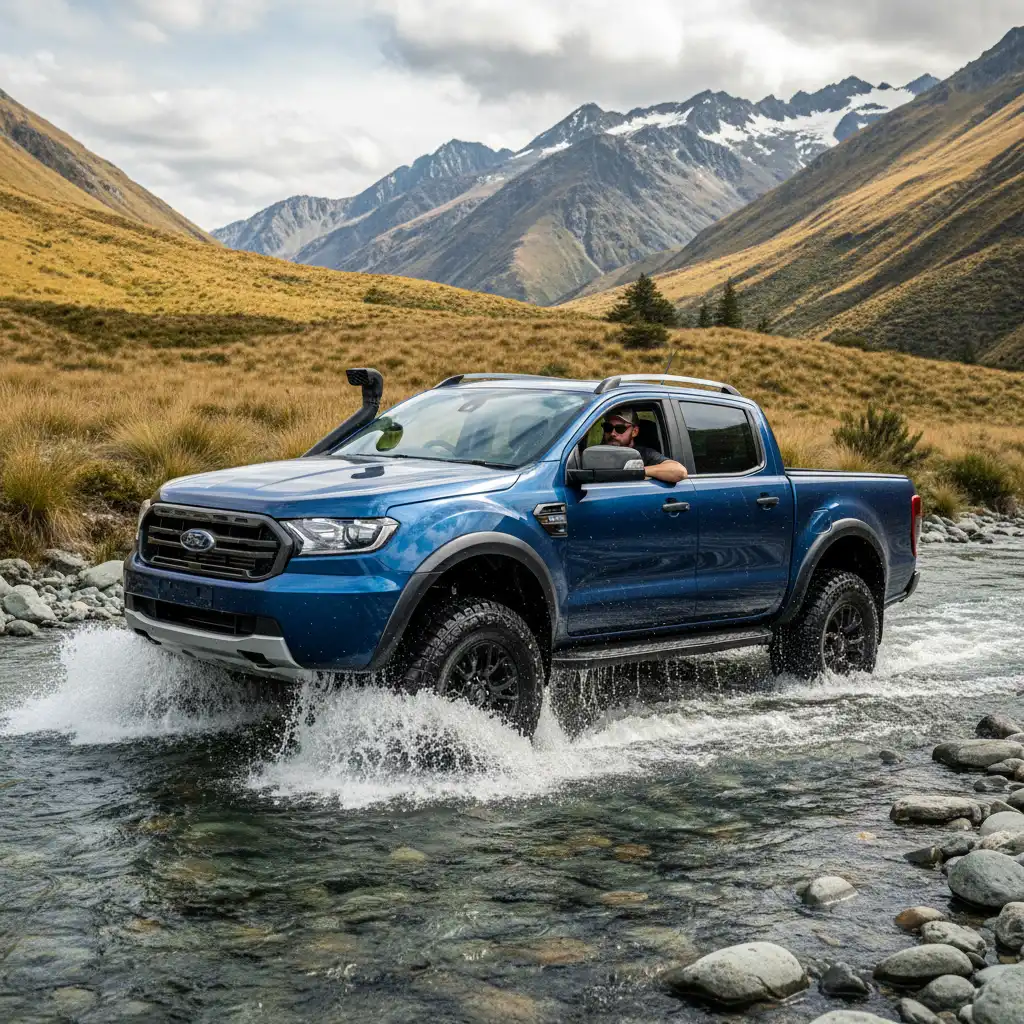
New Zealand has a vibrant culture of modifying Ford Rangers—lift kits, bigger tires, snorkels, and ECU remapping. It is crucial to understand how these affect your coverage.
The “Related Failure” Principle
Installing an aftermarket accessory does not automatically void the entire vehicle warranty. It voids the warranty for that specific component and any systems it directly affects.
- Example 1: You install a 2-inch lift kit. Your infotainment screen fails. The warranty on the screen is still valid because the suspension lift did not cause the screen to fail.
- Example 2: You install an ECU “chip” or remap to get more power. The transmission overheats and fails. Ford will deny the transmission claim because the engine was producing torque beyond the factory parameters the transmission was designed for.
ECU Remapping: Be aware that Ford diagnostic tools can detect if an ECU has been flashed, even if you revert it to stock before bringing it in. This is a permanent “flag” in the system that can void powertrain coverage globally.
The Dealer Service Advantage: Software Updates
While independent servicing is legal, one significant advantage of dealer servicing is access to proprietary software updates. Modern Fords rely heavily on the PCM (Powertrain Control Module) and TCM (Transmission Control Module).
Ford frequently releases “Silent Recalls” or Technical Service Bulletins (TSBs) that are software patches designed to fix shift flares, improve fuel economy, or prevent premature wear. Independent mechanics generally do not have the ability to flash these updates. A hybrid approach—using independents for oil changes but visiting the dealer for major intervals—can be a strategic way to maintain software currency while managing costs.
Conclusion: Protecting Your Investment
Adhering to Ford NZ warranty service requirements is not about blind loyalty to the dealership; it is about risk management. By ensuring all fluids meet WSS specifications, using filters of equivalent quality, and keeping impeccable records, you protect your rights under both the factory warranty and the Consumer Guarantees Act. Whether you drive a Ranger, Everest, or Transit, technical precision in maintenance is the key to longevity.
People Also Ask
Can I service my Ford Ranger at a local mechanic in NZ?
Yes, you can service your Ford Ranger at a local mechanic without voiding the warranty, provided the mechanic uses parts and fluids that meet Ford’s specifications and follows the official service schedule. You must keep all invoices as proof.
Does Ford NZ warranty cover brake pads?
Generally, no. Brake pads are considered “consumable items” subject to wear and tear. However, if they fail due to a manufacturing defect (e.g., the friction material de-bonds from the backing plate) early in the vehicle’s life, they may be covered.
What happens if I miss a Ford service by one month?
Minor overruns are usually tolerated, but significant delays can jeopardize warranty claims related to that service. If you miss an oil change by months and the engine develops sludge, Ford is likely to deny the claim due to lack of maintenance.
Is the Ford warranty transferable to a new owner?
Yes, the balance of the Ford Express New Vehicle Warranty is fully transferable to subsequent owners. The new owner should notify Ford NZ to update the contact details associated with the VIN.
Does AdBlue affect the Ford warranty?
Yes. You must use AdBlue that meets ISO 22241 standards. If you use contaminated AdBlue or run the tank dry repeatedly, resulting in damage to the SCR system, repairs will not be covered by warranty.
How long is the Ford Ranger warranty in NZ?
As of recent models (MY22 onwards), the standard Ford Express New Vehicle Warranty in New Zealand is 5 years, with unlimited kilometers for the duration of that period, subject to standard terms and conditions.