
Off-Road Recovery Gear NZ
New Zealand’s terrain is legendary, ranging from the volcanic clay of the North Island to the braided riverbeds of the South. For Ford Ranger owners, exploring this landscape requires more than just engaging 4-High; it demands a comprehensive understanding of vehicle recovery. Whether you are traversing Woodhill Forest or tackling the Old Ghost Road, having the correct equipment is the difference between a memorable adventure and a costly extraction.
4×4 recovery gear NZ refers to the essential equipment required to safely extract a vehicle from mud, sand, or rough terrain. A compliant kit for a Ford Ranger typically includes rated recovery points, a kinetic snatch strap (minimum 8,000kg rating), rated bow or soft shackles, a recovery damper, and traction boards to ensure safe self-recovery in New Zealand’s variable conditions.
Rated Recovery Points for the Ford Ranger
One of the most common misconceptions among new 4×4 owners is the purpose of the factory loops found under the front bumper of many vehicles. On a standard Ford Ranger (excluding the Raptor), the factory loops are often designed as “tie-down points” for transport logistics, not for the high-stress loads of a snatch recovery.
The Difference Between Tie-Downs and Recovery Points
Attempting to snatch a bogged Ranger using a factory tie-down clip can be catastrophic. These loops are welded to withstand vertical hold-down pressure during shipping, not the sudden horizontal kinetic energy generated during a recovery. Failure here can result in the metal loop becoming a lethal projectile.
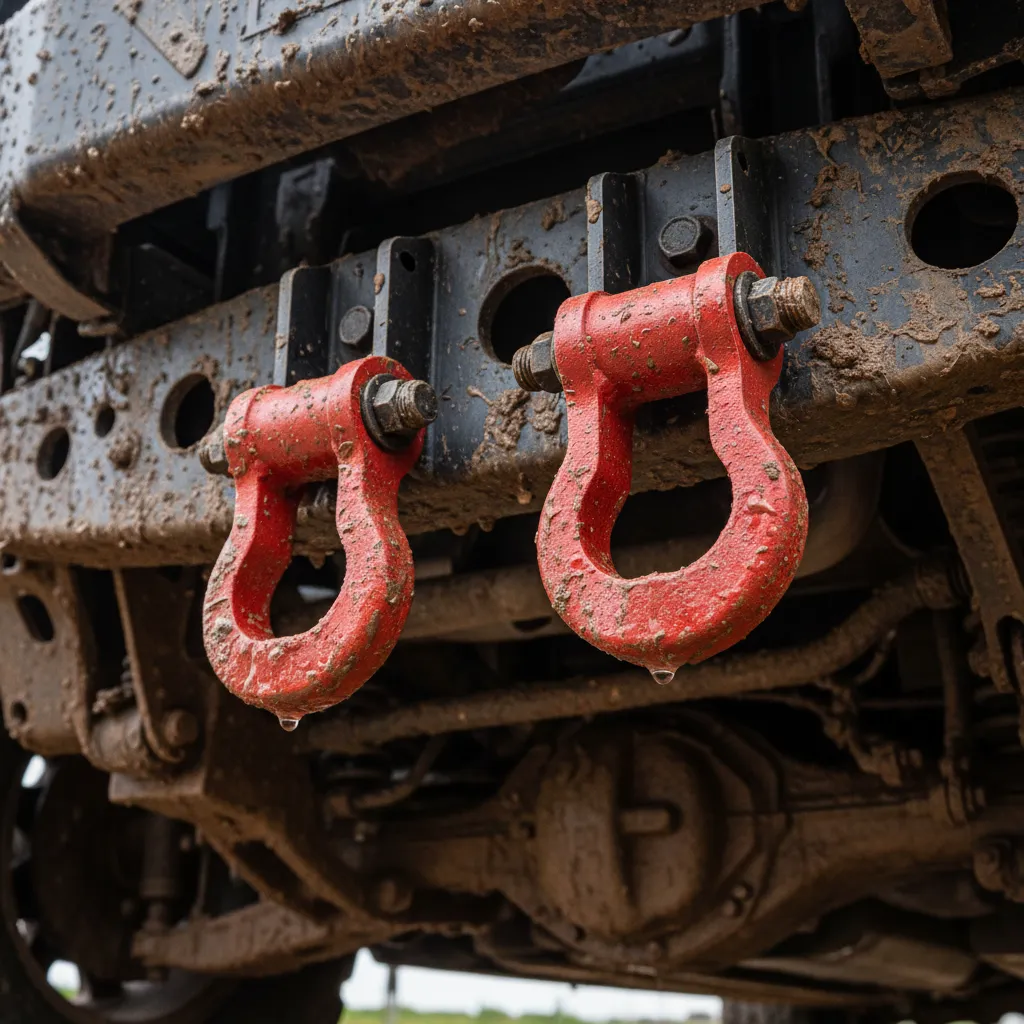
Rated Recovery Points are aftermarket additions bolted directly to the vehicle’s chassis rails. For a Ford Ranger (PX1, PX2, PX3, and Next-Gen), you must look for points that are:
- Rated with a Working Load Limit (WLL): Typically 5,000kg per point.
- Destruction Tested: Ensure the manufacturer has tested the steel to failure to verify safety margins.
- Chassis Mounted: They must utilize high-tensile bolts passing through the chassis rails, often requiring the removal of the bumper for installation.
Equalizing Loads
When recovering a heavy vehicle like a fully loaded Ranger (often pushing 3.2 tonnes GVM), it is critical to use an equalizer strap (bridle). This connects two rated recovery points on the front of the vehicle to the snatch strap, distributing the load across both chassis rails rather than stressing a single side, which could twist the frame.
Winch Mounting Options and Selection
For solo travel in remote NZ locations, a winch is your primary insurance policy. However, mounting a winch to a Ford Ranger requires consideration of airflow, approach angles, and legal compliance regarding frontal protection systems.
Bullbar Mounting vs. Hidden Winch Mounts
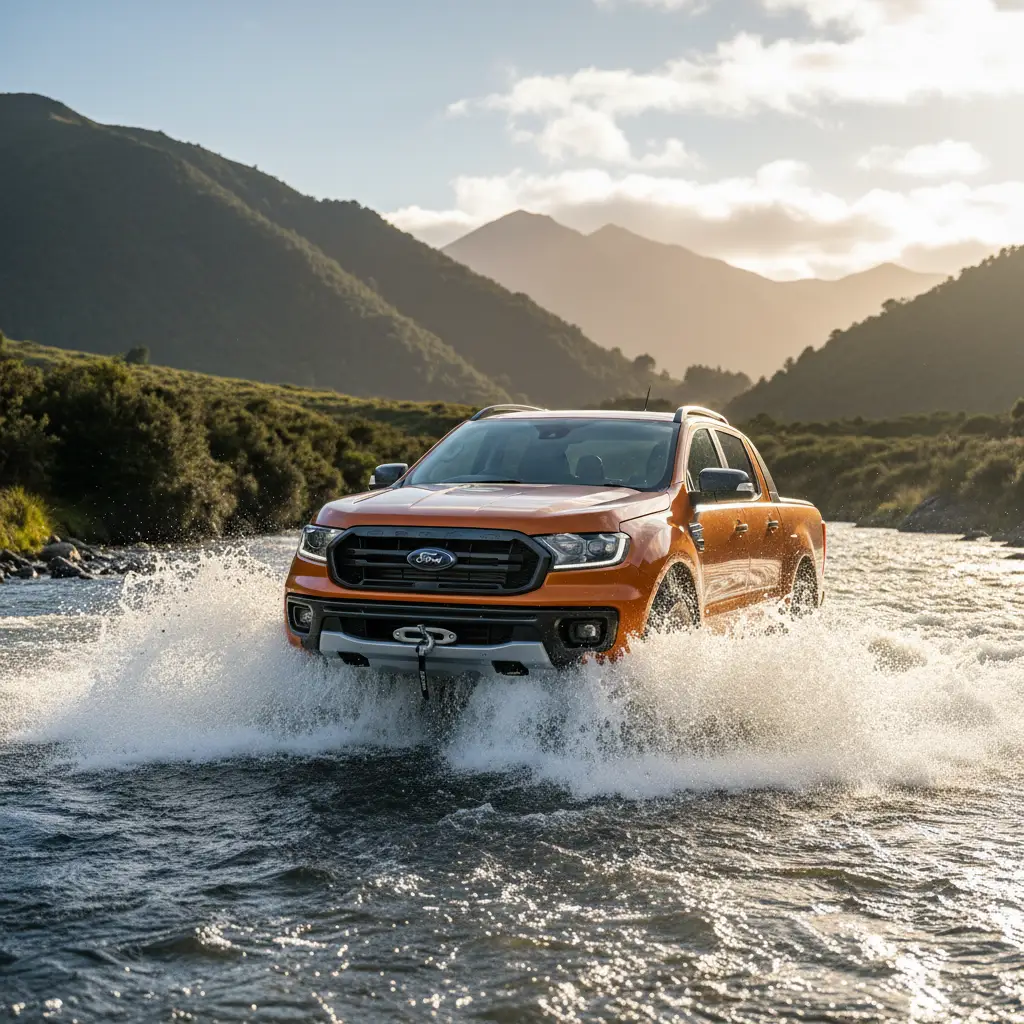
Bullbar Mounts: The most common method in New Zealand involves installing a steel or alloy bullbar (such as ARB, Ironman 4×4, or similar) that houses the winch. This offers superior frontal protection against animal strikes and provides easy access to the winch clutch lever.
Hidden Winch Mounts: For Ranger owners who prefer the factory look or want to reduce front-end weight, a hidden winch cradle is an excellent option. This creates a discrete setup where the fairlead protrudes through the lower grille. While aesthetically pleasing, ensure the cradle is specifically engineered for the Ranger’s crumple zones and airbag compatibility.
Choosing the Right Winch for a Ranger
The general rule of thumb for winch selection is 1.5 times the Gross Vehicle Mass (GVM).
Ford Ranger Calculation: 3,200kg (GVM) x 1.5 = 4,800kg.
Therefore, a 9,500lb to 12,000lb winch is the ideal standard. Given the suction effect of NZ mud (which can double the effective weight of the vehicle), a 12,000lb winch is the recommendation for technical touring.
Synthetic Rope vs. Steel Cable
In the New Zealand market, synthetic rope has largely superseded steel cable. Synthetic rope is lighter, floats in water (helpful during river crossings), and does not store as much kinetic energy as steel, making it safer if it snaps. However, it requires care; UV exposure and embedded sand can degrade the fibers. Always choose a winch with a rope that has a protective sheath on the first few meters and a high-quality hawse fairlead.
Essential Gear for NZ Bush Tracks
Beyond the vehicle modifications, your portable 4×4 recovery gear NZ kit needs to be tailored to the environment. The clay tracks of the Waitakeres or the slippery roots of the Central Plateau require specific tools.

Traction Boards (Maxtrax / Treds)
Before you reach for the winch or the strap, reach for the traction boards. In NZ’s soft sand and slippery clay, these are invaluable. They allow the vehicle to climb out of a rut under its own power. For a Ford Ranger, usually heavy at the rear, carrying four boards (one for each wheel) is advisable for maximum efficacy.
The Snatch Strap
A snatch strap is a nylon webbed strap designed to stretch (typically 20-30%) under load. This elasticity builds up kinetic energy, which helps “pop” the stuck vehicle out of the mud.
Rating: For a Ranger, an 8,000kg or 11,000kg minimum breaking strength (MBS) strap is standard. Do not use a strap that is too heavy (e.g., 15,000kg+ for a light truck), as it won’t stretch enough to be effective, transferring harsh shock loads to the chassis.
Recovery Damper
Mandatory Safety Item: A recovery damper (or blanket) is placed over the middle of the winch rope or snatch strap. In the event of a failure, the damper adds drag and weight to the line, forcing it to the ground rather than allowing it to recoil towards the windscreen or bystanders.
Kinetic Straps vs. Static Ropes
It is vital to distinguish between kinetic straps and static extension straps. Using the wrong one can be dangerous.
Kinetic (Snatch) Straps
Made from Nylon 66. These are designed for dynamic recoveries where the recovery vehicle drives away to build momentum. The stretch cushions the blow.
Static (Winching) Extension Straps
Made from Polyester. These stretch very little (less than 5%). They are used to extend the reach of a winch cable. NEVER use a static strap for a snatch recovery. The lack of stretch results in massive shock loading that can shear bolts, break tow balls, or rip chassis rails.
Soft Shackles vs. Steel: The Safety Debate
Modern 4×4 recovery gear in NZ is shifting rapidly toward soft shackles.
The Case for Soft Shackles
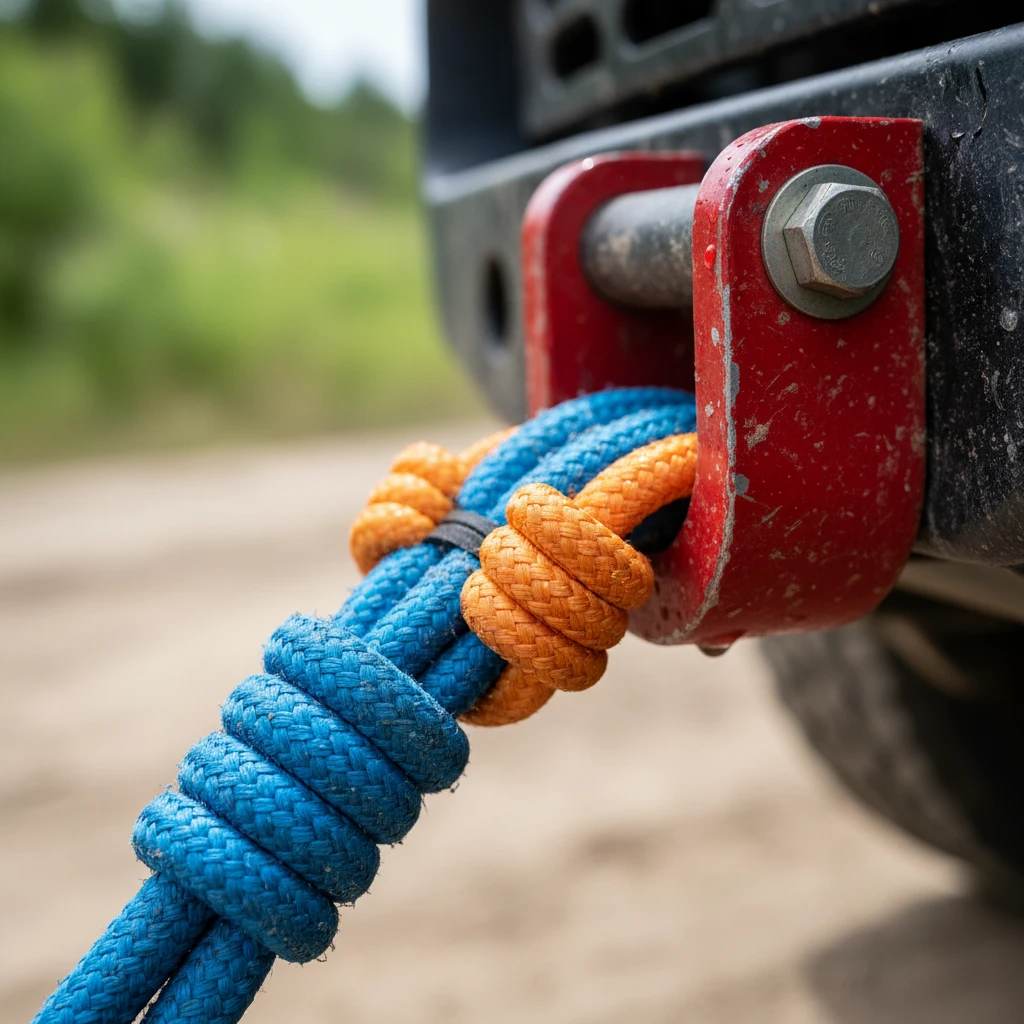
Soft shackles are made from Ultra-High Molecular Weight Polyethylene (UHMWPE). They are stronger than steel shackles of equivalent size but weigh mere grams.
Safety: If a soft shackle breaks, it does not carry the mass to cause lethal injury like a 1kg steel projectile would.
Usability: They don’t seize up with rust or over-tightening, and they float.
Steel Bow Shackles
If using steel shackles, ensure they are rated “S” grade or similar, with the WLL stamped clearly on the body (usually 3.25t or 4.75t). Never use unrated hardware store shackles. Always back the pin off a quarter turn to prevent it from seizing under load.
Gear Maintenance and Inspection
New Zealand’s environment is harsh on gear. Salt spray from beach driving and acidic mud can rot webbing and corrode metal.
Cleaning: After every trip, unspool your winch rope and wash it with fresh water to remove grit that cuts fibers internally. Wash straps in a bucket of warm water (no harsh detergents) and hang them to dry in the shade.
Inspection: Check straps for cuts, fraying, or chemical burns. If a strap has a nick on the edge greater than a few millimeters, its structural integrity is compromised, and it should be retired. For the Ford Ranger owner, treating your recovery gear with the same respect as your engine maintenance is the key to long-term reliability.
People Also Ask
Do I need rated recovery points on my Ford Ranger?
Yes, absolutely. The factory loops on most Ford Ranger models are tie-down points for shipping and are not rated for the high kinetic forces of a snatch recovery. Using them can result in component failure and serious injury. You should install aftermarket points rated for at least 5,000kg WLL.
What size winch do I need for a Ford Ranger?
A 12,000lb (approx 5,400kg) winch is recommended for a Ford Ranger. The Ranger is a heavy vehicle, often exceeding 3 tonnes when modified and loaded. A 12,000lb winch provides a sufficient safety margin for overcoming the resistance of deep mud or steep inclines.
Can I use a tow ball for recovery?
NO. Never use a tow ball for recovery. Tow balls are designed for towing trailers, not for the shock loads of recovery. They can shear off and become a lethal projectile, known as a “cannonball,” which has caused fatalities. Always use a rated recovery hitch receiver.
What is the difference between a snatch strap and a tow rope?
A snatch strap is made of nylon and is designed to stretch (kinetic energy) to pull a vehicle out of a bog. A tow rope or strap is usually polyester, has very little stretch, and is designed only for towing a free-moving vehicle on a flat surface. Using a tow rope for a bog recovery causes dangerous shock loading.
How do I maintain my synthetic winch rope?
Regularly unspool the rope and wash it with fresh water to remove sand and grit, which can act as an abrasive inside the fibers. Inspect it for fraying or UV damage. Using a winch rope cover or keeping the winch spooled in a covered bullbar helps protect it from the NZ sun.
Are soft shackles better than steel shackles?
In most scenarios, yes. Soft shackles are lighter, float on water, and are significantly safer because they don’t store kinetic energy or become heavy projectiles if they break. However, they can be damaged by sharp edges, so ensure your recovery points have smooth, radiused edges.