
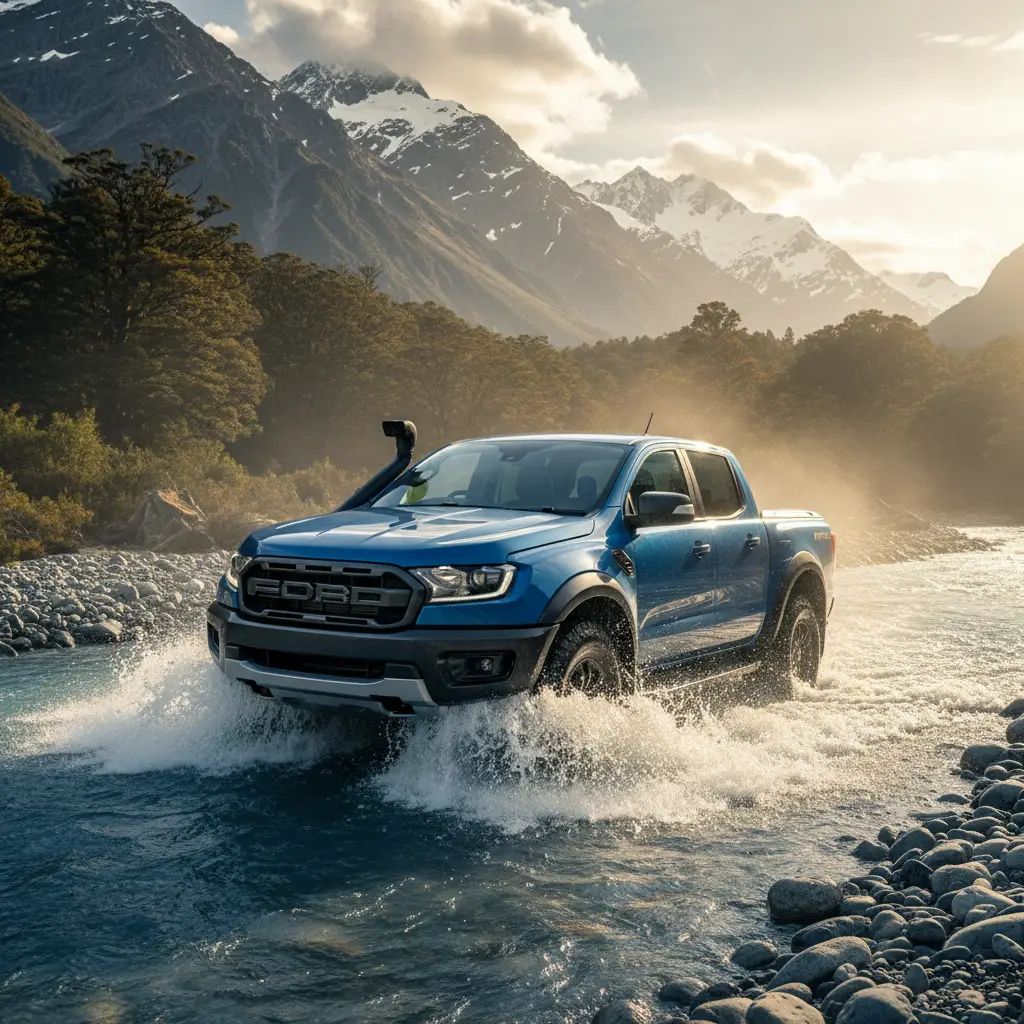
Performance Air Intake Systems
A Ford Ranger snorkel elevates the engine’s air intake point above the roofline, delivering cleaner, cooler air while preventing water ingress during river crossings. Essential for New Zealand’s rugged terrain, it protects against hydro-locking and filters out heavy dust on gravel roads, ensuring engine longevity and consistent performance in harsh environments.
The Ultimate Guide to Ford Ranger Snorkels in New Zealand
The Ford Ranger is the undisputed king of New Zealand utes, dominating both the worksite and the weekend trails. From the muddy tracks of the pureora forest to the braided river crossings of the South Island, the Ranger is built to handle punishment. However, the factory air intake system is often the limiting factor when pushing this vehicle to its absolute limits.
For New Zealand owners, installing a performance air intake system—specifically a snorkel—is rarely just an aesthetic choice; it is a critical insurance policy for your engine. Whether you are driving a PX1, PX2, PX3, or the Next-Gen Ranger, understanding the dynamics of airflow, water protection, and dust filtration is paramount for vehicle longevity.
Why Your Ford Ranger Needs a Snorkel in NZ
New Zealand’s terrain presents a unique set of challenges that differ significantly from other markets. Our environment is characterized by high humidity, frequent river crossings, and an extensive network of unsealed, dust-heavy roads. The standard air intake on a Ford Ranger is typically located inside the front fender, drawing air from just under the bonnet lip. While sufficient for city driving, this location is vulnerable in off-road scenarios.
The Threat of Hydro-Locking
The most catastrophic failure a diesel engine can suffer is hydro-locking. This occurs when water is sucked into the air intake and enters the combustion chamber. Because water is incompressible, the pistons cannot complete their stroke, leading to bent con-rods, shattered pistons, and often a destroyed engine block. In a factory configuration, the wading depth is limited. A snorkel raises the intake height to the roofline, significantly increasing the vehicle’s safe wading depth and providing peace of mind during deep water crossings.
Combating Engine Dust Ingestion
On New Zealand’s “metal” (gravel) roads, a vehicle traveling in a convoy sits in a cloud of suspended particulate matter. A standard fender intake sits right in the thick of the dust kicked up by the front wheels. By moving the intake point higher, a snorkel draws from air that is significantly lower in dust density, reducing the load on your air filter and keeping the engine internals cleaner.
Cold Air Intake Benefits and Performance
While protection is the primary driver for snorkel installation, performance gains are a significant secondary benefit. A high-quality snorkel acts as an extension of a cold air intake system.
The Physics of Cooler Air
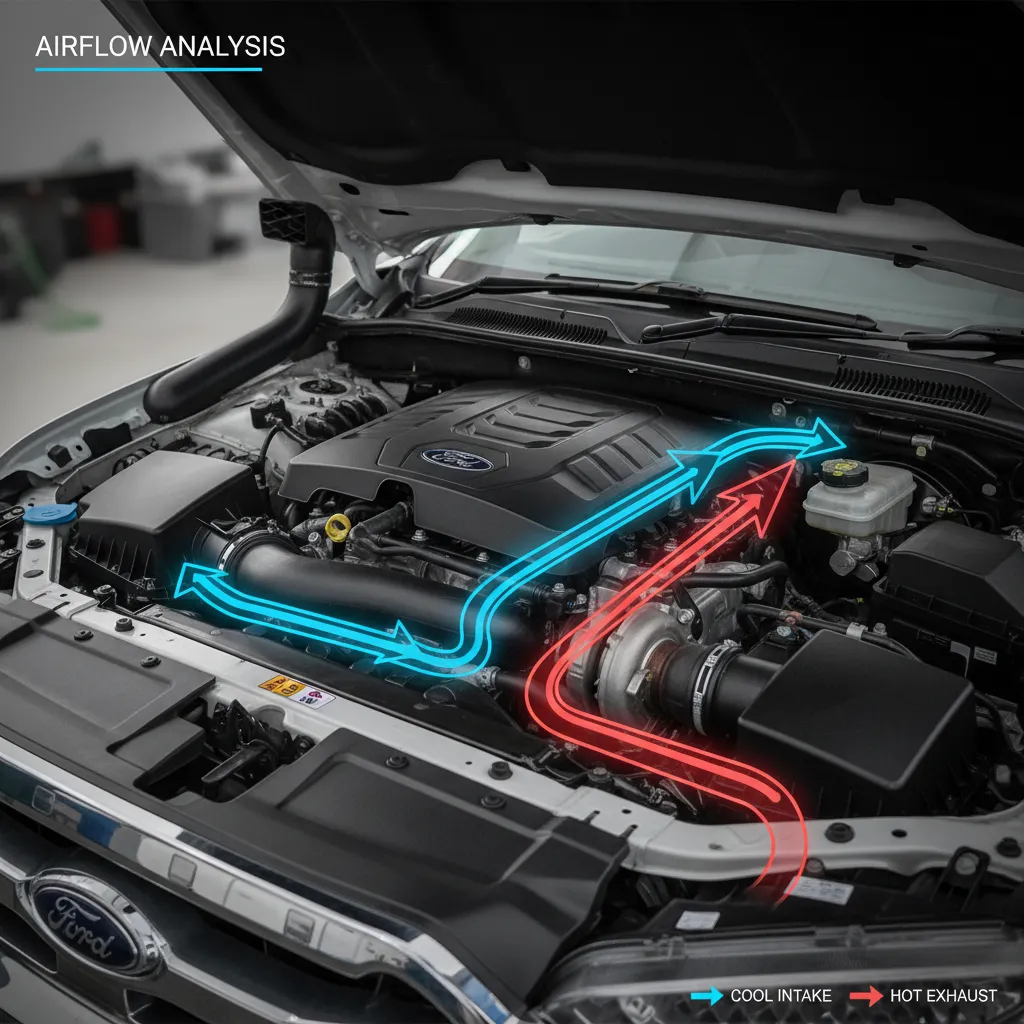
Engines thrive on cool, dense air. The air temperature under the bonnet of a working Ford Ranger can be significantly higher than the ambient temperature due to radiant heat from the engine block, turbo, and exhaust manifold. Standard intakes often draw this pre-heated air.
By sourcing air from roof height, the intake temperature is closer to ambient levels. Cooler air carries more oxygen molecules per cubic foot. Improved oxygen density allows for more efficient combustion, which can result in:
- Improved Throttle Response: The engine breathes more freely, reducing turbo lag.
- Better Fuel Economy: More efficient combustion requires less fuel to produce the same amount of power.
- Sustained Power: Preventing heat soak ensures the engine maintains peak power output during long, uphill tows or heavy off-roading.
Ram Air Effect
Many premium snorkels, such as the Safari ARMAX or genuine Ford accessories, utilize a “ram head” design. As the vehicle moves forward, the forward-facing scoop forces air into the intake system. While this doesn’t act like a supercharger, it does create a positive pressure zone in the airbox at highway speeds, reducing the vacuum the engine must overcome to draw air in. This subtle improvement aids in fuel efficiency and overtaking performance.
Snorkel Installation for Water Crossing
Installing a snorkel is not merely about bolting a plastic tube to the A-pillar; it requires a systematic approach to sealing the entire induction system. A snorkel is only as effective as its weakest seal. If the connection between the snorkel and the airbox, or the airbox and the engine, is not watertight, the snorkel is purely cosmetic.
Critical Sealing Points
For a Ford Ranger to be truly water-ready, the installation process must involve:
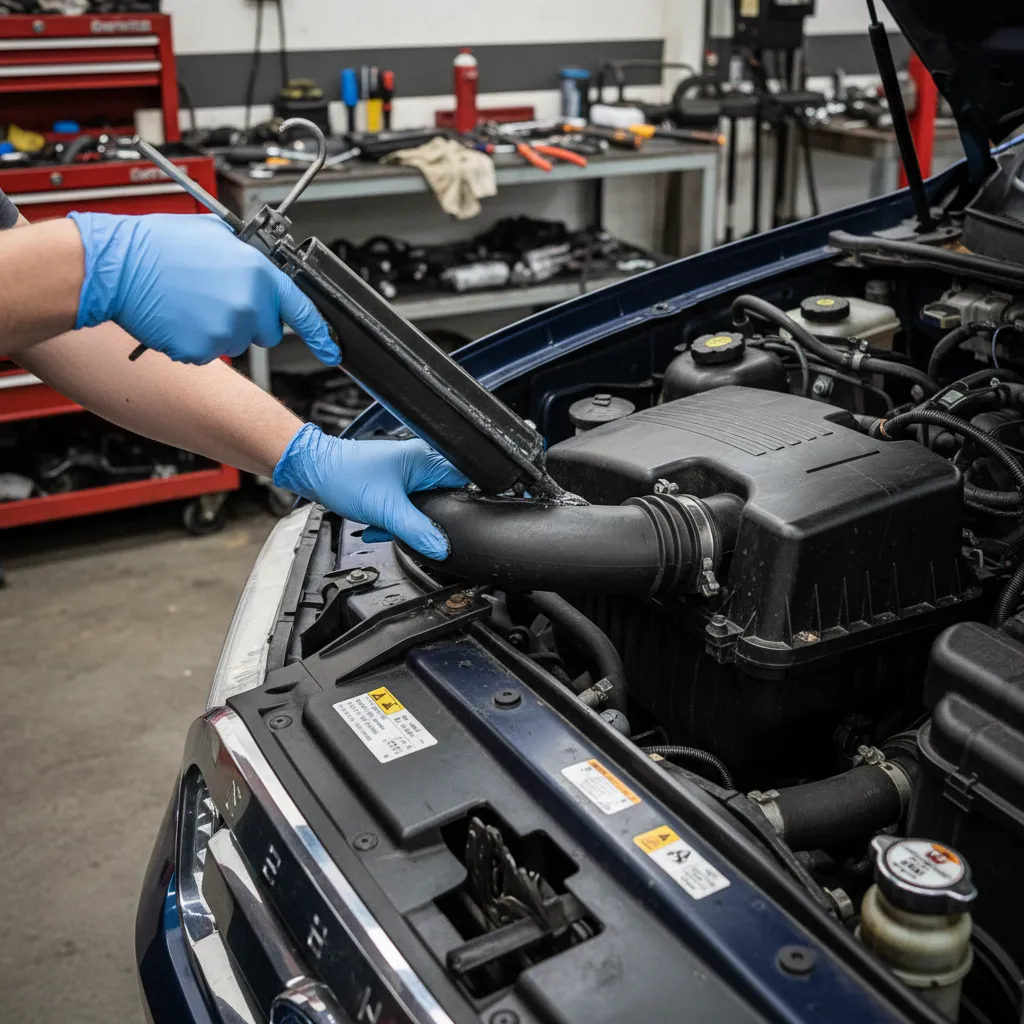
- Airbox Modification: The factory airbox often requires modification to accept the larger diameter snorkel hose. This connection must be sealed with high-grade automotive silicone and riveted or clamped securely.
- Drain Valve Inspection: Factory airboxes have one-way drain valves designed to let moisture out. In deep water, these can sometimes let water in if they are old or stiff. They must be inspected and, in some extreme competition trucks, sealed permanently (though this requires vigilant maintenance).
- Sensor Sealing: The Mass Air Flow (MAF) sensor and other intake penetrations must be watertight.
Warning: Even with a snorkel, safe wading depth is dictated by other factors such as differential breathers, transmission breathers, and ECU placement. A snorkel handles the engine air, but a comprehensive wading kit is recommended for serious water crossings.
Pre-Filter Options for Dusty NZ Roads
For Rangers that spend the majority of their life on the gravel backroads of the South Island or farm tracks, a standard ram head might not be enough. The standard head is designed to separate rain, but fine dust can still enter the system. This is where pre-cleaners become essential.
Cyclonic Pre-Filters
A cyclonic pre-filter replaces the standard ram head. It uses a spinning vane system driven by the incoming airflow to spin dust and debris out to the sides of a clear bowl, where it is trapped before it can travel down the snorkel tube.
Benefits of Pre-Filters:
- Extended Filter Life: By catching 80-90% of heavy dust before it reaches the main air filter, you extend the service life of your OEM paper filter significantly.
- Visual Maintenance: The clear bowl allows you to see exactly how much dust you are catching, prompting timely cleaning.
- Engine Protection: Prevents fine silt from clogging the filter media, which can restrict airflow and increase engine temperatures.
The “Sock” Option
A cheaper alternative is a foam “sock” that slips over the standard ram head. While effective at catching large debris and some dust, these can restrict airflow if they get wet or heavily clogged. They are best used as a temporary measure for extremely dusty days rather than a permanent solution.
Stainless Steel vs. Polyethylene: Making the Right Choice
When selecting a Ford Ranger snorkel in NZ, the market is generally divided into two material categories: UV-stable Polyethylene and Stainless Steel.
Polyethylene (Plastic)
This is the industry standard for brands like Safari and Ford Genuine Parts.
Pros:
- Durability: Highly resistant to impact. If you hit a tree branch, it tends to flex and bounce back rather than dent.
- UV Stability: High-quality units are treated to withstand NZ’s harsh UV rays without becoming brittle.
- Factory Look: Designed to follow the body lines of the Ranger perfectly.
Stainless Steel
Seamless stainless snorkels are popular for the custom/modified aesthetic.
Pros:
- Airflow: often feature large 4-inch diameters with smooth bends for maximum airflow volume.
- Sound: They amplify the turbo spool and induction noise, which appeals to many enthusiasts.
Cons: Can be prone to denting upon impact and may require more cutting of the guard to install.

The Importance of Professional Installation
Installing a snorkel involves cutting a large hole in the fender of your Ford Ranger. This is a point of no return. Professional installation ensures that:
- Rust Prevention: All cut metal edges are deburred, primed, and painted to prevent rust, which is common in NZ’s coastal environment.
- Template Accuracy: Using the correct template ensures the snorkel sits flush against the body, preventing wind noise and vibration.
- Warranty Compliance: For newer Rangers, professional installation by an approved fitter ensures your vehicle warranty remains intact. Improper installation that leads to engine damage will almost certainly void factory coverage.
When considering a “Ford Ranger snorkel NZ” upgrade, prioritize quality components and expert fitting. It is an investment in the reliability of your vehicle, ensuring that whether you are crossing the Rakaia River or cruising State Highway 1, your engine is breathing clean, cool, and dry air.
People Also Ask
Does a snorkel increase horsepower on a Ford Ranger?
While a snorkel is primarily for protection, it can provide a slight performance increase. By acting as a cold air intake and utilizing the ram-air effect at speed, it improves air density and combustion efficiency. However, massive horsepower gains should not be expected without accompanying ECU tuning.
Do I need a certification (LVVTA) for a snorkel in NZ?
Generally, no. Installing a snorkel does not usually require LVVTA certification in New Zealand provided it does not protrude dangerously or obscure the driver’s vision. However, always check current NZTA regulations or consult with a professional installer to ensure compliance.
Can I take my Ranger through deep water with just a snorkel?
Not necessarily. While a snorkel protects the engine air intake, other components like differentials, the transmission, and electronics are still vulnerable. For deep water wading, you should also install a breather kit for your drivetrain components and be aware of the vehicle’s maximum wading depth regarding electronics.
Does a snorkel affect fuel economy?
A snorkel can have a neutral to slightly positive effect on fuel economy. The “ram air” effect can reduce the restriction on the intake, allowing the engine to work slightly less to draw in air. However, the added aerodynamic drag of the snorkel itself is usually negligible for a vehicle like the Ranger.
How often do I need to clean my snorkel head?
You should inspect the ram head at every service or after any trip involving heavy dust or insects. If you use a pre-filter or cyclonic head, check the clear bowl daily during off-road trips and empty it as needed to maintain optimal airflow.
Is a stainless steel snorkel better than plastic?
It depends on your needs. Polyethylene (plastic) is generally more durable for bush-bashing as it resists impact and doesn’t dent. Stainless steel offers a custom look and increased induction noise but can be more susceptible to physical damage and heat soak if not properly insulated.