
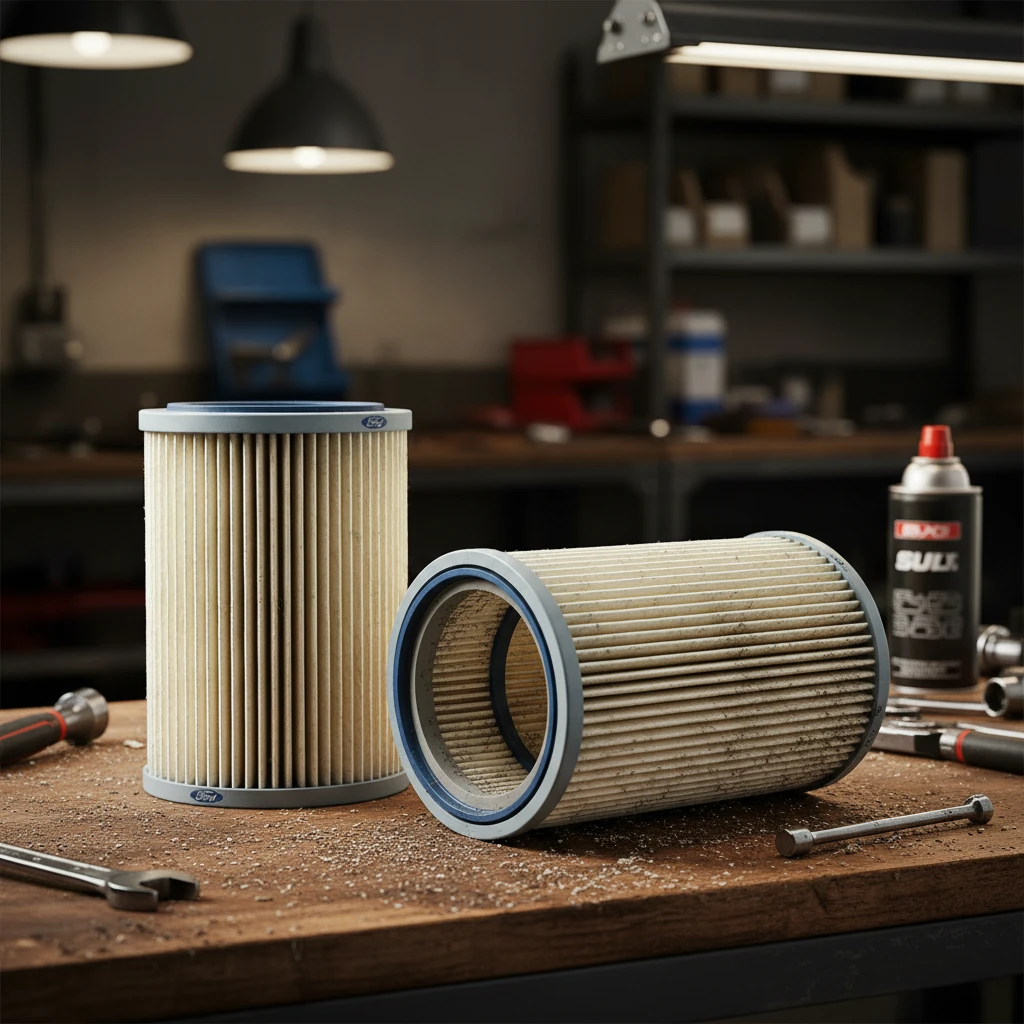
PX2 (2015-2018) Technical Breakdown
The Ford Ranger PX2 air filter (Genuine Part Number AB39-9601-AB) is a cylindrical high-flow element designed specifically for the 3.2L and 2.2L Duratorq engines. Utilizing a genuine filter is critical for maintaining correct Mass Air Flow (MAF) sensor readings, preventing limp mode, and ensuring maximum dust filtration on New Zealand’s gravel roads.
For owners of the Ford Ranger PX2 (produced between late 2015 and mid-2018), understanding the specific technical requirements of your vehicle is essential for longevity. While visually similar to its predecessor, the PX2 introduced significant mechanical and electrical updates that affect maintenance, specifically regarding filtration and sensor calibration.
Mastering the Ford Ranger PX2 Air Filter
When sourcing a Ford Ranger PX2 air filter, precision is non-negotiable. The PX2 update retained the robust powertrain of the PX1 but refined the engine management systems, making air intake quality more vital than ever. The primary confusion for many owners stems from the variety of filters available on the global market, but for the New Zealand spec PX2 Ranger, the cylindrical design is the standard.
Why the Genuine Part Number AB39-9601-AB Matters
The specific part number for the PX2 air filter is typically AB39-9601-AB (or the updated Motorcraft equivalent). Unlike generic aftermarket flat-panel filters found in other vehicles, the Ranger’s cylindrical design offers a larger surface area for filtration. This is crucial for the 3.2L 5-cylinder engine, which demands a high volume of air to maintain boost pressure without stressing the turbocharger.
Using a non-genuine or incorrect air filter in a PX2 can lead to several documented technical failures:
- MAF Sensor Contamination: The Mass Air Flow sensor is located immediately downstream of the air box. Inferior filters often shed fibers or allow micro-dust particles to pass through, coating the hot wire of the MAF sensor. This results in incorrect fueling data sent to the ECU, causing hesitation, poor fuel economy, and eventually, a ‘Check Engine’ light.
- Airbox Seal Failure: Genuine Ford filters feature a specific polyurethane seal density that matches the airbox housing perfectly. Cheaper alternatives often have rigid seals that do not compress correctly, allowing unmetered, dusty air to bypass the filter entirely—a death sentence for engines driven on NZ metal roads.
- Water Ingress Protection: The structural integrity of the genuine filter element is designed to withstand humidity and moisture without collapsing. In wet NZ conditions, paper-only aftermarket filters can become soggy and deform under turbo suction.
Identifying the Correct Fitment
To ensure you are purchasing the correct Ford Ranger PX2 air filter, verify the VIN spec or look for the cylindrical housing on the driver’s side of the engine bay. Note that while the PX1 and PX2 share this filter design, the intake piping and sensor placement saw minor revisions to accommodate the updated front-end geometry and cooling requirements.
Fuel Filtration: The First Line of Defense
While the air filter manages combustion efficiency, the fuel filter manages engine survival. The PX2 Ranger runs a high-pressure common rail diesel injection system (HPCR), operating at pressures exceeding 20,000 PSI. At these pressures, even microscopic contaminants can destroy injectors.
The PX2 Fuel Filter Assembly
The PX2 utilizes a cartridge-style fuel filter located under the vehicle, near the chassis rail on the passenger side (in most NZ configurations). It is imperative to use genuine filters (Part typically AB39-9176-AC) because they include the correct water separation membrane.

Technical Note on Priming: Unlike older diesel engines, the PX2 fuel system is notoriously difficult to re-prime if air enters the lines. When changing the fuel filter, it is highly recommended to fill the new filter bowl with clean diesel before installation and follow the specific key-cycle priming procedure or use a diagnostic tool to bleed the low-pressure pump. Failure to do so can result in extended cranking that damages the high-pressure fuel pump.
Electrical System Evolution: PX1 vs. PX2
The transition from PX1 (Mk1) to PX2 (Mk2) in 2015 brought a massive overhaul to the electrical architecture, moving the Ranger closer to passenger-car levels of sophistication. This has direct implications for parts compatibility and troubleshooting.
Introduction of EPAS (Electric Power Assisted Steering)
One of the most distinct changes in the PX2 technical breakdown is the deletion of the hydraulic power steering pump. The PX2 adopted EPAS, which integrates an electric motor directly onto the steering rack.
- Maintenance Impact: There is no power steering fluid reservoir to check or service.
- Electrical Load: The EPAS system draws significant current. Consequently, the PX2 is equipped with a smart charging system and a Battery Management System (BMS) on the negative terminal.
- Battery Replacement Warning: When replacing a battery in a PX2, the BMS must be reset using a diagnostic tool. If not reset, the alternator may not charge the new battery correctly, leading to premature failure of the battery or the alternator itself.
CAN Bus and BCM Updates
The Body Control Module (BCM) in the PX2 is more advanced than the PX1 to support features like SYNC 2/3 infotainment and advanced driver-assist systems (adaptive cruise control, lane keep assist). This means that tapping into wiring harnesses for accessories (like spotlights or tow bars) requires specific CAN-bus compatible modules. Simply splicing into a headlight wire for a relay trigger can cause the BCM to detect a fault and shut down the circuit.

Body Panel and Facelift Compatibility
Visually, the PX2 is distinguished by the “McQueen” face—a bolder, more trapezoidal grille and narrower headlights. For owners looking to repair collision damage or upgrade a PX1, understanding the interchangeability is key.
Front End Architecture
The PX2 introduced a completely new front clip. The following parts are not directly interchangeable with the PX1 without swapping the entire set:
- Bonnet: The PX2 bonnet has a different leading edge contour to match the grille.
- Headlights: PX2 headlights are slimmer. The wiring connectors also differ slightly, requiring adaptors if retrofitting.
- Bumper and Grille: The mounting points on the chassis are largely the same, but the interlock between the bumper, grille, and headlights necessitates a full facelift swap if you intend to change one major component.
Intercooler and Radiator Support
Behind the bumper, the PX2 saw adjustments to the radiator support panel and the intercooler piping routing. If you are ordering replacement cooling parts, ensure you specify the 2015+ model year. The intercooler hoses, notorious for splitting, have slightly different bends in the PX2 compared to the early PX1 models.
Essential Maintenance for NZ Conditions
New Zealand’s unique environment—high humidity, coastal salt spray, and abrasive volcanic dust—requires a stricter maintenance schedule than the factory manual suggests. To keep your PX2 reliable, adhere to these service intervals using genuine parts.

| Component | Factory Interval | Recommended NZ Interval | Critical Notes |
|---|---|---|---|
| Air Filter | 30,000 km | 15,000 km | Check every 5,000km if driving on gravel. Blow out with compressed air gently or replace. |
| Engine Oil & Filter | 15,000 km | 10,000 km | Use 5W-30 spec oil meeting Ford WSS-M2C913-D. |
| Fuel Filter | 30,000 km | 20,000 km | Crucial for protecting injectors from low-quality diesel or water contamination. |
| Automatic Transmission Fluid | Filled for Life | 80,000 km | “Filled for life” does not apply to towing or off-road use. Drain and refill is recommended. |
People Also Ask
Is the PX2 air filter the same as the PX3?
Generally, yes. The cylindrical air filter design (AB39-9601-AB) is carried over from the PX2 to the PX3 for the 3.2L and 2.2L engines. However, the 2.0L Bi-Turbo engines in the PX3 use a different air box and filter arrangement.
How often should I change my Ford Ranger PX2 air filter?
While Ford recommends every 30,000km, in New Zealand conditions we recommend inspecting it at every oil change (10,000km) and replacing it every 15,000km to 20,000km, especially if you drive on gravel roads or in dusty environments.
Can I wash my genuine Ford Ranger air filter?
No. Genuine paper element filters are not designed to be washed with water or solvents. Doing so destroys the paper fibers and ruins the filtration capability. You can gently tap out loose dust, but replacement is the only safe option when clogged.
Does the PX2 Ranger have a cabin air filter?
Yes, the PX2 Ranger is equipped with a pollen/cabin filter located behind the glovebox. This should be changed at every major service to prevent musty odors and maintain air conditioning efficiency.
What happens if I use a cheap aftermarket air filter?
Cheap filters often lack the correct sealing foam and filtration density. This can allow dust to bypass the filter, “dusting” the turbo compressor wheel and engine cylinders, leading to loss of compression and catastrophic engine failure over time.
How do I reset the air filter sensor on a Ford Ranger?
The Ranger PX2 utilizes a restriction gauge on the airbox lid (on some models) or relies on MAF data. There is no dashboard light specifically for the air filter unless the blockage causes a generic engine fault. Physically replacing the filter and ensuring the MAF sensor is clean resolves flow issues.