
Steering Rack & Suspension Bushings
Ford Ranger steering rack replacement involves swapping the worn rack assembly—either hydraulic (PX1) or electric (PX2/PX3)—to restore precise handling. It requires recalibration, alignment, and often upgrading to polyurethane bushings and heavy-duty tie rod ends to prevent future failure on New Zealand’s rugged terrain.
Identifying Your Ranger: Electric vs. Hydraulic Steering Racks
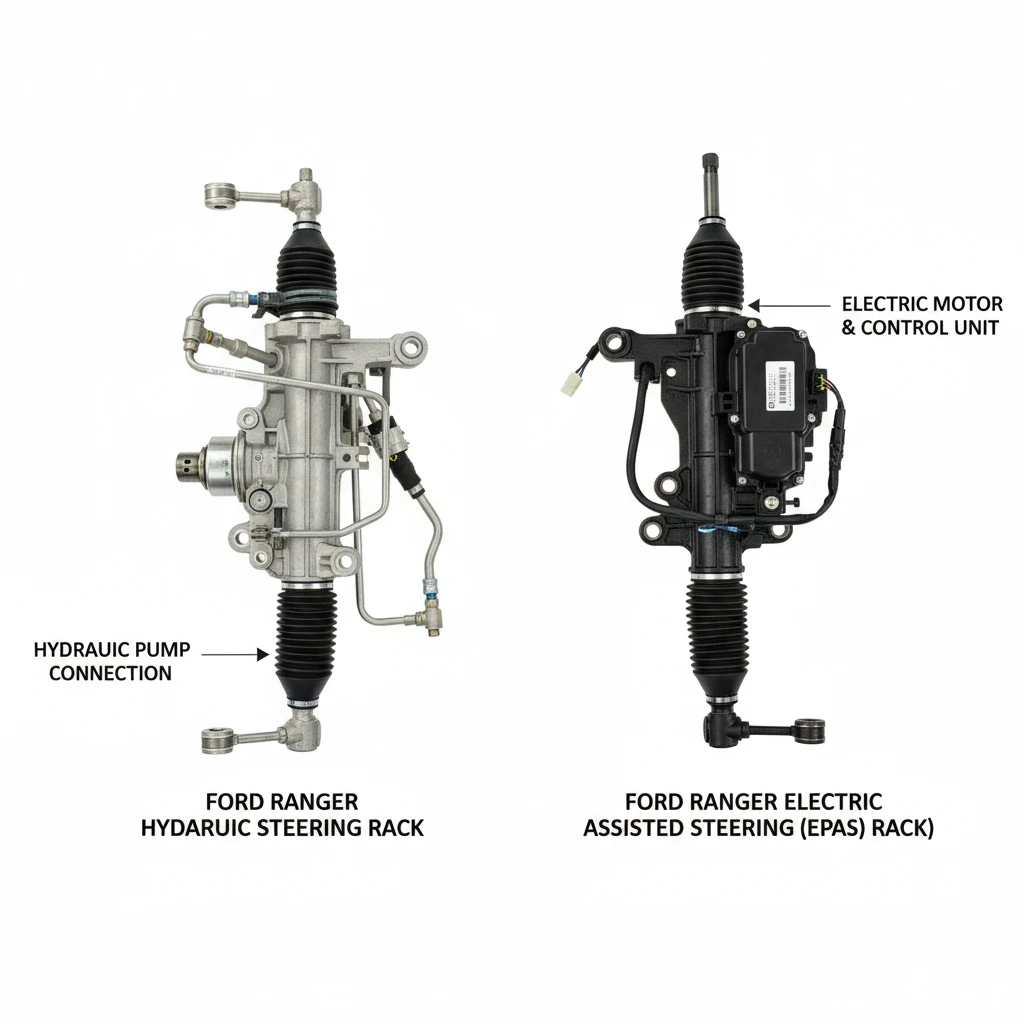
Before sourcing parts for a Ford Ranger steering rack replacement, it is imperative to identify the specific steering assistance system your vehicle utilizes. The Ford Ranger T6 platform underwent a significant technological shift between the PX1 and PX2 generations, moving from traditional hydraulic systems to advanced electronic assistance.
The Hydraulic System (PX1: 2011–2015)
The PX1 generation Ford Ranger utilizes a conventional hydraulic power steering setup. This system relies on a belt-driven pump, hydraulic fluid, and high-pressure lines to assist the driver. While robust, these racks are prone to seal failures and fluid leaks, particularly in New Zealand’s harsh off-road environments where dust and grit can compromise the seals.
Key Characteristics:
- Requires power steering fluid (ATF).
- Driven by an engine-mounted pump.
- Common failure points: Leaking pinion seals, split boots, and pump whine.
The Electric System (PX2 & PX3: 2015–Current)
With the introduction of the PX2 facelift, Ford transitioned to Electric Power Assisted Steering (EPAS). This system eliminates the hydraulic pump and fluid entirely, replacing them with an electric motor mounted directly to the steering rack housing. This allows for variable assistance (lighter at low speeds, heavier at high speeds) and integration with driver-assist features like Lane Keep Assist.
Key Characteristics:
- No fluid reservoir or pump.
- Requires electronic calibration (coding) upon replacement.
- Common failure points: Motor electrical faults, internal belt failure, and water ingress in the electronics.
Critical Signs Your Steering Rack Requires Replacement
Ignoring a failing steering rack can lead to catastrophic loss of control. In the context of New Zealand Warrant of Fitness (WOF) inspections, steering play is a major failure point. Here is how to diagnose the issue before it leaves you stranded.
1. The “Dead Zone” and Excessive Play
A primary indicator of internal gear wear is a “dead zone” in the steering wheel center. If you can turn the wheel several degrees before the road wheels respond, the rack and pinion gears are likely worn beyond tolerance. On the EPAS systems (PX2/3), this can also manifest as a notchiness or artificial resistance when initiating a turn.
2. Clunking Noises on Rough Terrain
If you hear a distinct metal-on-metal clunk when driving over corrugations or gravel roads, it often points to worn rack mounting bushings or internal rack play. While bushings can be replaced (discussed below), internal knocking usually necessitates a full rack replacement.
3. Fluid Leaks (PX1 Only)
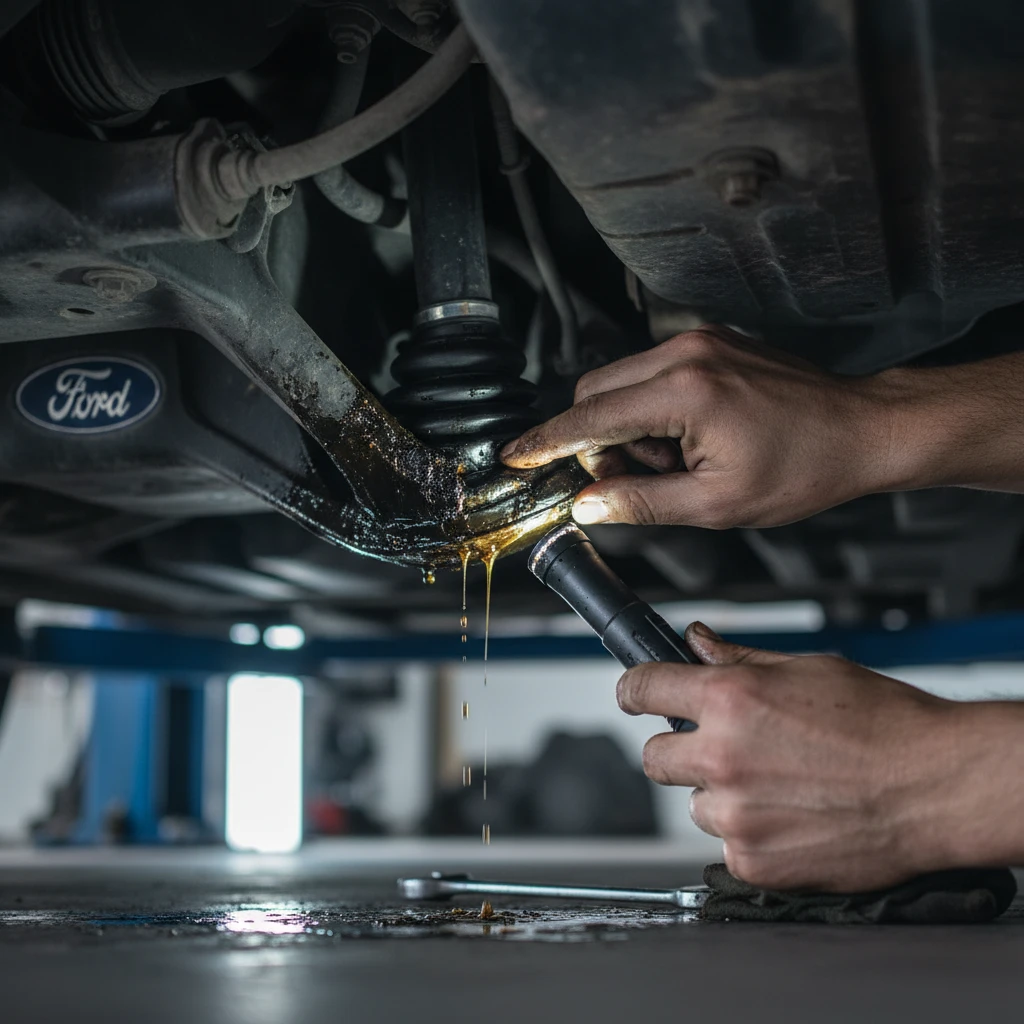
For hydraulic owners, red or brown fluid dripping from the steering boots indicates seal failure. Once the boots fill with oil, the rack is generally considered non-serviceable and requires a remanufactured or new unit.
The Case for Polyurethane Bushing Upgrades
When performing a Ford Ranger steering rack replacement, reinstalling standard rubber bushings is a missed opportunity for performance improvement. The heavy front-end weight of the Ranger, especially when equipped with bull bars and winches, places immense stress on the steering rack mounting points.
Why Rubber Fails
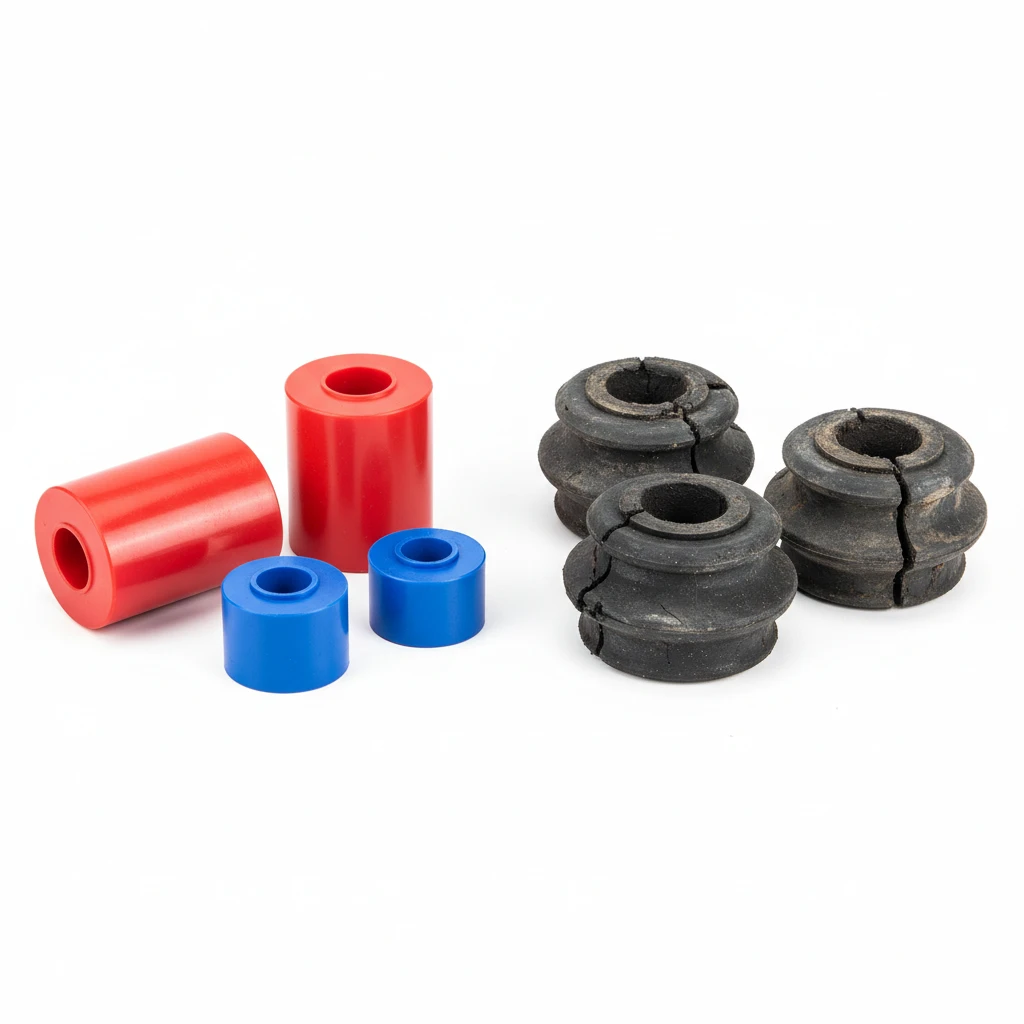
OEM rubber bushings are designed for comfort and cost-effectiveness. However, rubber is susceptible to degradation from oil, ozone, and physical stress. Over time, the rubber compresses, allowing the steering rack to shift laterally during cornering. This movement results in vague steering input and increased tyre wear.
The Polyurethane Advantage
Upgrading to polyurethane bushings (such as those from SuperPro or Nolathane) solves the deflection issue. These synthetic elastomers offer:
- Higher Durometer: They are stiffer than rubber, ensuring the rack stays firmly planted to the chassis.
- Chemical Resistance: Impervious to oil leaks and road grime.
- Longevity: They do not perish or crack like rubber.
For New Zealand drivers who tow boats or navigate technical trails, polyurethane rack bushings provide a noticeable increase in steering precision and feedback.
Tie Rod End and Ball Joint Kits: The Essential Add-Ons
A steering rack does not operate in isolation. It is connected to the wheel hubs via tie rods. Replacing the rack without addressing worn tie rod ends or ball joints is a false economy that will result in poor alignment and rapid component wear.
Inner vs. Outer Tie Rods
Most replacement steering racks come with new inner tie rods (rack ends) pre-installed. However, the outer tie rod ends (which connect to the steering knuckle) must often be purchased separately. We strongly recommend installing heavy-duty outer tie rod ends that feature greaseable joints and larger ball studs, particularly for lifted Rangers.
Ball Joint Synergy
While the ball joints are technically part of the suspension arms, they work in unison with the steering. Worn lower ball joints can mimic steering rack play. When the vehicle is on the hoist for a rack replacement, it is the ideal time to inspect and replace the upper and lower ball joints. High-articulation ball joints are available for vehicles with suspension lifts to prevent binding at full droop.
Installation Nuances and EPAS Calibration
Replacing a steering rack on a Ford Ranger is technically demanding. The procedure varies significantly between the hydraulic and electric models.
Hydraulic Bleeding (PX1)
After mechanical installation, the hydraulic system must be flushed and bled. Failure to remove all air pockets can result in pump cavitation (noise) and erratic assistance. We recommend using a vacuum bleeder to ensure a complete air evacuation before starting the engine.
EPAS Programming (PX2/PX3)
The electric racks are not “plug and play.” Because the EPAS unit communicates with the vehicle’s ECU, ABS, and stability control modules, a new rack must be introduced to the vehicle’s CAN bus network.
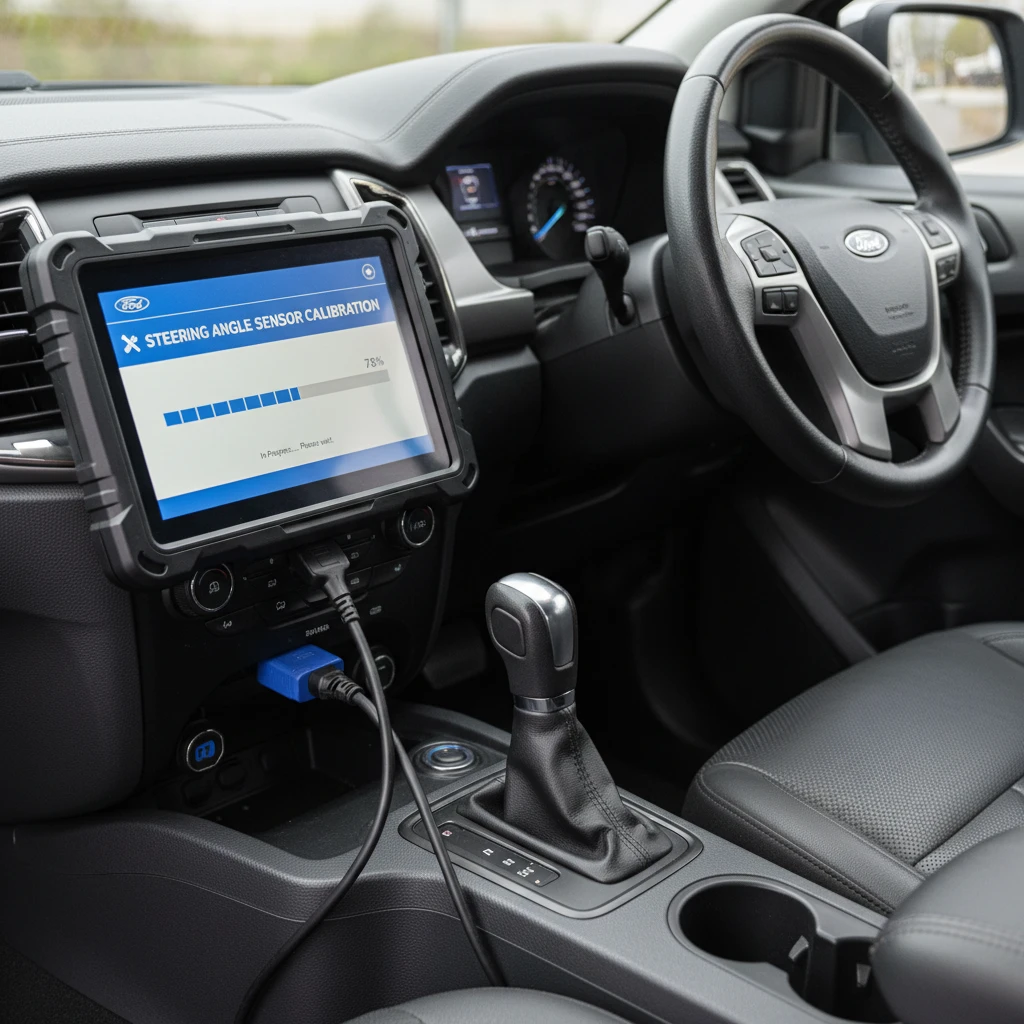
This process, known as “Module Programming” or “Calibration,” requires a Ford IDS scan tool or a high-level diagnostic computer. The calibration process:
- Loads the vehicle’s “As-Built” data into the new rack module.
- Calibrates the steering angle sensor to zero.
- Initializes the pull-drift compensation software.
Warning: Installing a used rack from a wreck without reprogramming can trigger permanent error codes and disable safety features like Lane Keep Assist.
Sourcing Genuine vs. Aftermarket Parts in NZ
In the New Zealand market, Ranger owners are often faced with a choice between Genuine Ford parts and aftermarket alternatives. Given the critical safety nature of steering components, the decision should be based on quality assurance rather than price alone.
Genuine Ford Parts
Pros: Guaranteed fitment, supports all factory electronic features, factory warranty.
Cons: significantly higher cost, sometimes limited availability for older PX1 models.
Quality Aftermarket (OEM Spec)
Brands like TRW (who often manufacture the OEM units) or reputable 4×4 specialists offer racks that meet or exceed factory specifications. For lifted vehicles, some aftermarket suppliers offer “heavy-duty” racks with reinforced housings to cope with larger tyres.
Avoid: Unbranded, low-cost units from generic online marketplaces. These often use inferior metallurgy in the pinion gears and low-grade electronics in EPAS units, leading to premature failure and potential safety risks.
Frequently Asked Questions
How much does a Ford Ranger steering rack replacement cost in NZ?
The cost varies significantly by generation. A hydraulic rack for a PX1 typically costs between $600 and $1,200 NZD for the part, plus labour. An electric EPAS rack for a PX2/PX3 is more expensive, ranging from $1,800 to $3,500 NZD depending on whether it is genuine or aftermarket, plus the cost of calibration and alignment.
Can I drive my Ranger with a leaking steering rack?
It is not recommended. A leaking hydraulic rack will eventually run dry, causing the power steering pump to seize and the serpentine belt to snap, which will kill your alternator and water pump. Furthermore, leaking fluid onto suspension bushes degrades the rubber, causing secondary failures.
Do I need a wheel alignment after replacing the steering rack?
Yes, absolutely. Replacing the rack disrupts the toe settings of the front wheels. Driving without an alignment immediately after replacement will result in a crooked steering wheel, severe tyre scrubbing, and unpredictable handling.
What is the difference between the PX1 and PX2 steering racks?
The PX1 (2011-2015) uses a hydraulic power steering system with fluid and a pump. The PX2 (2015+) uses an Electric Power Assisted Steering (EPAS) system with an integrated electric motor and no fluid. The parts are not interchangeable.
Why is my Ford Ranger steering wheel shaking?
Steering wheel shake is often caused by unbalanced tyres or warped brake rotors, but if the shake occurs specifically when hitting bumps or is accompanied by a clunking sound, it likely indicates worn tie rod ends or play within the steering rack mechanism itself.
Are polyurethane bushes better for the steering rack?
Yes, for most applications. Polyurethane bushes reduce rack movement, providing sharper steering response and better durability against oil and contaminants compared to standard rubber bushes. They are highly recommended for Rangers used for towing or off-roading.