
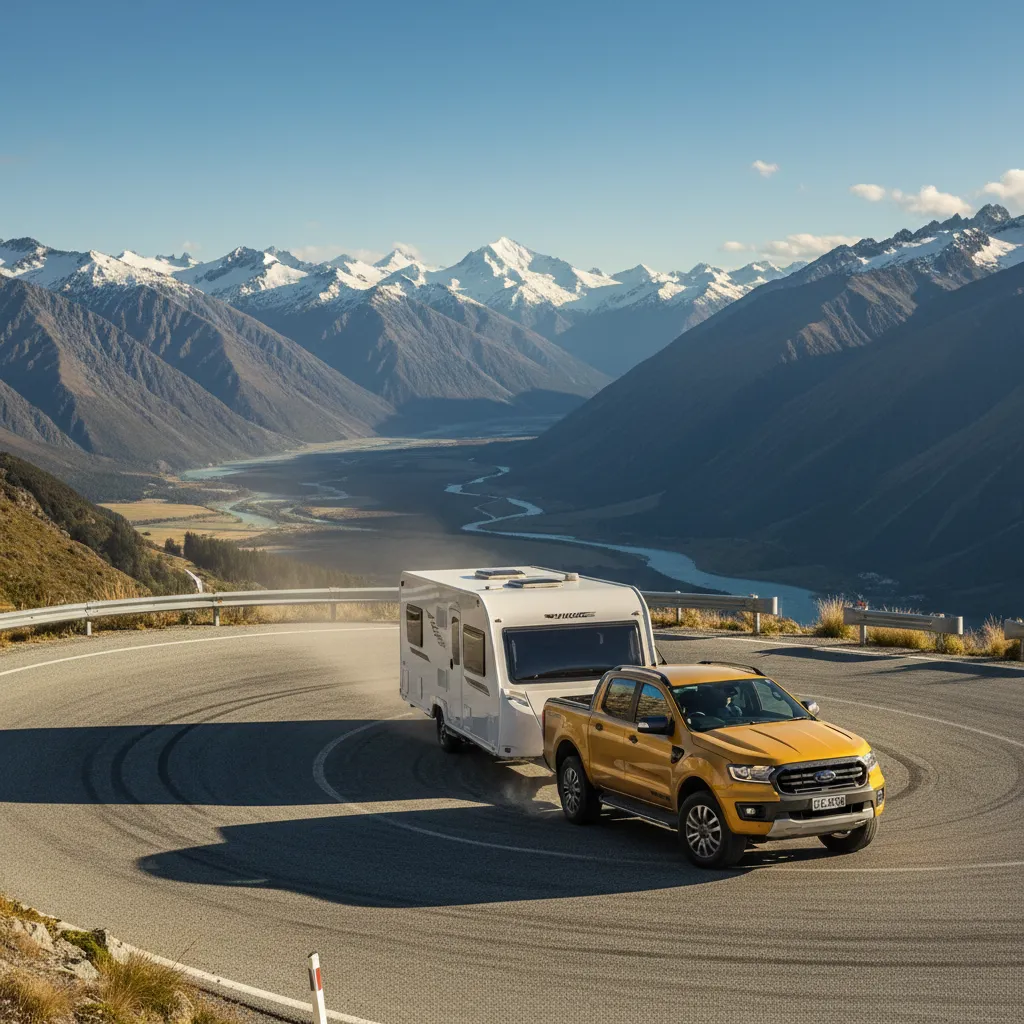
Summer Towing & Cooling Prep (NZ)
Essential Ford Ranger towing upgrades in NZ include installing an external transmission oil cooler to prevent overheating on steep gradients, upgrading to slotted brake rotors with high-temperature pads for fade resistance, and fitting a heavy-duty suspension lift kit to manage tongue weight. These modifications ensure reliability when hauling heavy caravans or boats during the New Zealand summer.
New Zealand’s summer offers the perfect backdrop for hauling the boat to the Coromandel or taking the caravan through the Southern Alps. However, the combination of high ambient temperatures, steep mountain passes, and heavy loads pushes your utility vehicle to its mechanical limits. For Ford Ranger owners, stock components are often sufficient for daily driving but can fall short under the stress of heavy towing. Ensuring your rig is equipped with the right Ford Ranger towing upgrades NZ drivers rely on is not just about performance; it is about safety and protecting your investment.
Why NZ Summer Towing Demands Upgrades
New Zealand presents a unique set of challenges for towing vehicles. Unlike the flat highways of Australia or the US, Kiwi roads are characterized by frequent elevation changes, winding corners, and coarse chip-seal surfaces. When you combine the geography of the Kaimai Ranges or the Crown Range with summer temperatures often exceeding 25°C (and road surface temperatures much higher), the thermal load on your Ford Ranger increases exponentially.
While the Ford Ranger (especially the PX2, PX3, and Next-Gen models) is a capable tow vehicle with a 3,500kg rating, that rating is a maximum limit, not a target for continuous operation in alpine conditions. Stock cooling systems and transmissions are designed for a balance of economy and performance. When you add a 2.5-tonne caravan and a tray full of camping gear, the factory thermal management systems struggle to dissipate the heat generated by the engine and transmission, leading to “limp mode” or catastrophic failure.
Essential Ford Ranger Towing Upgrades NZ
To transform your Ranger into a dedicated tourer, specific mechanical upgrades are required. These modifications target the weak points of the vehicle that are exacerbated by heavy towing.
Transmission Oil Coolers
The number one enemy of the Ford Ranger’s 6R80 (6-speed) and 10R80 (10-speed) automatic transmissions is heat. Under heavy load, the torque converter unlocks frequently, generating massive amounts of heat. The factory heat exchanger, which is integrated into the radiator, often cannot cope with this excess thermal energy.
The Upgrade: Installing a dedicated, external transmission oil cooler is the most critical upgrade. By bypassing or supplementing the factory heat exchanger, you can drop transmission operating temperatures by 20-30°C. This prevents the transmission fluid from degrading and protects internal clutch packs from burning out.
Thermal Management Valves
Many modern Rangers are equipped with a thermal bypass valve on the transmission lines. This valve is designed to warm the fluid up quickly for emissions and fuel economy. However, these valves are prone to sticking, which can block flow to the cooler and destroy the transmission.
The Upgrade: Replacing the stock thermal valve with a high-flow, pinned open valve ensures constant fluid circulation to your cooler, eliminating a common point of failure.
The Critical Cooling System Check
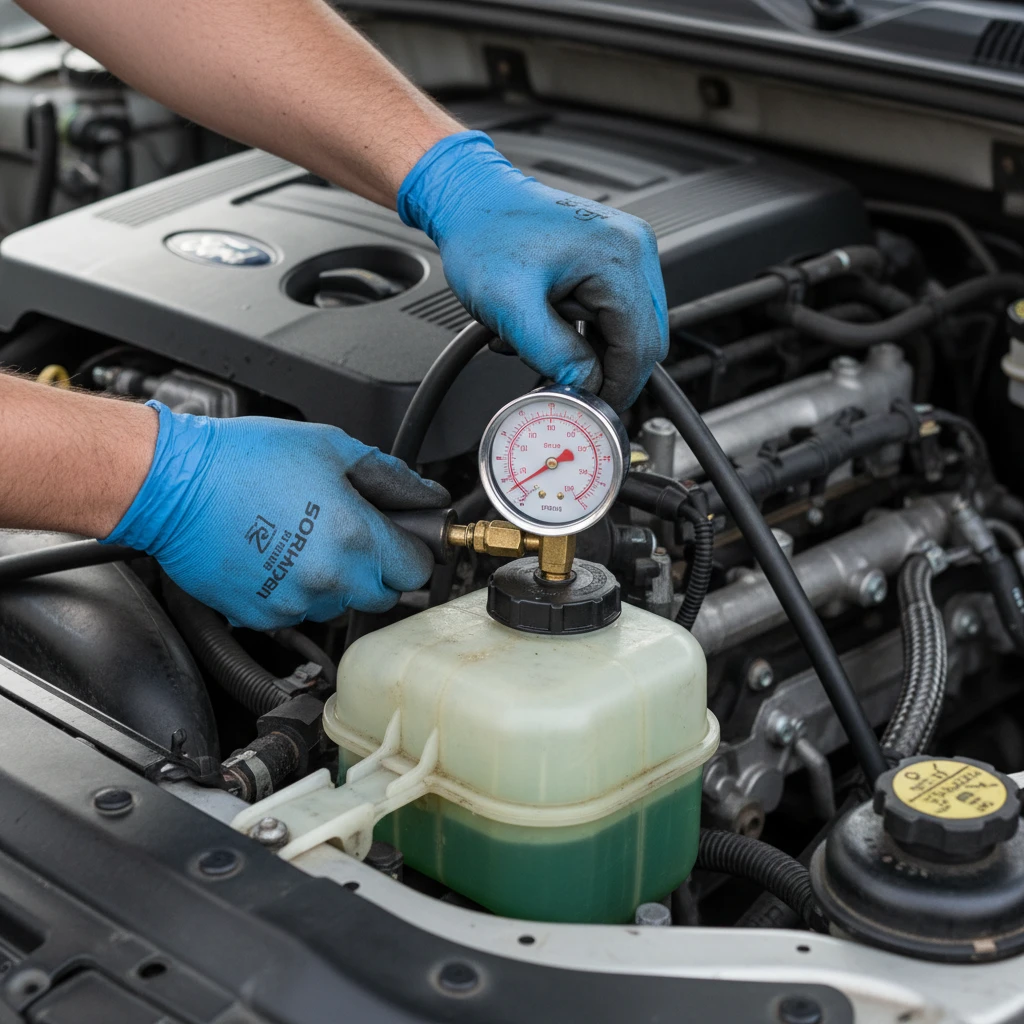
Before you even consider hitching up the boat, the integrity of your engine’s cooling system must be verified. A cooling system that functions adequately during the daily commute to work may fail spectacularly under the sustained load of towing up the Bombay Hills.
Why Pressure Testing is Mandatory
A pressure test involves attaching a specialized pump to the radiator or expansion tank to simulate the pressure built up when the engine is hot. This test reveals:
- Micro-leaks in hoses: Small cracks that only open under pressure.
- Radiator crimp failures: Common on plastic-tank radiators used in modern utes.
- Water pump seal integrity: Ensuring the pump isn’t weeping coolant.
The EGR Cooler Factor
On the 3.2L and 2.0L Bi-Turbo engines, the EGR (Exhaust Gas Recirculation) cooler is cooled by engine coolant. If this unit cracks internally due to thermal stress, coolant can leak into the engine cylinders or exhaust. A comprehensive pressure test can help identify internal pressure drops that suggest an EGR failure is imminent.
Stopping Power: Brake Fluid & Upgrades
Going up the hill tests your cooling system; coming down tests your braking system. Brake fade is a terrifying experience where the brake pedal goes soft or to the floor, resulting in a loss of stopping power. This is almost always caused by boiling brake fluid.
Understanding Hygroscopic Fluid
Brake fluid is hygroscopic, meaning it absorbs moisture from the atmosphere over time. As the water content in the fluid increases, the boiling point decreases drastically.
Standard DOT 4 Fluid:
Dry Boiling Point: ~230°C
Wet Boiling Point (3.7% water): ~155°C
In NZ, where humidity is high, fluid degrades faster. If your fluid boils at 155°C, a few heavy braking applications on a descent can vaporize the water in the lines, creating gas bubbles that compress, resulting in total brake failure.
The Upgrade Path
- Fluid Flush: Replace old fluid with high-performance DOT 4 or DOT 5.1 fluid immediately before summer towing season.
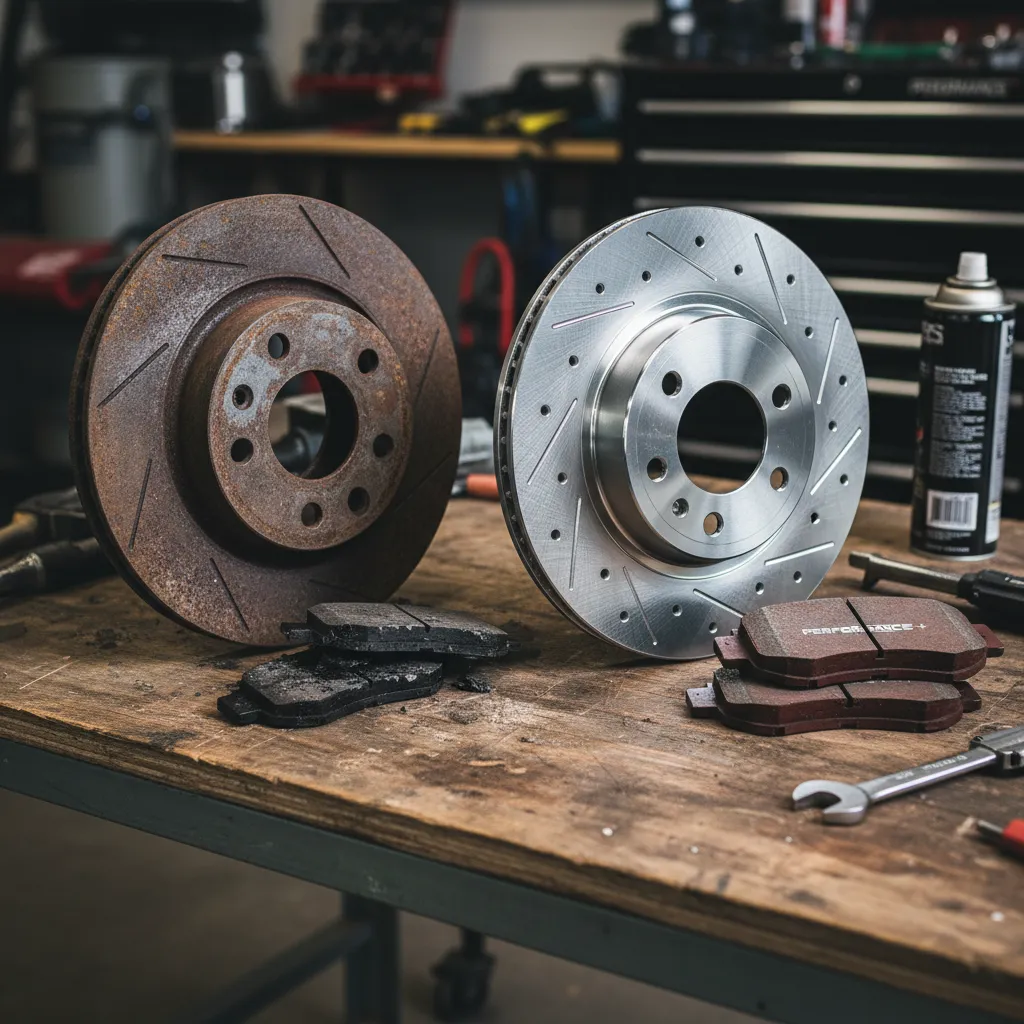
- Slotted Rotors: Upgrade to slotted rotors (like DBA T3) which help expel the gasses produced by hot brake pads, keeping the pad surface clean and biting.
- Heavy Duty Pads: Switch to pads with a higher friction coefficient and higher thermal threshold (e.g., Bendix Ultimate 4WD).
Towing Heavy Loads in NZ Summer Heat
Mechanical upgrades provide the capability, but driver behavior ensures longevity. Towing heavy loads in the heat requires a shift in driving style to manage the vehicle’s vitals.
Gear Selection is Key
Do not leave your Ford Ranger in “Drive” (D) when towing heavy loads, especially on inclines. The gearbox is programmed for fuel economy and will attempt to hold higher gears (Overdrive), causing the torque converter to slip and generate heat.
The Strategy: Manually select a gear (Sport mode or Manual mode) that keeps the engine RPM between 2,200 and 3,000. This locks the torque converter, reducing heat generation, and spins the water pump faster, circulating more coolant through the engine.
Monitoring Vital Signs
The factory temperature gauge on the dashboard is heavily dampened; by the time the needle moves toward the red, the engine is already overheating.
The Upgrade: Install an OBD2 monitor (like a ScanGauge or Ultragauge) to read real-time digital temperatures for:
- Cylinder Head Temperature (CHT)
- Transmission Fluid Temperature (TFT)
- Intake Air Temperature (IAT)
If you see Transmission temps hitting 115°C+, pull over safely and idle the engine in Park to cool it down. Turning the engine off immediately can cause “heat soak,” spiking temperatures further.
Suspension and GVM Considerations
When you hitch a heavy trailer, the rear of the Ranger sags, lifting the front wheels. This reduces steering grip and braking efficiency. Furthermore, the factory suspension is often too soft to handle the dynamic loads of a swaying caravan.
GVM Upgrades
If your accessories (bull bar, winch, canopy), passengers, and ball weight exceed the Gross Vehicle Mass (GVM), your insurance may be void. A certified GVM upgrade involves fitting heavier springs and upgraded shock absorbers, legally increasing the payload capacity of your Ranger.
Airbags vs. Full Leaf Replacement
For occasional towing, helper airbags (like Airbag Man) allow you to level the ride height. However, for regular heavy towing, a full leaf spring replacement designed for constant load (e.g., 300kg+ constant) is superior as it distributes the weight correctly across the chassis rails, whereas airbags can create stress points if used incorrectly.
Frequently Asked Questions
Do I need an aftermarket transmission cooler for my Ford Ranger?
Yes, if you tow regularly. The factory cooling system is adequate for standard driving, but towing heavy loads in NZ’s hilly terrain causes transmission temperatures to spike, which significantly shortens the life of the fluid and the transmission itself. An external cooler is cheap insurance.
What is the maximum towing capacity of a Ford Ranger in NZ?
Most PX2, PX3, and Next-Gen Ford Rangers have a braked towing capacity of 3,500kg. However, you must consider the Gross Combination Mass (GCM). If you are towing the full 3,500kg, your payload in the ute itself is severely restricted.
How often should I change brake fluid for towing?
For vehicles used for heavy towing, it is recommended to test the brake fluid moisture content at every service and replace the fluid at least every 24 months, or annually if you tow frequently in alpine areas.
Will a GVM upgrade void my Ford warranty?
If you use a reputable, Second Stage Manufacturer (SSM) approved kit installed by a certified agent, it generally does not void the vehicle warranty, but the warranty on the suspension components shifts to the aftermarket manufacturer. Always check with your dealer first.
Why does my Ranger overheat when towing uphill?
This is usually due to a combination of high load, low airflow speed, and the transmission generating excess heat. Ensuring your viscous fan hub is working, your radiator is clean of mud/bugs, and upgrading your transmission cooling can resolve this.
What tire pressure should I use when towing?
Rear tire pressures generally need to be increased when towing to handle the extra load and reduce sidewall flex, which generates heat. Refer to your tire placard for “loaded” pressures, typically between 38-45 PSI depending on the tire rating and load.