
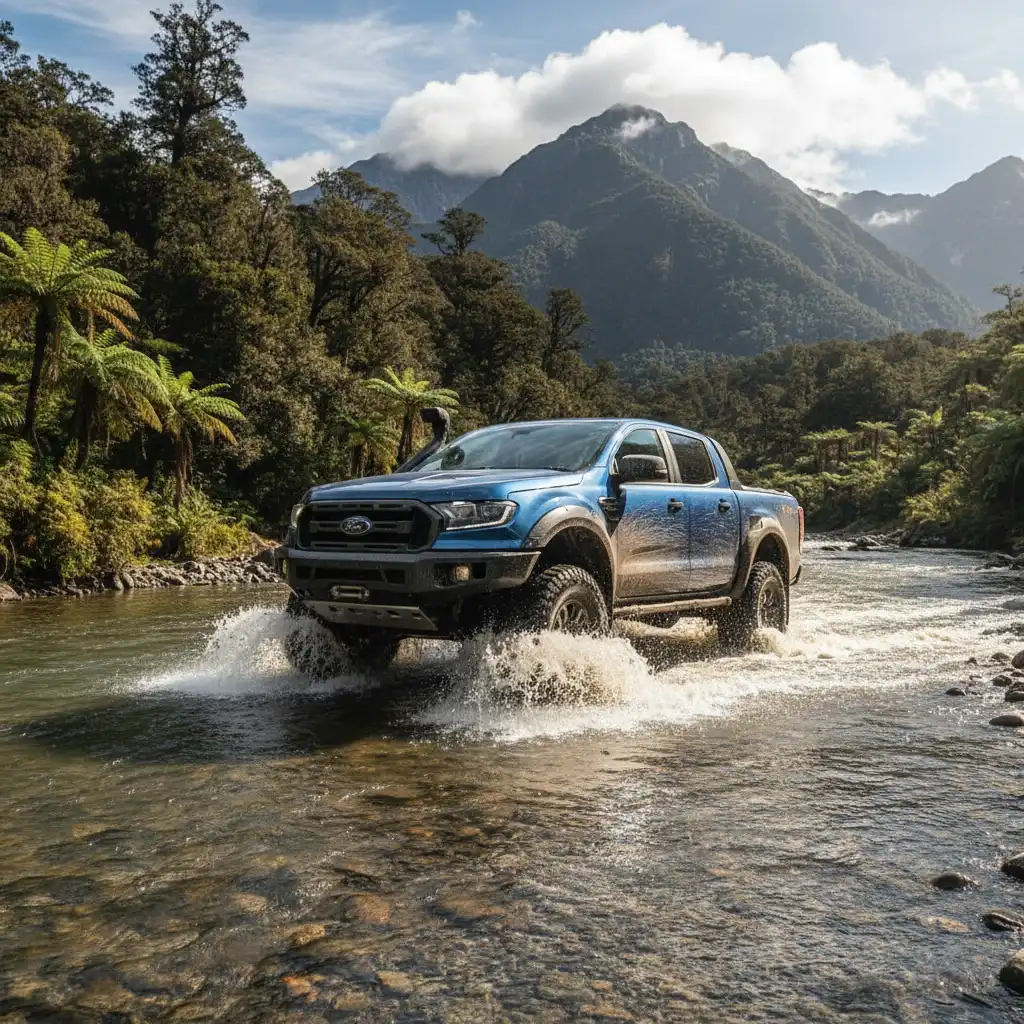
Suspension Lift Kits (Bilstein/OME)
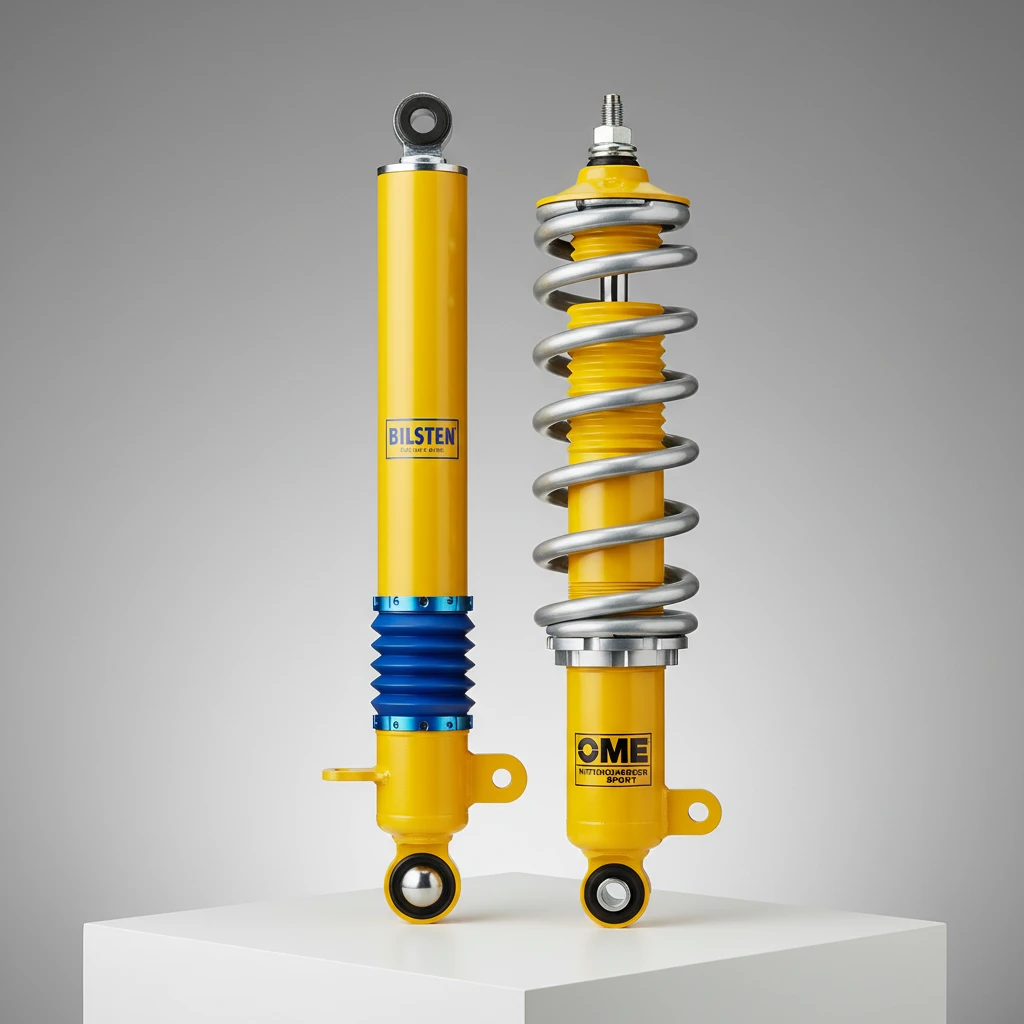
A Ford Ranger 2 inch lift in NZ typically involves replacing factory suspension with performance components like Bilstein B6 or Old Man Emu (OME) Nitrocharger Sport shocks paired with matched coil and leaf springs. This upgrade increases ground clearance to approximately 50mm, allows for larger all-terrain tyres, and significantly improves load-carrying capacity and off-road articulation while maintaining New Zealand LVVTA compliance.
Why Upgrade Your Ford Ranger Suspension?
For New Zealand tradespeople, farmers, and overlanding enthusiasts, the factory suspension on the Ford Ranger (whether PX1, PX2, PX3, or the Next-Gen Ranger) often falls short under heavy loads or on corrugated metal roads. A professional 2-inch lift is not merely cosmetic; it is a functional necessity for those pushing their vehicle beyond the pavement.
Stock suspension is designed for a “happy medium”—soft enough for a test drive but often too soft for a fully loaded tray or towing a boat. Upgrading to a specialized system provides three critical benefits: increased approach and departure angles, the ability to fit 33-inch tyres (with minor trimming), and vastly superior damping control to prevent brake dive and body roll.
Bilstein vs. Old Man Emu (OME): The NZ Showdown
When researching a Ford Ranger 2 inch lift NZ, two names dominate the market: Bilstein and Old Man Emu (OME). Both offer exceptional quality, but they utilize different technologies suited to different driving styles found across New Zealand.
Bilstein B6 / B60 (The Monotube Master)
Bilstein is renowned for its monotube gas-pressure technology. The B6 Offroad and the heavy-duty B60 series are engineered for drivers who prioritize handling precision and heat dissipation.
- Technology: Monotube design with a large working piston. This allows for rapid heat dissipation, which is critical when driving fast over corrugated gravel roads found in the South Island.
- Performance: Bilstein shocks typically offer a firmer, more sporty ride. They utilize digressive valving, meaning the shock is firm at low shaft speeds (controlling body roll in corners) but becomes compliant at high shaft speeds (hitting a pothole).
- Best For: Drivers who spend a lot of time on the open road, tow heavy loads, or drive aggressively on gravel.
Old Man Emu Nitrocharger Sport (The Twin-Tube Tourer)
Old Man Emu, developed by ARB, focuses on a complete integrated system. Their Nitrocharger Sport shocks are a twin-tube design.
- Technology: Twin-tube design protects the internal working cylinder from stone damage—if the outer tube gets dented, the piston can still move freely inside the inner tube.
- Performance: OME generally provides a more compliant, softer initial ride compared to the sportier Bilstein. They focus heavily on “ride quality” for long-distance touring.
- Best For: Overlanders, slow-speed technical 4WDing, and drivers who prioritize ride comfort over cornering precision.
Choosing the Right Leaf Springs: Comfort vs. Heavy Duty
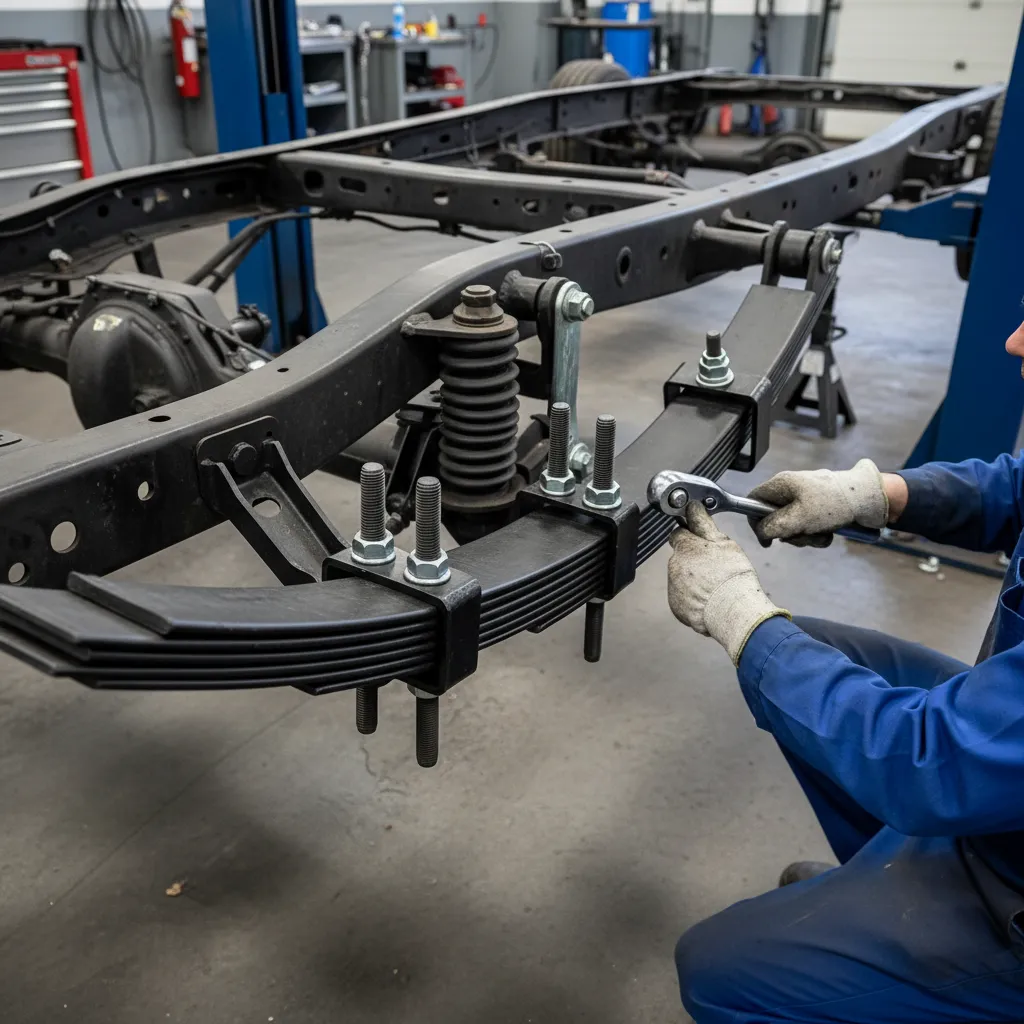
The most common mistake when purchasing a lift kit is selecting the wrong spring rate for the rear leaf springs. In the Ford Ranger, the rear suspension dictates the vehicle’s rake and ride quality.
Comfort / Medium Load (0-300kg)
If your Ranger serves as a family vehicle, does the school run, and occasionally carries a few bags of cement or camping gear, you need “Comfort” or “Medium” springs. These are designed to provide the 50mm lift without making the ride harsh.
Warning: If you install Heavy Duty springs on an unladen ute, the ride will be jarring, and the rear of the vehicle will sit too high, causing vibration issues and poor handling.
Heavy Duty / Constant Load (300kg – 600kg+)
“Constant Load” refers to weight that is always in the vehicle. This includes:
- Steel tray upgrades
- Canopies (fiberglass or steel)
- Drawer systems and fridges
- Permanent toolboxes
- Bull bars and winches (affects front coil selection)
If you fit a comfort spring to a Ranger carrying 400kg of tools, the rear will sag, you will lose your 2-inch lift immediately, and the suspension will bottom out. Conversely, a 600kg constant load spring is essential for trade vehicles to maintain the correct geometry and safety.
GVM Upgrade Options for Ford Ranger
A standard 2-inch lift kit improves load carrying ability, but it does not legally increase the Gross Vehicle Mass (GVM). The GVM is the maximum legal weight of the vehicle including the truck itself, fuel, passengers, and cargo.
For commercial operators in NZ, exceeding the GVM is a serious safety and liability issue. If your Ranger needs to carry more than the factory limit, you must look into a certified GVM upgrade.
Pre-Registration vs. Post-Registration
Ideally, a GVM upgrade (often involving specialized OME or Pedders kits) is fitted prior to the vehicle being first registered in New Zealand. This is known as a Second Stage Manufacture (SSM) in some markets, but in NZ, it simplifies the certification process.
If the vehicle is already registered, a GVM upgrade is treated as a modification requiring Low Volume Vehicle (LVV) certification. This upgrade often requires:
- Heavy-duty shock absorbers and springs tested for the higher weight.
- Upgraded braking components (rotors and pads).
- Chassis reinforcement in specific areas.
- A dedicated LVVTA certification plate.
NZ LVVTA Certification Requirements
New Zealand has strict regulations regarding vehicle modifications. Navigating the Low Volume Vehicle Technical Association (LVVTA) rules is crucial for keeping your Ford Ranger road-legal and insurable.
The 50mm Threshold
Generally, a suspension lift of up to 50mm (2 inches) usually does not require LVV certification, provided:
- The suspension geometry is maintained within factory tolerances.
- The steering geometry remains safe (bump steer is not introduced).
- Brake hoses and ABS lines are not under tension at full droop.
- The vehicle’s structure is not modified (no cutting or welding of the chassis).
When is Certification Required?
You will likely need an LVV cert if:
- You combine a suspension lift with a body lift.
- You fit tyres that significantly increase the rolling diameter beyond 5% of the standard option (often 33-inch tyres or larger on a Ranger may trigger scrutiny regarding speedometer accuracy and braking performance).
- You modify the steering knuckles or upper control arms (though some direct replacement arms are now considered standard repair parts if they mimic factory geometry, most aftermarket correction arms require a cert).
- The lift affects the Electronic Stability Control (ESC) system functioning.
Note: Always consult with a registered LVV certifier before commencing major work. Regulations can be subject to interpretation and updates.
Geometry and Upper Control Arms (UCAs)
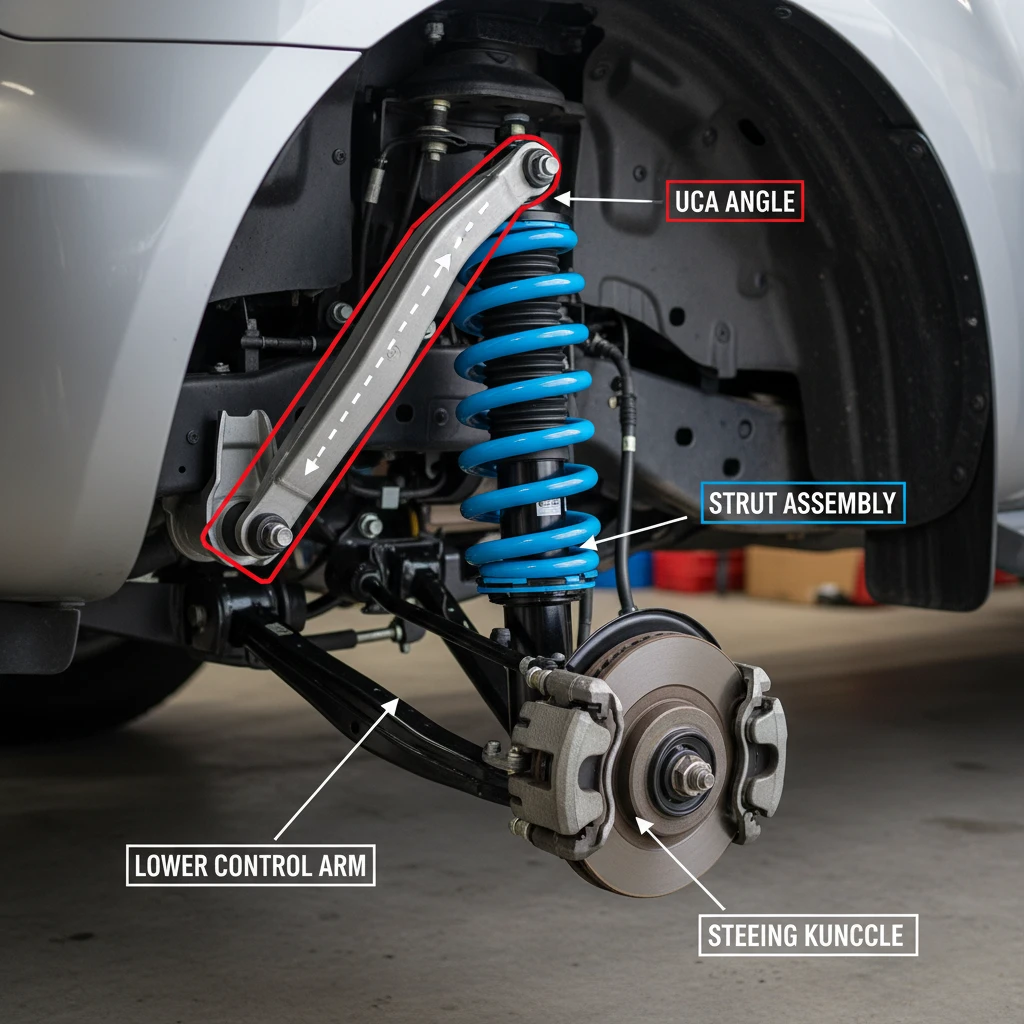
When you lift a Ford Ranger 2 inches, the front suspension geometry changes. The Lower Control Arms (LCA) and Upper Control Arms (UCA) angle downward, which reduces the amount of down-travel (droop) available before the UCA hits the coil spring or reaches the limit of the ball joint.
Furthermore, the caster angle is reduced, which can make the steering feel “flighty” or vague at highway speeds. While the factory adjustment cams can sometimes correct the alignment on a 40mm lift, a full 50mm lift often pushes the factory adjustment to its limit.
The Solution: Aftermarket UCAs
Installing aftermarket Upper Control Arms (such as those from SuperPro, Blackhawk, or OME) is highly recommended for a 2-inch lift. These arms are designed with:
- Built-in Caster Correction: Returns steering feel to factory sharpness.
- High-Angle Ball Joints: Allows for greater articulation without binding.
- Clearance: Shaped to avoid contact with the coil spring at full extension.
Installation and Maintenance
Installing a suspension lift is a safety-critical task. While the rear leaf springs are relatively straightforward, the front struts on a Ford Ranger require a high-quality spring compressor. The energy stored in a heavy-duty front coil is enough to cause serious injury if mishandled.
The “Settling” Period
After installation, new springs will settle. It is common for the ride height to decrease by 5-10mm over the first 500-1000km. Do not perform a final wheel alignment immediately after the car comes off the hoist. Drive the vehicle for a week to let the bushes and springs seat, then perform a professional wheel alignment.
Maintenance Checklist
- 500km Check: Re-torque all U-bolts, shackle bolts, and strut top nuts.
- Every Service: Inspect shock absorbers for leaking oil (misting is normal, dripping is not).
- Greaseable Shackles: If you installed greaseable shackles, pump them with fresh grease every 10,000km to prevent squeaking and premature wear.
Conclusion
Investing in a premium Ford Ranger 2 inch lift NZ setup from Bilstein or Old Man Emu transforms the vehicle from a standard ute into a capable tourer or workhorse. The choice between the two brands largely depends on your preference for sporty control (Bilstein) versus touring comfort (OME). However, the most critical factor is correctly matching your spring rates to your constant load. By adhering to LVVTA guidelines and considering geometry correction with UCAs, you ensure your Ranger remains safe, legal, and ready for the rugged New Zealand terrain.
Will a 2 inch lift void my Ford Ranger warranty?
Generally, a lift kit will not void the warranty on the entire vehicle. However, Ford NZ may deny warranty claims on specific suspension components or driveline parts (like CV joints) if they can prove the modification caused the failure. Always check with your local dealer.
Do I need extended brake lines for a 2 inch lift?
For a standard 50mm (2 inch) lift on a Ford Ranger PX1, PX2, or PX3, factory brake lines are usually sufficient. However, checking the tension at full droop during installation is mandatory. If you go higher or disconnect sway bars, extended lines are required.
Can I fit 35 inch tyres with a 2 inch lift?
No, not without significant modification. A 2 inch lift comfortably clears 33-inch tyres (e.g., 285/70R17). Fitting 35s typically requires a body lift, aggressive guard cutting, and flares, which will definitely require LVV certification.
What is the difference between a body lift and a suspension lift?
A suspension lift extends the springs/struts to push the chassis away from the axles, increasing ground clearance and suspension travel. A body lift uses spacers to lift the cab/tub off the chassis; it allows for bigger tyres but does not increase ground clearance under the chassis or improve handling.
How much does a Ford Ranger lift kit cost in NZ?
A quality suspension lift kit (parts only) from brands like Bilstein or OME typically ranges from $2,500 to $3,500 NZD. Installation and wheel alignment will add another $800 to $1,200 depending on the workshop.
Does a lift kit affect fuel economy?
Yes, slightly. Raising the vehicle increases aerodynamic drag. Furthermore, if you fit larger, heavier off-road tyres along with the lift, you can expect fuel consumption to increase by 1-2 litres per 100km.