
Transmission Cooler Upgrades
A Ford Ranger transmission cooler upgrade in NZ involves replacing or supplementing the undersized factory water-to-oil heat exchanger with a heavy-duty, external air-to-oil kit. This modification is essential for heavy towing and off-road driving, significantly lowering transmission fluid temperatures to prevent the 6R80 and 10R80 transmissions from overheating, degrading fluid, and entering limp mode on steep New Zealand terrain.
For New Zealand Ford Ranger owners, the vehicle’s reputation as a “tow-anything” workhorse is well-earned. However, the factory cooling system often struggles to keep up with the demands of hauling heavy caravans, boats, or trade trailers through the Southern Alps or during the heat of an NZ summer. The standard transmission cooling setup is designed for general use, not the extreme loads many Kiwi drivers place on their utes. This guide provides authoritative technical insight into why upgrading your Ford Ranger transmission cooler is not just a luxury, but a necessity for longevity.
Why does the Ford Ranger factory transmission cooler fail?
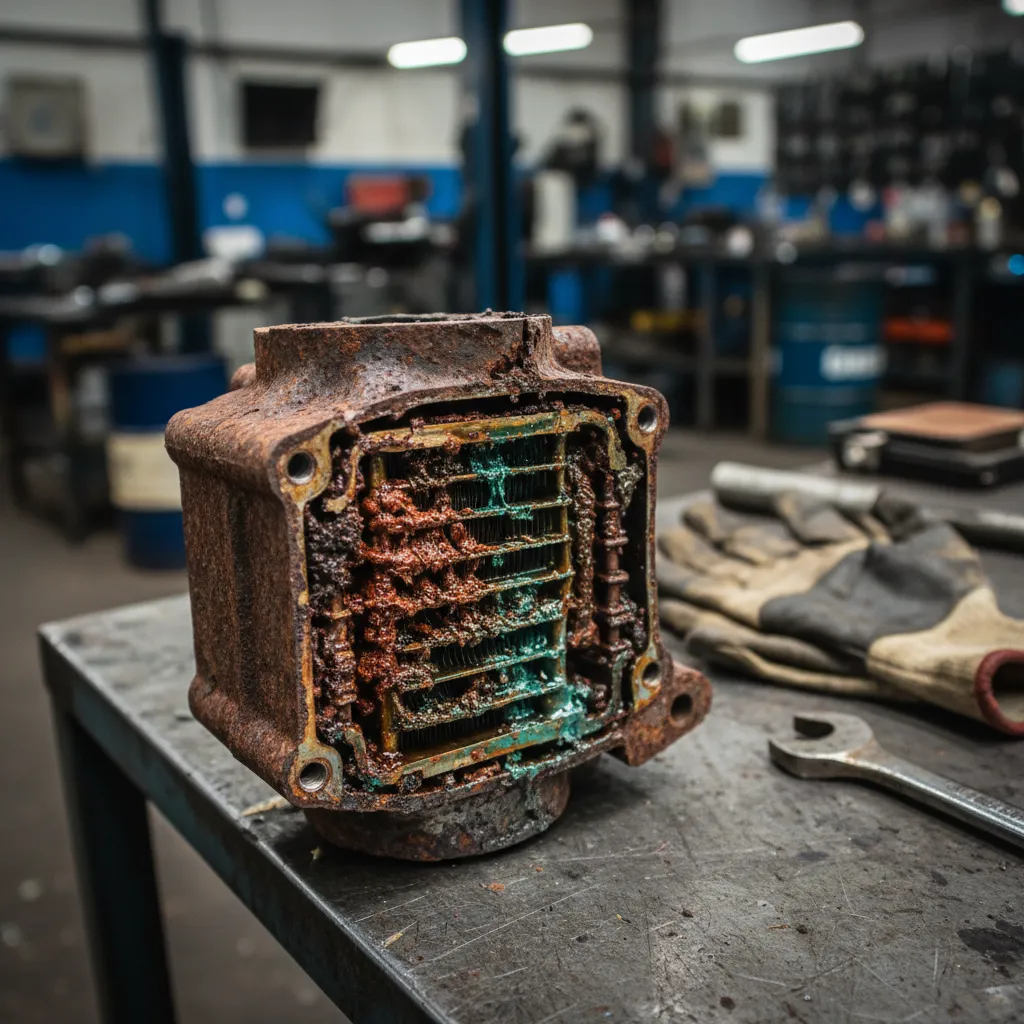
The primary reason the factory cooling system fails under load is its design reliance on the engine’s coolant temperature. In the PX1, PX2, PX3, and even Next-Gen Rangers, the transmission fluid is cooled (and heated) by a water-to-oil heat exchanger.
The Heat Soak Phenomenon
The factory heat exchanger is often mounted directly to the transmission or integrated into the radiator. Its job is to normalize temperatures, bringing the transmission fluid up to operating temperature quickly using engine coolant. However, under heavy load—such as towing a 3-tonne boat up the Kaimai Ranges—the engine coolant temperature rises significantly. Because the transmission cooler relies on this already-hot coolant to “cool” the transmission fluid, the system reaches a thermal saturation point. The transmission fluid cannot shed heat effectively because the cooling medium (the engine coolant) is too hot. This leads to spiraling temperatures, fluid oxidation, and eventually, the vehicle’s computer triggering “Limp Mode” to save the gearbox.
The “Strawberry Milkshake” Risk
A catastrophic failure mode known among mechanics as the “Strawberry Milkshake” occurs when the internal barrier of the water-to-oil cooler breaches. This allows pressurized engine coolant to mix with the transmission fluid. The resulting emulsion destroys the friction materials inside the transmission clutches almost instantly. In New Zealand, where Rangers often see high mileage and varied terrain, the vibration and thermal cycling increase the risk of these internal cooler failures. An external air-to-oil cooler completely isolates the transmission fluid from the engine coolant system, eliminating this risk entirely.
What are the benefits of external air-to-oil cooler kits?
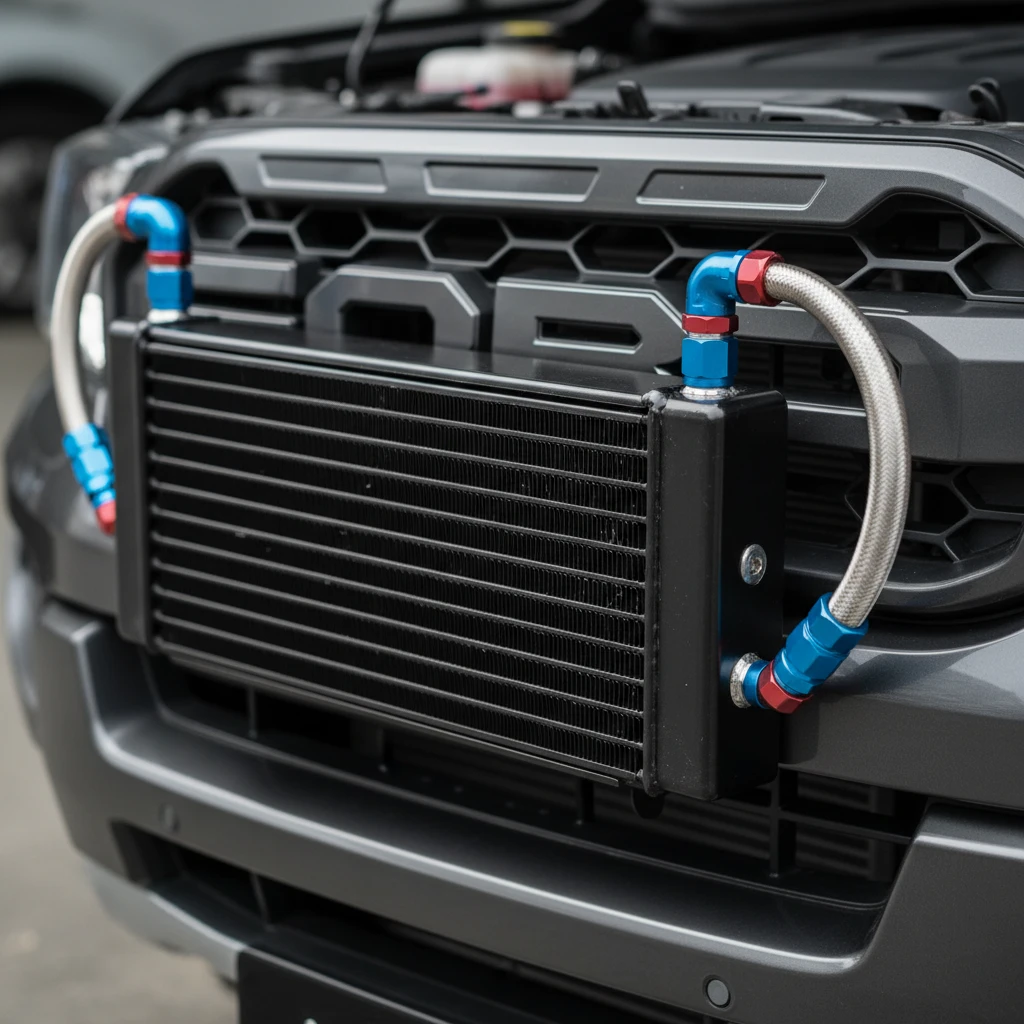
Moving to an external air-to-oil cooler kit is the industry-standard solution for fixing transmission thermal management issues. Instead of relying on hot engine coolant, these kits mount a dedicated radiator (heat exchanger) at the front of the vehicle, directly in the airflow behind the grille.
Superior Heat Dissipation
Air-to-oil coolers utilize the ambient air temperature, which in New Zealand rarely exceeds 30°C, compared to engine coolant which operates around 90°C–105°C. By routing the transmission fluid through a front-mounted matrix, the temperature differential is massive, allowing for highly efficient heat transfer. This can drop peak transmission temperatures by 20°C to 40°C, keeping the fluid within its optimal operating range (typically 80°C–95°C) even under load.
The Importance of Thermostatic Bypass Valves
While cooling is critical, over-cooling is also a risk, particularly during New Zealand winters in regions like Otago or the Central Plateau. Transmission fluid (ATF) must reach a certain viscosity to lubricate effectively and allow the torque converter to lock up properly. High-quality aftermarket kits sold in NZ include a thermostatic bypass valve. This valve recirculates the fluid back to the transmission until it reaches operating temperature (usually around 70°C), at which point it opens and allows flow through the external cooler. This ensures the transmission warms up quickly on cold mornings while providing maximum cooling capacity when hot.
What are the best towing-specific cooling upgrades?
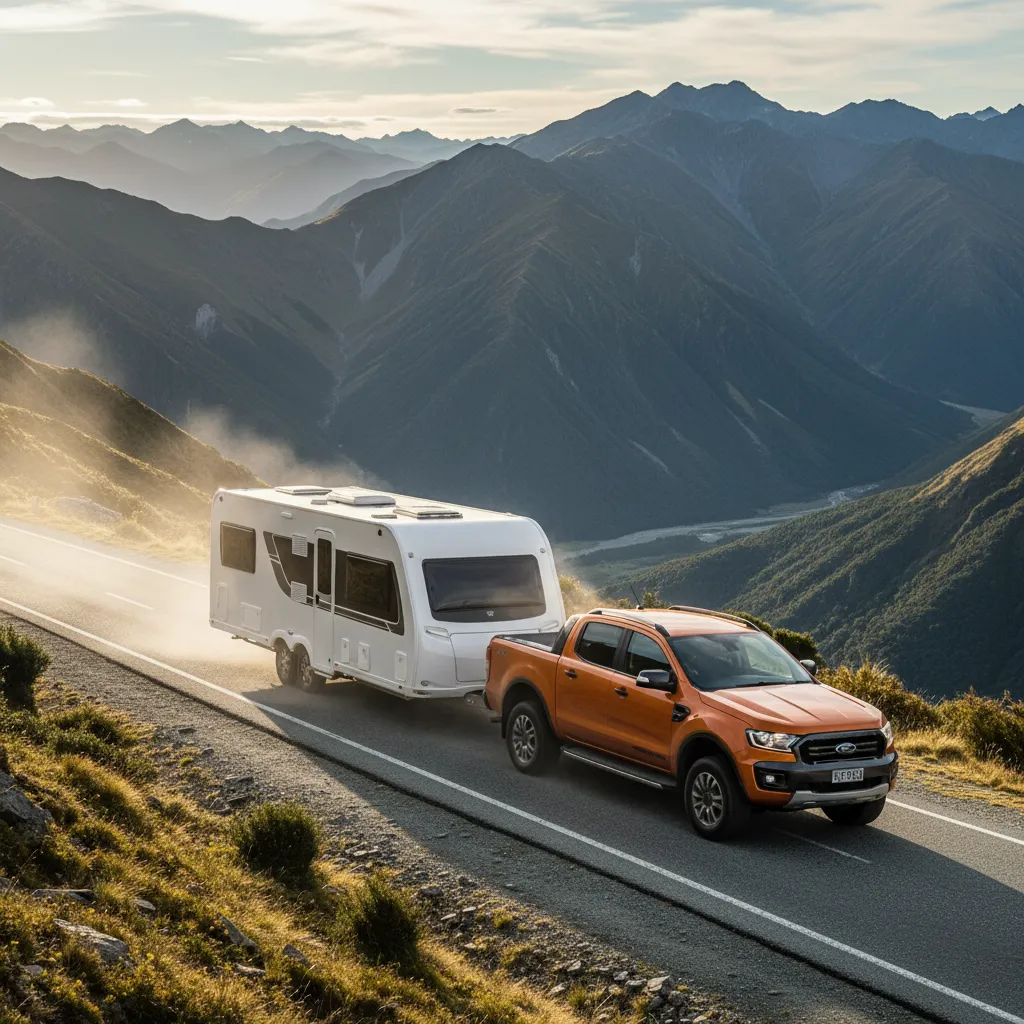
For commercial operators and recreational towers hauling near the Ford Ranger’s 3500kg limit, a simple cooler upgrade might be part of a larger thermal management strategy. Towing creates a compounding heat effect: the torque converter slips more often to maintain momentum, generating immense friction heat.
Torque Converter Lockup Kits
While not a cooler itself, a torque converter lockup kit is a vital companion to a transmission cooler upgrade. In factory form, the Ranger’s torque converter slips significantly in lower gears to smooth out the drive. This slippage is the primary source of transmission heat. A lockup kit allows the driver to manually force the converter to lock (create a direct mechanical link) at lower speeds or when descending hills. This stops the fluid shear that generates heat, reducing the load on your newly installed cooler.
Deep Transmission Pans
Replacing the standard stamped steel transmission pan with a cast aluminum deep pan offers two benefits. First, it increases the total volume of Automatic Transmission Fluid (ATF) in the system, creating a larger thermal buffer (it takes longer to heat up more fluid). Second, cast aluminum pans often feature cooling fins that help dissipate heat from the bottom of the transmission case, further aiding the external cooler.
Installation & Technical Considerations for NZ Owners
When sourcing a Ford Ranger transmission cooler in NZ, the quality of the installation components is just as important as the cooler core itself. Cheap universal kits often fail due to poor hose quality or inadequate mounting brackets.
Bracketry and Mounting
The Ford Ranger PX series and Next-Gen models have specific space constraints behind the grille, particularly if a winch or aftermarket intercooler is already installed. Premium NZ-specific kits come with laser-cut stainless steel brackets designed to bolt into existing factory holes, avoiding the need for drilling into the crash beam. This ensures the cooler is isolated from vibration, preventing stress fractures in the aluminum core.
Hose Quality and Routing
Transmission fluid is highly flammable and pressurized. Using standard fuel hose is a recipe for disaster. You must ensure the kit uses hydraulic-grade, high-temperature transmission hose (often Parker or Gates brand) with proper crimped or AN-fittings. Routing is critical; hoses must be protected with abrasion-resistant sheathing where they pass through the radiator support panel to prevent rub-through failures.
Fluid Management: 6R80 vs 10R80
The Ford Ranger market in New Zealand is dominated by two main transmissions: the 6-speed 6R80 (found in 3.2L and 2.2L models) and the 10-speed 10R80 (found in the Bi-Turbo and V6 models). Understanding the fluid requirements for each is vital during a cooler upgrade.
6R80 (PX1, PX2, Early PX3)
The 6R80 is a robust unit but is prone to the thermal bypass valve sticking. When installing a cooler on these models, it is often recommended to completely remove or bypass the factory thermal valve located on the side of the transmission, replacing it with the external thermostat included in your kit. This transmission uses Mercon LV fluid. When adding a cooler, you must calculate the additional volume required to fill the cooler and lines (usually 0.5L to 1.0L extra).
10R80 (Bi-Turbo, Next-Gen)
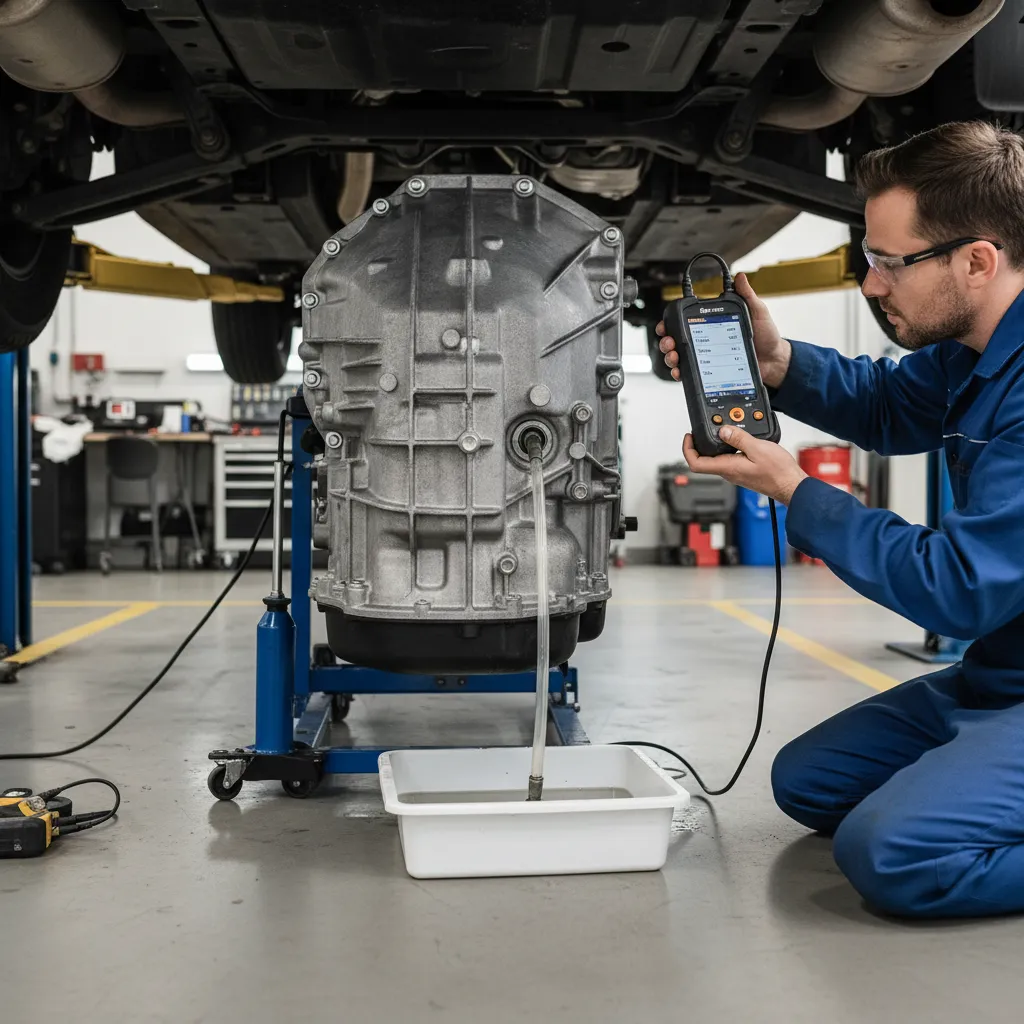
The 10R80 runs hotter by design to improve efficiency and reduce emissions. However, this leaves little headroom for towing. The fluid used here is Mercon ULV (Ultra Low Viscosity). You cannot mix LV and ULV fluids. The 10R80 is extremely sensitive to fluid level; it has no dipstick and must be checked via a plug on the casing while the transmission is at a specific temperature. Upgrading the cooling on a 10R80 requires precise fluid leveling procedures, often necessitating a scan tool to monitor internal fluid temperature during the refill process.
People Also Ask
Do I really need a transmission cooler for my Ford Ranger?
If you tow loads over 1500kg, drive frequently on sand, or navigate steep alpine passes in New Zealand, yes. The factory cooler is sufficient for an unladen ute on the highway, but heavy loads cause heat buildup that significantly shortens transmission life.
How much does a Ford Ranger transmission cooler cost in NZ?
High-quality, vehicle-specific kits in NZ typically range from $600 to $1,200 NZD depending on the core size and fittings. Professional installation usually adds another 2 to 3 hours of labor.
Will an aftermarket transmission cooler void my Ford warranty?
Generally, no, provided the installation does not cause a failure. Under NZ consumer law, a manufacturer cannot void a whole warranty simply because an aftermarket part is present. However, if the cooler leaks and destroys the transmission, Ford will not cover it. Professional installation is key.
What is the normal transmission temperature for a Ford Ranger?
Normal operating temperature is between 80°C and 95°C. Temperatures consistently above 105°C are dangerous, and the warning light usually triggers around 120°C–125°C.
Can I install a transmission cooler myself?
It is possible for a competent DIY mechanic, but not recommended for the 10R80 (10-speed) models due to the complex fluid leveling process. The 6R80 is more forgiving, but ensuring leak-free connections is critical.
What is the Ford Ranger thermal bypass valve issue?
On 6R80 transmissions, the factory thermal bypass valve can stick in the closed position, preventing fluid from cycling through the cooler. This causes rapid overheating. Many aftermarket kits replace this faulty component entirely.