
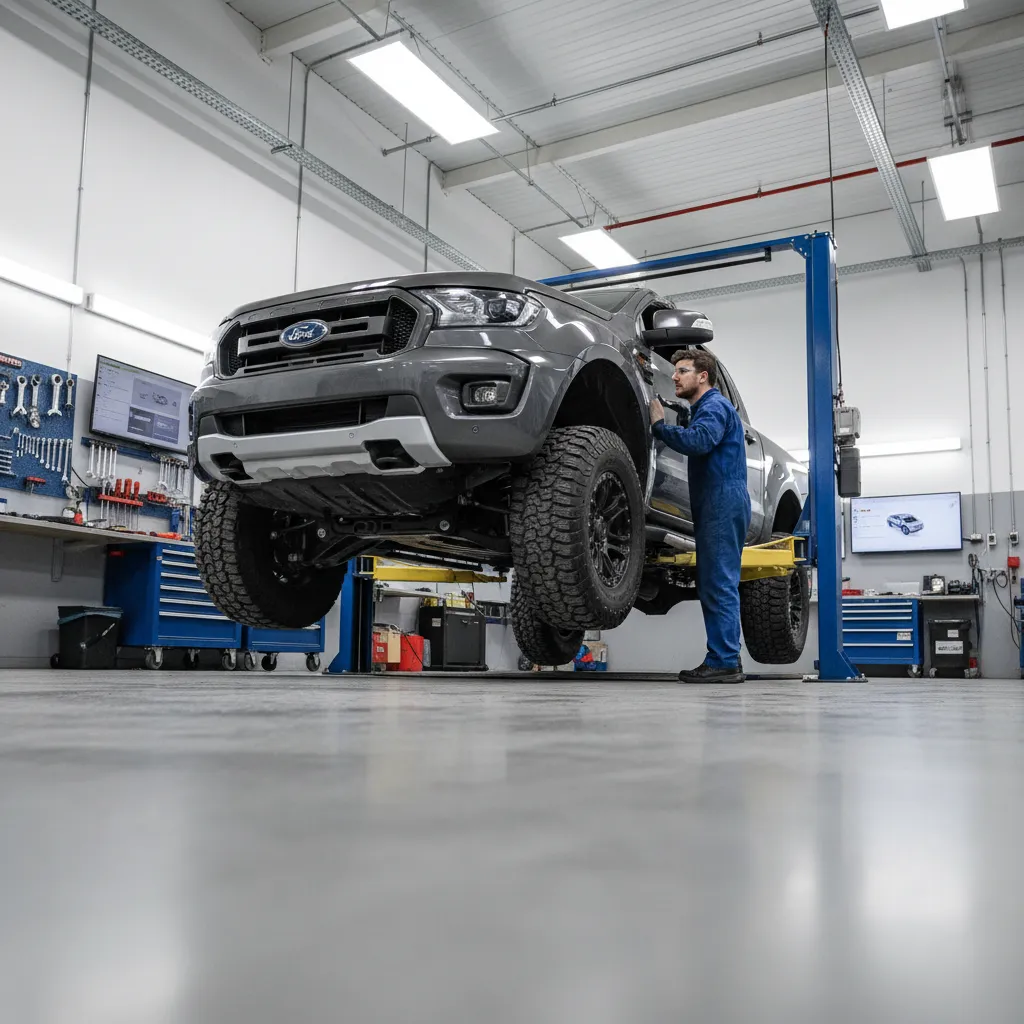
Transmission Types: Manual vs Automatic Parts
Ford Ranger gearbox parts encompass the critical components required to maintain and repair the vehicle’s transmission system, ranging from clutch kits and flywheels for manual models to filtration systems and torque converters for automatics. Selecting high-quality, genuine, or OEM-specification parts is essential for ensuring longevity, preventing premature failure, and maintaining optimal performance under heavy towing or off-road conditions.
Maintaining the drivetrain of New Zealand’s favorite ute requires a deep understanding of the specific demands placed on its transmission. Whether you are navigating the rugged terrain of the South Island or managing a fleet of commercial vehicles in Auckland, the reliability of your Ford Ranger hinges on the quality of its gearbox components. This guide provides a comprehensive technical breakdown of manual and automatic transmission parts to help you make informed purchasing decisions.
What Are the Main Ford Ranger Transmission Systems?
Before diving into specific Ford Ranger gearbox parts, it is crucial to identify the transmission model equipped in your vehicle. The Ford Ranger platform, particularly the PX, PX2, and PX3 generations (and the newer Next-Gen), utilizes several distinct transmission architectures. Identifying your specific gearbox code is the first step in sourcing the correct replacement parts.
For manual variants, the MT82 (6-speed) is a common fixture, known for its robust gearing but sensitive clutch engagement. In the automatic sector, the 6R80 (6-speed) and the advanced 10R80 (10-speed) transmissions are prevalent. Each system has unique fluid requirements, service intervals, and component vulnerabilities. Understanding these differences ensures that you purchase parts that fit perfectly and function as intended by Ford engineers.
Automatic Transmission Filter Kits: Essential Maintenance
The automatic transmission is a hydraulic marvel, relying on clean fluid to actuate clutches and shift gears. The most critical maintenance item for the 6R80 and 10R80 transmissions is the filtration system. Neglecting this component is a leading cause of catastrophic gearbox failure.
Why Replace the Transmission Filter?
Over time, friction materials from the clutch packs and fine metal shavings from gears accumulate in the transmission fluid. The transmission filter captures these contaminants. If the filter becomes clogged, fluid pressure drops, leading to slipping gears, delayed engagement, and eventual overheating. When sourcing Ford Ranger gearbox parts for an automatic service, a complete filter kit is non-negotiable.
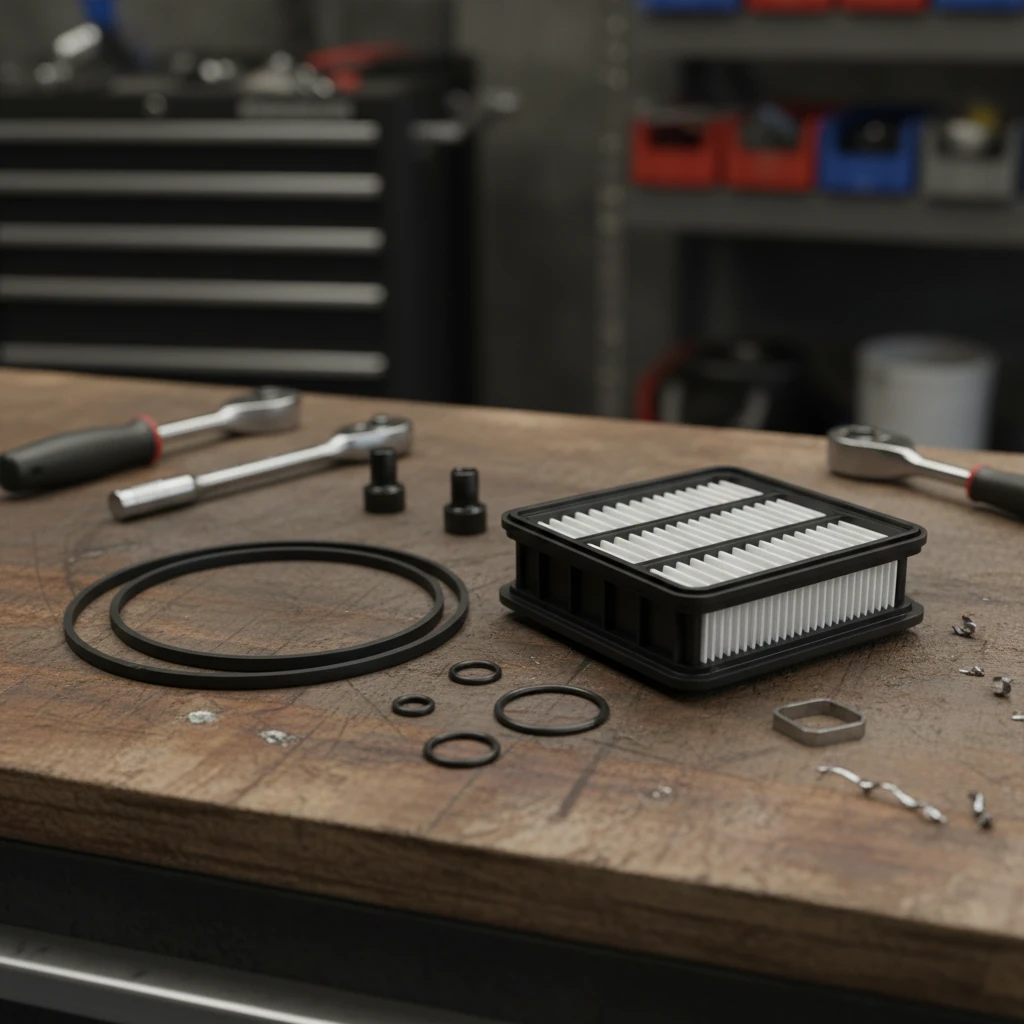
Components of a Quality Filter Kit
A comprehensive automatic transmission service kit typically includes:
- Primary Oil Filter: The main defense against debris. For the 10R80, this is often a plastic composite unit with a specific micron rating.
- Pan Gasket: Reusable rubber or single-use cork/composite gaskets. High-quality rubber gaskets are preferred for their durability and leak resistance.
- Magnet: Many kits include a new pan magnet to trap ferrous metal particles.
- O-Rings and Seals: Essential for the filter neck to ensure a tight seal against the valve body.
Service Intervals for NZ Conditions
While factory schedules might suggest “filled for life” or long intervals, New Zealand driving conditions—often involving towing boats, carrying heavy trade loads, or hill driving—classify as “severe service.” It is highly recommended to replace the automatic transmission filter and fluid every 40,000 to 60,000 kilometers to preserve the valve body and torque converter.
Manual Clutch Replacement Options: SMF vs DMF
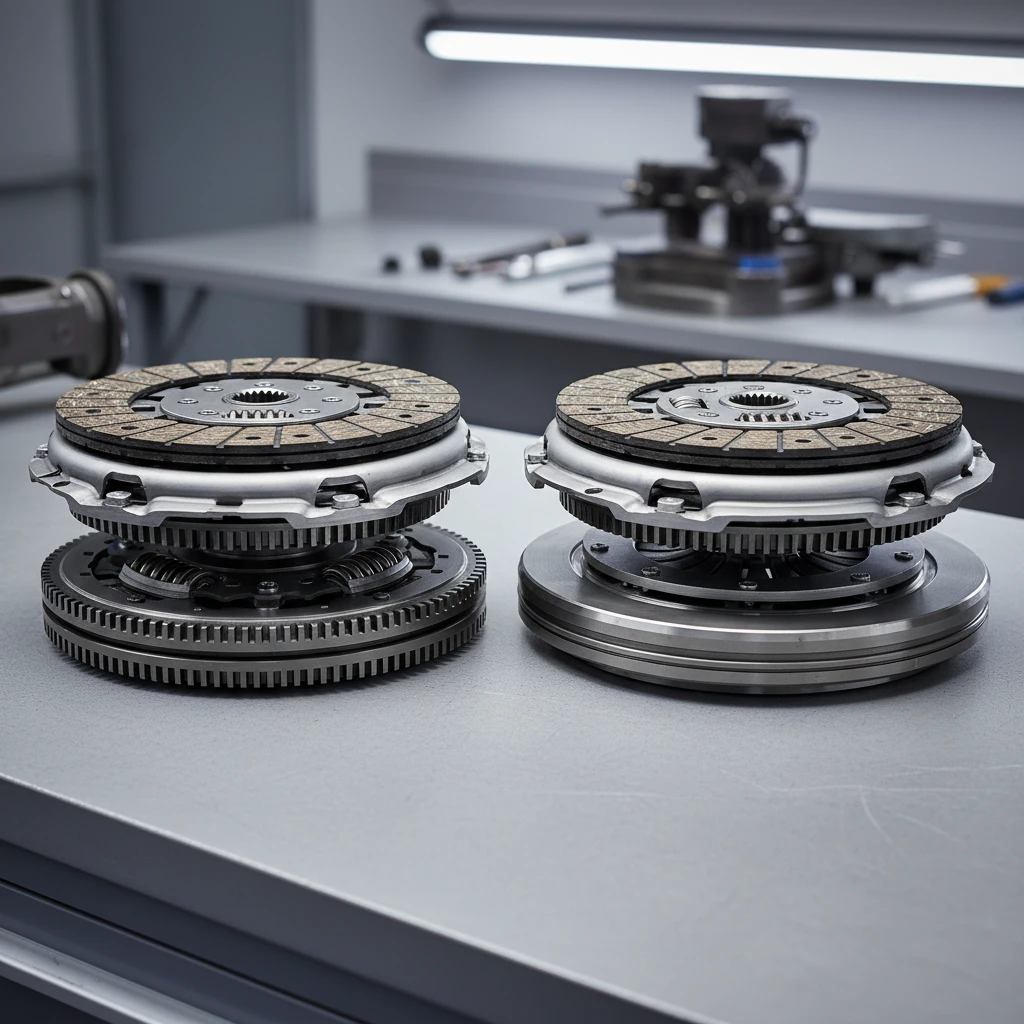
For owners of manual Ford Rangers, the clutch system is a wear item that will eventually require replacement. However, the market offers different technologies, primarily centering on the flywheel design. When browsing Ford Ranger gearbox parts, you will encounter Dual Mass Flywheels (DMF) and Single Mass Flywheels (SMF).
Dual Mass Flywheel (DMF)
The DMF is the standard factory fitment for most modern Rangers. It consists of two independent flywheels connected by a damping mechanism (springs).
Pros: Superior vibration dampening, smoother gear changes, and reduced noise entering the cabin.
Cons: More expensive to replace, and the internal springs can fail under high-torque loads or excessive heat, leading to rattling noises and driveline shudder.
Single Mass Flywheel (SMF) Conversion
An SMF conversion kit replaces the complex DMF with a solid block of steel or chromoly. The damping springs are moved to the clutch friction disc.
Pros: Extremely durable, no internal springs to fail, generally cheaper, and can be resurfaced. Ideal for heavy towing and off-road use.
Cons: Increased transmission noise (gear rollover noise) and slightly more vibration felt through the gear stick.
Heavy-Duty Clutch Kits
For commercial users carrying heavy loads, a standard OEM replacement may not suffice. Heavy-duty clutch kits often feature:
- High-Clamp Pressure Plate: Increases the clamping force on the disc to prevent slipping under load.
- Ceramic or Kevlar Friction Material: Offers higher heat resistance compared to standard organic facings.
- Reinforced Release Bearing: The Concentric Slave Cylinder (CSC) is a known weak point; upgraded versions prevent hydraulic leaks.
Transfer Case Components for 4×4 Systems
The transfer case is the heart of the Ford Ranger’s 4WD capability, splitting power between the front and rear axles. Unlike the main gearbox, transfer case issues often manifest as difficulty engaging 4WD or grinding noises while in Low Range.
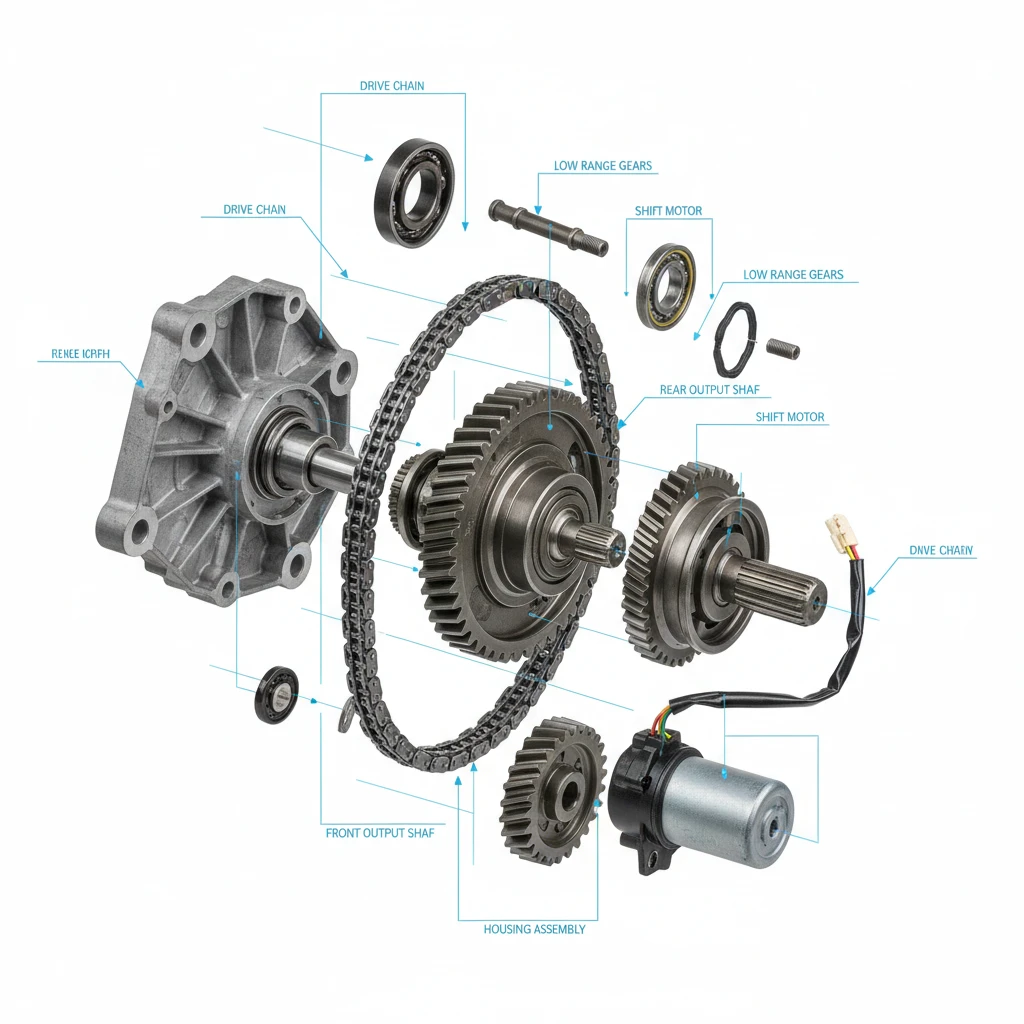
Transfer Case Chain
Inside the transfer case, a heavy-duty chain transfers power to the front output shaft. Over high mileage or aggressive off-road use, this chain can stretch. A stretched chain may skip teeth on the gears, producing a loud popping sound under load. Replacement chains are a specialized Ford Ranger gearbox part that must meet exact tensile strength specifications.
Shift Motor Actuator
The Ranger uses an electronic shift motor to switch between 2H, 4H, and 4L. This external motor is exposed to mud, water, and road grime. Failure of the shift motor is the most common reason a Ranger refuses to engage 4WD. Fortunately, this is a bolt-on replacement part that does not require disassembling the transmission.
Output Shaft Seals
Leaking seals at the rear of the transfer case or the front output are common. If left unchecked, low fluid levels will destroy the internal oil pump and planetary gears. When purchasing seals, look for double-lipped Viton seals for superior heat and abrasion resistance.
OEM vs Aftermarket: Making the Right Choice
The debate between Original Equipment Manufacturer (OEM) and aftermarket parts is pivotal when maintaining a commercial vehicle. In the context of Ford Ranger gearbox parts, the decision often comes down to application.
When to Choose Genuine Ford Parts
For internal transmission components like solenoids, valve bodies, and complex electronic sensors, Genuine Ford parts are strongly recommended. These components require precise calibration with the vehicle’s ECU. Using non-genuine electronics can lead to fault codes and erratic shifting behavior.
When to Choose Aftermarket Upgrades
Aftermarket parts excel where factory components have known limitations. For example:
- Transmission Coolers: Aftermarket external coolers are often larger and more efficient than stock, vital for towing heavy caravans.
- SMF Conversion Kits: As discussed, these offer better longevity for workhorses than the stock DMF.
- Deep Transmission Pans: Aftermarket pans often hold more fluid and include drain plugs (which some stock pans lack), making servicing easier and running temperatures cooler.
The Cost of Downtime
For commercial operators, the price of the part is secondary to the cost of downtime. Buying cheap, unbranded gearbox parts often results in premature failure, requiring the labor-intensive job of removing the transmission to be repeated. Always source parts from reputable suppliers who offer warranties and technical support within New Zealand.
People Also Ask
How do I know if my Ford Ranger gearbox is failing?
Common signs of gearbox failure include delayed engagement when shifting from Park to Drive, harsh or clunky gear shifts, a burning smell (indicating overheating fluid), and slipping gears where the engine revs increase but vehicle speed does not. In manual models, a high clutch pedal bite point or difficulty changing gears usually indicates a worn clutch.
What is the difference between a 6R80 and 10R80 transmission?
The 6R80 is a 6-speed automatic transmission used in earlier PX and PX2 Rangers. The 10R80 is a 10-speed automatic introduced with the PX3 and Raptor models. The 10R80 offers closer gear ratios for better fuel economy and towing performance but is more complex and requires specific ultra-low viscosity transmission fluid.
Can I upgrade my Ford Ranger transmission cooler?
Yes, upgrading the transmission cooler is highly recommended if you tow frequently. The factory heat exchanger can be bypassed or supplemented with a larger air-to-oil cooler mounted at the front of the vehicle. This helps keep transmission fluid temperatures within the optimal range (below 100°C), significantly extending the life of the gearbox.
How often should I change the oil in my manual gearbox?
For the MT82 manual transmission, it is advisable to change the gear oil every 40,000 to 50,000 km, especially if the vehicle is used for towing or off-roading. Fresh oil ensures the synchros operate smoothly and reduces wear on the gears. Always use the specific viscosity oil recommended in your owner’s manual.
Is a Single Mass Flywheel better than a Dual Mass Flywheel?
A Single Mass Flywheel (SMF) is generally “better” for durability and reliability, particularly for work vehicles and heavy towing. It eliminates the failure points of the Dual Mass Flywheel (DMF). However, a DMF provides a smoother, quieter drive. The choice depends on whether you prioritize comfort (DMF) or rugged durability (SMF).
Where can I buy genuine Ford Ranger gearbox parts in NZ?
Genuine parts can be sourced from authorized Ford dealerships or specialized independent parts importers like Ford Ranger Technical Authority & Genuine Parts NZ. It is crucial to provide your VIN (Vehicle Identification Number) when ordering to ensure the parts match your specific model year and engine configuration.