
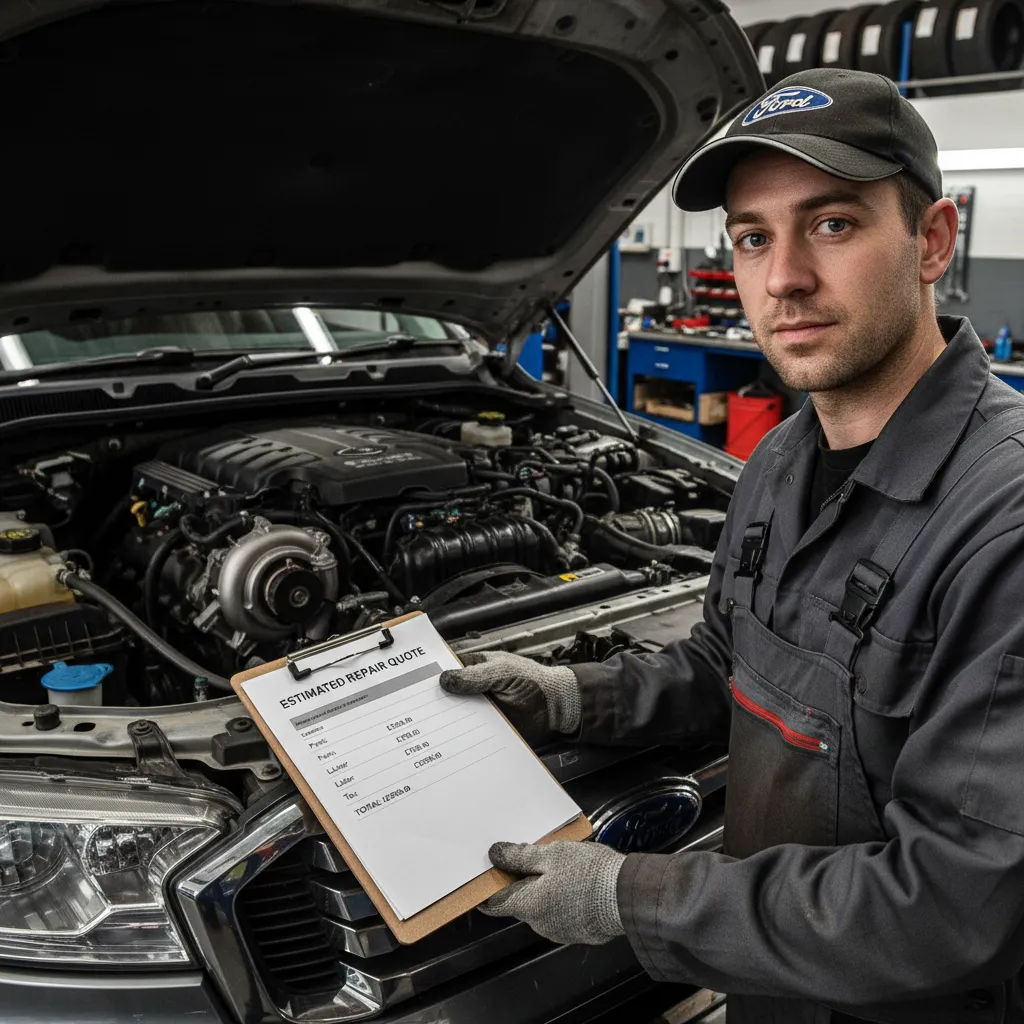
Turbocharger Replacement & Gaskets
The average Ford Ranger turbo replacement cost in New Zealand typically ranges from $2,200 to $4,500 NZD. This total includes a genuine Garrett or BorgWarner turbocharger unit ($1,500–$2,800) and professional labor (4–6 hours). Final pricing depends on whether you own the 2.2L or 3.2L engine and if additional components like oil feed lines and gasket kits are required.
Detailed Cost Breakdown: 2.2L vs 3.2L Rangers
When budgeting for a Ford Ranger turbo replacement cost, it is essential to understand that not all Ranger engines are created equal. The market in New Zealand is dominated by the PX1, PX2, and PX3 generations, primarily featuring either the 2.2L Puma 4-cylinder or the 3.2L Duratorq 5-cylinder engine.
While both engines utilize Variable Geometry Turbochargers (VGT), the physical units and labor requirements differ slightly. Below is a detailed estimation of what you can expect to pay at a reputable diesel specialist or dealership in NZ.
Parts Costs (Genuine vs. Aftermarket)
The single largest factor in the replacement cost is the origin of the hardware. In the world of modern diesel common-rail engines, precision is non-negotiable.
- Genuine OEM (Garrett/Honeywell): $1,800 – $2,800 NZD. These are the units Ford installs at the factory. They are calibrated precisely to the ECU’s mapping.
- High-Quality Aftermarket: $1,200 – $1,600 NZD. Brands like Melett or reputable remanufacturers offer viable alternatives, provided they come with a flow-bench calibration certificate.
- Cheap Imports: $600 – $900 NZD. Avoid these at all costs. Low-quality metallurgy often leads to the turbine wheel shattering under the high exhaust gas temperatures (EGTs) generated by the 3.2L engine, potentially destroying your entire engine.
Labor Components
Replacing a turbo on a Ford Ranger is not a 30-minute job. It involves removing the inner guard, navigating tight spaces around the exhaust manifold, and dealing with potentially seized studs.
- Standard Labor Time: 4 to 6 hours.
- Hourly Rate (NZ Average): $110 – $160 per hour.
- Total Labor Cost: Approx. $500 – $960 NZD.
Identifying Turbo Failure: Lag, Whistle, and Smoke
Before committing to the replacement cost, you must confirm the turbo is indeed the culprit. The Ford Ranger is a robust vehicle, but the turbocharger is a wear item that spins at over 150,000 RPM. Early detection can save you from a runaway engine scenario.
What causes the “Police Siren” Whistle?
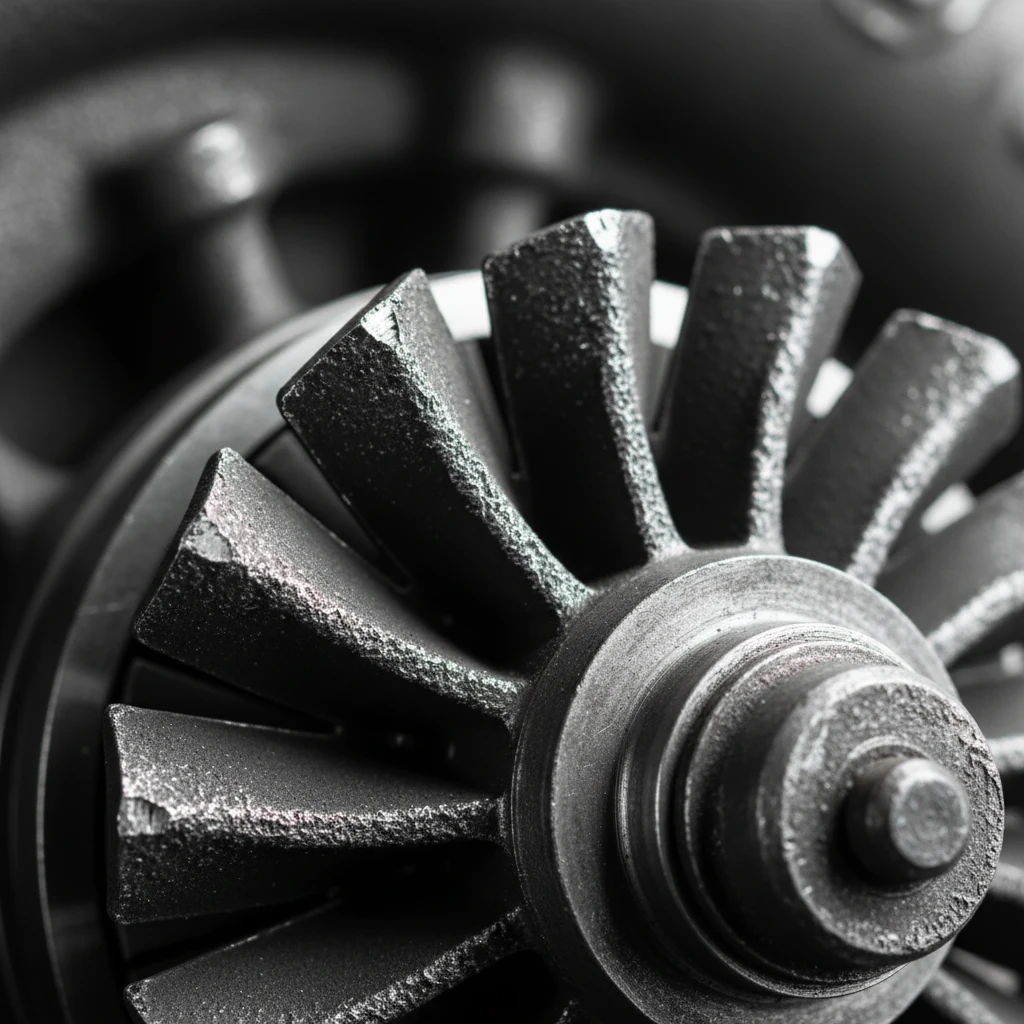
If your Ranger sounds like a distant police siren when you accelerate, this is the hallmark sign of compressor wheel damage or a boost leak. This noise usually indicates that the blades of the intake impeller have been “dusted” (eroded by fine dust passing a poor air filter) or chipped by foreign debris. Once the aerodynamics of the wheel are compromised, the air becomes turbulent, creating a high-pitched whine.
Distinguishing Smoke Colors
The color of the exhaust smoke provides a diagnostic roadmap:
- Blue/Grey Smoke: Indicates oil is burning. This suggests the internal seals of the turbo cartridge have failed, allowing pressurized oil to leak into the intake or exhaust stream.
- Black Smoke: Indicates a rich fuel mixture. This is often caused by a boost leak (split intercooler hose) or the turbo failing to generate sufficient pressure to match the fuel injection.
- White Smoke: While often coolant-related, in a turbo context, it can indicate raw fuel vapor if the turbo has completely seized and the engine is suffocating.
Excessive Turbo Lag
The Variable Geometry Turbo (VGT) is designed to mitigate lag. If you press the accelerator and experience a significant delay (3-4 seconds) before power arrives, the VGT vanes inside the exhaust housing may be carbon-fouled and stuck in the “open” position, preventing the turbo from spooling up quickly.
The Critical Importance of Gaskets and Stud Kits
A common mistake that inflates the long-term Ford Ranger turbo replacement cost is reusing old hardware. The 3.2L Duratorq engine is notorious for exhaust manifold warping, which stresses the turbo mounting studs.
Why You Must Replace the Gasket Kit
The turbocharger gasket is usually a Multi-Layer Steel (MLS) component. Once crushed during the initial torque-down sequence, it cannot conform to the mating surfaces a second time. Reusing a gasket almost guarantees an exhaust leak within 5,000km, which will produce a high-pitched screech and fill the cabin with fumes.
The Manifold Stud Issue
When replacing the turbo, it is highly recommended to inspect the exhaust manifold studs. On the Ford Ranger, the rear cylinder studs often snap due to thermal expansion and contraction.
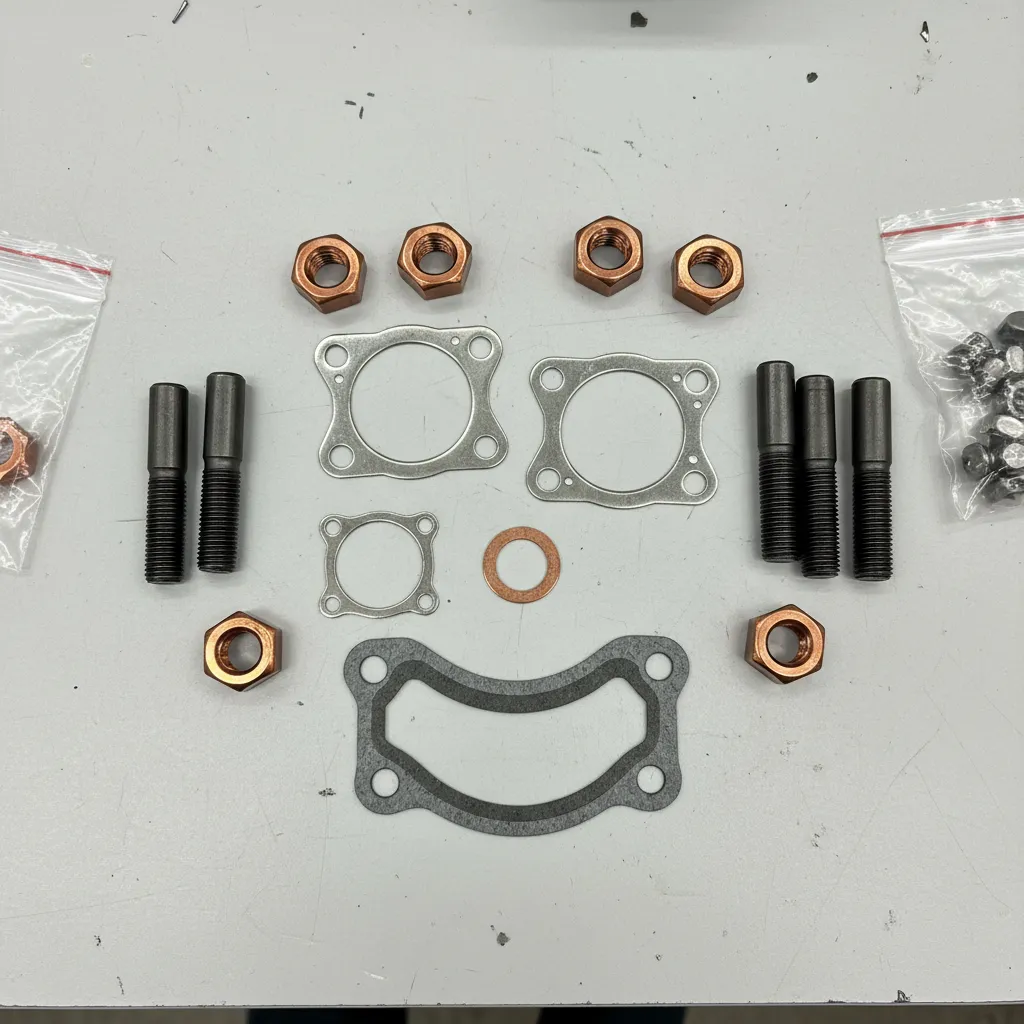
Pro Tip: Always use a comprehensive fitting kit that includes:
- New MLS Turbo-to-Manifold Gasket
- New Copper Pinch Nuts (Self-locking)
- New Oil Drain Gasket
- New Copper Washers for the Banjo Bolts
Actuator Failure Solutions and Calibration
Sometimes, the turbocharger mechanics are fine, but the electronic brain controlling it has died. The Ford Ranger uses an Hella electronic actuator attached to the side of the turbo. This device controls the angle of the VGT vanes.
Common Actuator Fault Codes
If you are seeing codes P003A (Turbocharger/Supercharger Boost Control “A” Position Exceeded Learning Limit) or P2263 (Turbo/Supercharger Boost System Performance), the actuator is the likely suspect. Inside these units, a plastic worm gear often strips, or the soldering on the PCB fractures due to vibration.
Can I Replace Just the Actuator?
Yes, but with a caveat. You cannot simply bolt on a new actuator and drive away. The actuator must be flow-calibrated to the specific turbocharger unit. The arm length and stop-points are precise to the millimeter. If you replace the actuator without professional calibration equipment, the ECU will detect the variance, throw a check engine light, and put the Ranger into limp mode.
Preventing Repeat Failures: Oil Feed Lines
If you are paying the full Ford Ranger turbo replacement cost, you need to ensure the new unit survives. The number one killer of new turbos is oil starvation.
The Banjo Bolt Filter Trap
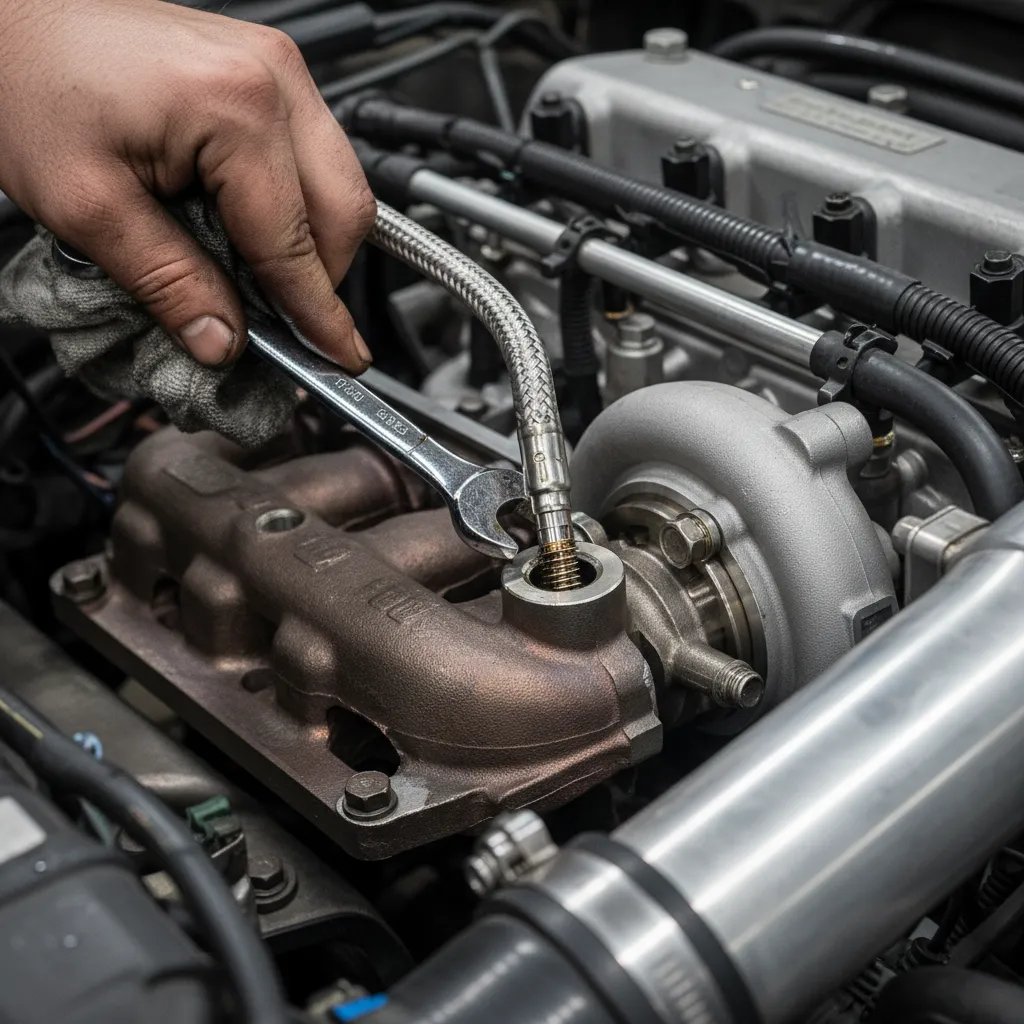
The Ford Ranger oil feed system includes a banjo bolt that contains a tiny mesh filter. Over time, this mesh becomes clogged with carbon deposits and sludge, restricting oil flow to the turbo bearings. If this filter is blocked, your new turbo will seize within minutes of the first startup.
Technical Recommendation: Many NZ diesel specialists recommend removing this mesh filter entirely during replacement, provided you adhere to strict oil change intervals (every 10,000km maximum) using high-quality 5W-30 synthetic oil. Alternatively, replace the entire oil feed line and the banjo bolt with a new genuine part.
Intercooler Hygiene
When a turbo fails, it often sends shrapnel (metal filings) or heavy oil into the intercooler. If you install a new turbo without removing and professionally cleaning the intercooler, the engine will suck that debris into the new turbo or the engine cylinders, causing catastrophic failure. Always budget for an intercooler clean or replacement.
Frequently Asked Questions
How many hours does it take to replace a Ford Ranger turbo?
A professional mechanic typically requires between 4 to 6 hours to replace a Ford Ranger turbo. This includes time for removing the inner wheel arch liner, draining fluids, removing the old unit, cleaning the intercooler lines, installing the new turbo with new gaskets, and performing an oil change.
Can I drive my Ford Ranger with a blown turbo?
No, you should not drive with a blown turbo. Doing so can cause total engine failure. If the turbo seal fails, the engine can run on its own engine oil (diesel runaway), leading to RPMs spiking uncontrollably until the engine destroys itself. Even minor failures can send metal shards into the cylinders.
What is the difference between the 2.2L and 3.2L Ranger turbo?
While both are Variable Geometry Turbos (VGT), they are sized differently to match the engine displacement. The 3.2L turbo is larger to handle higher exhaust gas volume. They are not interchangeable. The 2.2L turbo is generally slightly cheaper to purchase than the 3.2L unit.
Do I need to replace the oil feed pipe when changing the turbo?
Yes, it is critical to replace the oil feed pipe. The Ford Ranger oil feed pipe contains a small mesh filter in the banjo bolt that clogs with carbon. A clogged pipe will starve the new turbo of oil, causing it to fail almost immediately. Most warranty policies require proof of a new oil feed line.
How much is a genuine Ford Ranger turbo?
A genuine Garrett or BorgWarner turbocharger for a Ford Ranger typically costs between $1,800 and $2,800 NZD, depending on the specific model year and engine type (PX1, PX2, or PX3). This price is for the part only and excludes labor and installation kits.
Why is my Ford Ranger making a siren noise?
A siren or whistling noise usually indicates an imbalance in the turbocharger assembly, often caused by damage to the compressor wheel blades from foreign debris or dust ingress. It can also indicate a boost leak in the intercooler hoses. Immediate inspection is required to prevent further damage.