
Upgraded Intercoolers & Piping
A Ford Ranger intercooler pipe upgrade involves replacing the failure-prone factory plastic hot and cold side hoses with durable aluminium hard pipes and multi-ply silicone joiners. This critical modification prevents boost leaks caused by split pipes, improves throttle response by reducing hose expansion, and ensures reliable performance during heavy towing or high-boost driving conditions.
Why the Factory Ford Ranger Pipes Fail
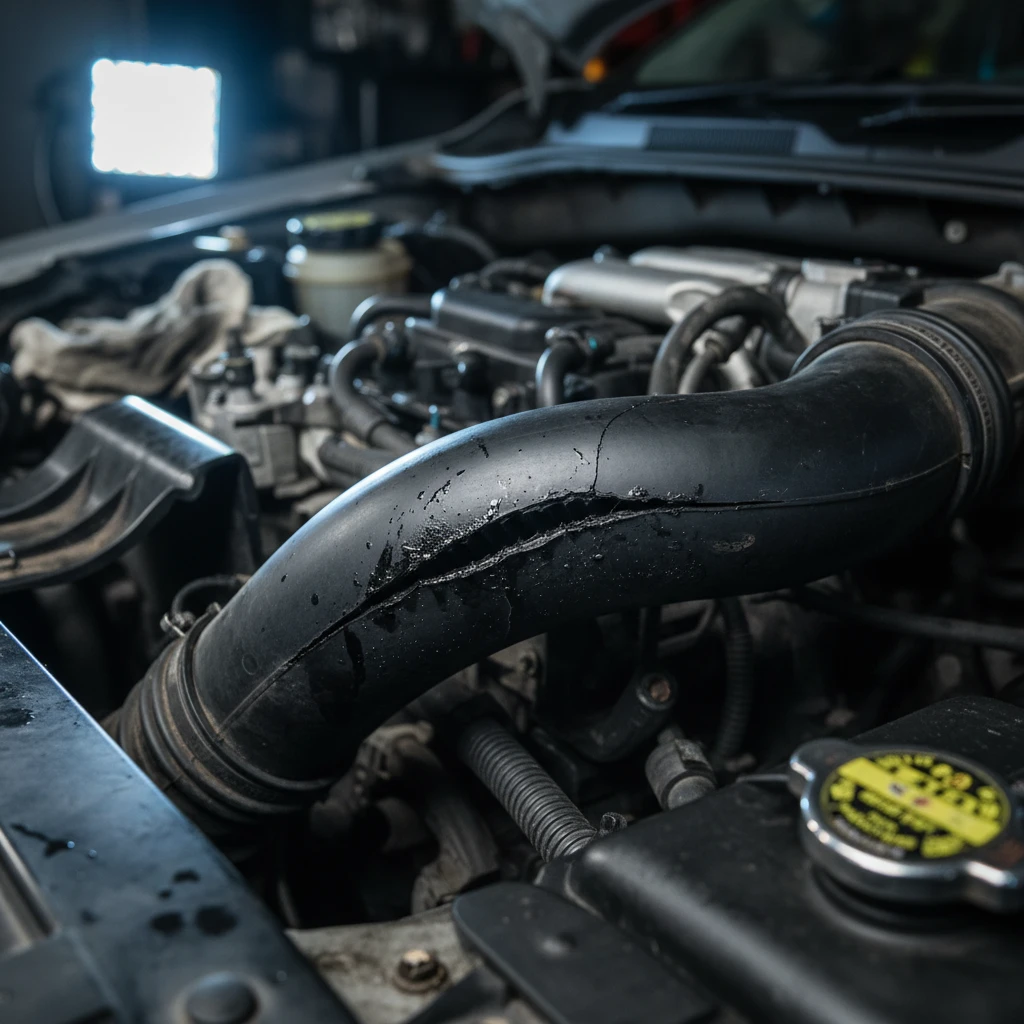
For owners of the Ford Ranger PX1, PX2, and PX3 models—particularly the 3.2L Duratorq engine—intercooler pipe failure is not a matter of if, but when. The factory-supplied intercooler piping is manufactured from standard rubber and rigid plastic. While cost-effective for mass production, these materials are ill-equipped to handle the rigours of the New Zealand environment, specifically the combination of high boost pressure, oil contamination, and thermal cycling.
The most common point of failure is the cold side hose leading into the throttle body. Over time, the constant expansion and contraction under boost pressure fatigue the plastic. Furthermore, oil blow-by from the crankcase ventilation system degrades the rubber internal lining, making it soft and prone to ballooning. Eventually, the pipe develops a hairline crack or splits entirely.
When this happens, the vehicle’s Manifold Absolute Pressure (MAP) sensor detects a discrepancy between requested boost and actual boost. This results in the engine management system entering “Limp Mode,” significantly reducing power to protect the engine. For commercial users or those towing caravans through the Southern Alps, a split hose can leave you stranded on the side of the road.
Symptoms of a Failing Intercooler Pipe
Before a catastrophic failure occurs, your Ranger may exhibit subtle signs that the factory piping is compromised:
- Audible Hissing: A loud “whooshing” noise under acceleration, indicating air escaping the system.
- Loss of Power: Sluggish acceleration and a lack of torque, particularly on hills.
- Black Smoke: Excessive exhaust smoke caused by the air-fuel mixture running too rich (too much fuel, not enough air).
- Check Engine Light: Fault codes related to “Underboost” or MAF/MAP sensor correlation errors.
Benefits of Aluminium Hard Piping Upgrades
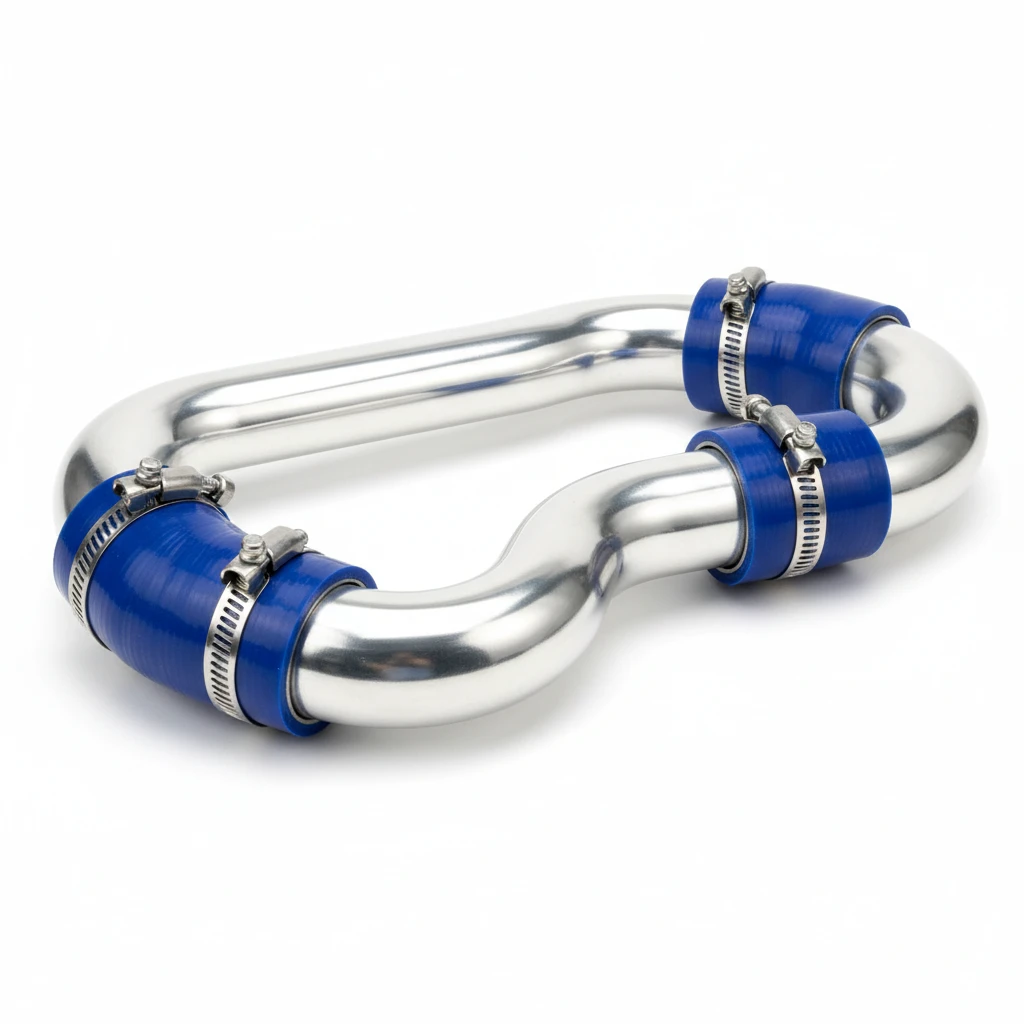
The definitive solution to the factory plastic weakness is upgrading to an aluminium hard pipe kit. Unlike the stock components, aftermarket hard pipes are engineered to withstand pressures far exceeding standard boost levels. This upgrade is essential for any Ranger that has been ECU remapped or is used for heavy-duty commercial work.
Durability and Reliability
Aluminium piping does not degrade with oil exposure or heat cycles. By replacing the plastic with mandrel-bent alloy, you eliminate the risk of cracking. This provides peace of mind for off-road enthusiasts and tradespeople who rely on their vehicles in remote locations. The rigid construction ensures that the pipe maintains its shape regardless of the engine load.
Improved Throttle Response
Factory rubber hoses are susceptible to “ballooning.” When you step on the accelerator and the turbo spools up, the rubber hose expands slightly before the air is forced into the engine. This expansion creates a momentary lag in throttle response. Rigid aluminium pipes do not expand. This means that when the turbo builds pressure, that energy is directed immediately into the intake manifold, resulting in sharper, more immediate throttle response.
Aesthetic and Maintenance Advantages
Beyond performance, hard pipes clean up the engine bay. They are easier to wipe down and inspect. High-quality kits utilize multi-ply silicone joiners at the connection points to allow for necessary engine movement (torque flex) while maintaining a high-pressure seal. This modular design makes future maintenance easier compared to the one-piece factory units.
Front Mount Intercooler (FMIC) Advantages
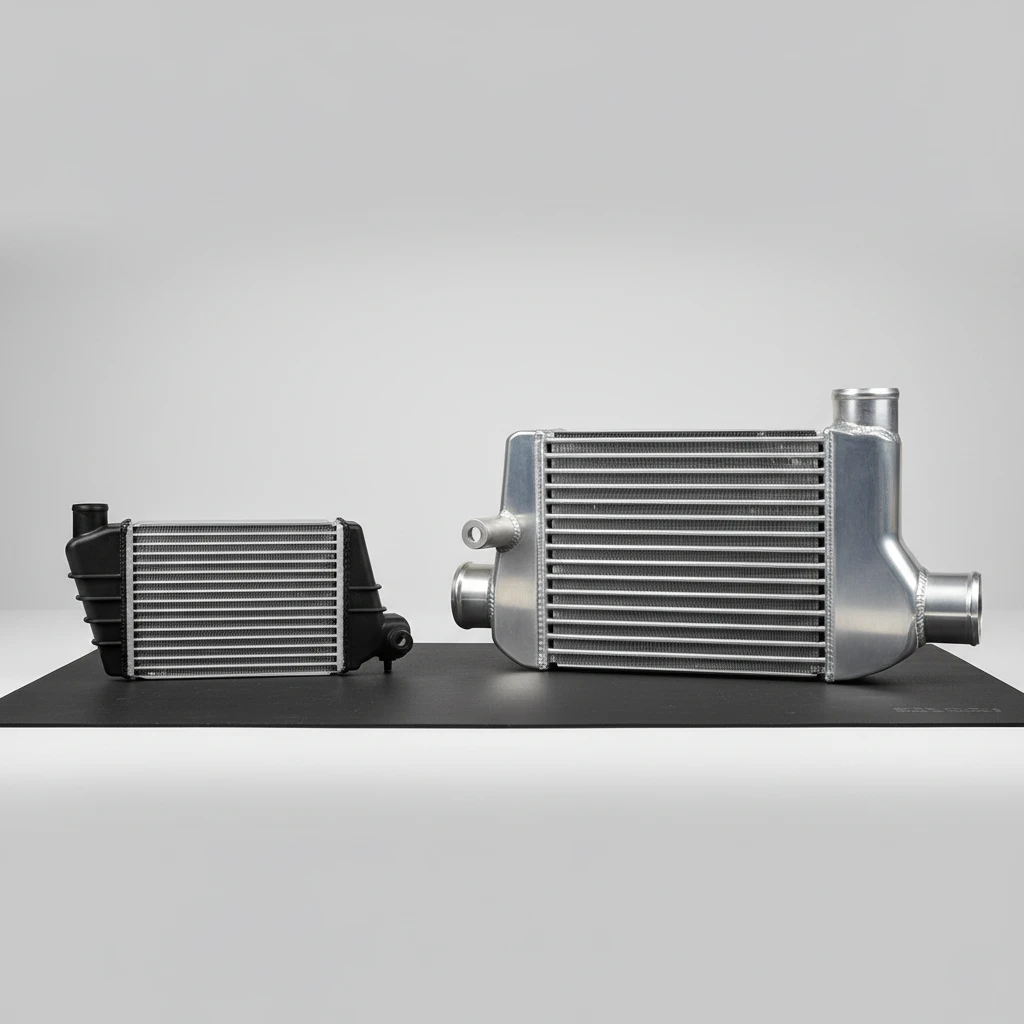
While piping ensures the delivery of air, the intercooler itself is responsible for the density of that air. The factory Ford Ranger intercooler is adequate for stock tuning and empty-load driving, but it quickly suffers from “heat soak” under load. Upgrading to a larger aftermarket Front Mount Intercooler (FMIC) is the second half of the airflow equation.
Combating Heat Soak
Heat soak occurs when the intercooler core becomes saturated with heat and can no longer effectively cool the charge air coming from the turbocharger. When air is compressed by the turbo, it heats up significantly. Hot air is less dense, meaning it contains less oxygen per cubic foot. Less oxygen results in less efficient combustion and higher engine temperatures.
Aftermarket intercoolers typically feature a “Bar and Plate” core design, which is more robust and offers superior thermal inertia compared to the factory “Tube and Fin” design. They also boast a significantly larger surface area and core volume. This allows for greater heat dissipation, ensuring that the air entering the engine remains cool and dense even after prolonged periods of hard driving.
Consistent Power Delivery
With a stock intercooler, you may notice power fading after a few aggressive overtakes or halfway up a long hill. This is the ECU pulling timing and fuel to protect the engine from high Intake Air Temperatures (IATs). An upgraded intercooler keeps IATs stable, allowing the engine to produce consistent power run after run, regardless of the ambient temperature.
Lowering EGTs for Heavy Towing
For New Zealand Ranger owners, towing boats, caravans, and horse floats is a primary use case. This is where the combination of upgraded piping and a larger intercooler becomes critical for engine longevity. The primary metric to watch here is Exhaust Gas Temperature (EGT).
The Relationship Between Air Density and EGTs
High EGTs are the enemy of diesel engines. Excessive heat can melt pistons, crack cylinder heads, and destroy turbochargers. High EGTs are often caused by a rich fuel mixture—too much fuel and not enough air to burn it completely. By upgrading the intercooler system, you are supplying the engine with a larger volume of cooler, denser air.
This improved air density leans out the air-fuel ratio to a safer, more efficient level. The result is a more complete combustion process that generates more power while simultaneously lowering the exhaust gas temperatures. If you are towing 2.5 tonnes or more, an intercooler upgrade acts as an insurance policy for your engine, keeping EGTs within a safe operating range (typically below 550°C to 600°C pre-turbo).

Efficiency and Fuel Economy
While the primary goal of these upgrades is performance and reliability, many drivers report a modest improvement in fuel economy. Because the engine is burning fuel more efficiently and the turbo doesn’t have to work as hard to overcome the restriction of small plastic pipes, the engine operates in a “sweeter spot.” Over the life of the vehicle, these efficiency gains can help offset the cost of the upgrade parts.
Installation and Compatibility Guide
When selecting a Ford Ranger intercooler pipe upgrade, it is vital to choose the correct kit for your specific model year and engine configuration. The piping layout differs slightly between the PX1 (2011-2015), PX2 (2015-2018), and PX3 (2018+) models.
DIY vs. Professional Installation
Installing an intercooler pipe kit is generally considered a moderate DIY task. It typically requires basic hand tools, including sockets, screwdrivers, and pliers. The process involves:
- Removing the engine cover and airbox for access.
- Loosening hose clamps on the factory hot and cold side hoses.
- Removing the factory pipes (the cold side clip can be tricky on some models).
- Positioning the new silicone joiners and hard pipes.
- Tightening high-quality T-bolt clamps (essential to prevent pipes popping off under boost).
- Test driving to check for boost leaks.
However, fitting a full front mount intercooler is more involved and may require removing the front grille and bumper. If you are not comfortable dismantling bodywork, we recommend seeking a professional installation from a 4×4 specialist or diesel mechanic. Incorrect installation can lead to boost leaks, which negate the benefits of the upgrade.
People Also Ask
Does a Ford Ranger intercooler upgrade add horsepower?
Yes, but indirectly. An intercooler upgrade itself doesn’t “create” horsepower like a turbo upgrade, but it recovers lost power by increasing air density. It allows the engine to sustain its maximum power output for longer without heat soaking. When combined with an ECU remap, an intercooler is essential to safely unlock significant horsepower gains.
Why do Ford Ranger intercooler hoses split so often?
Ford Ranger hoses split due to a combination of material degradation and location. The factory rubber degrades from oil blow-by found in the intake system, while the plastic sections become brittle from engine heat cycles. The cold-side hose near the throttle body is under high stress during boost, eventually causing it to fatigue and crack.
Is a hard pipe upgrade worth it for a stock Ranger?
Absolutely. Even on a stock vehicle, a hard pipe upgrade is a preventative reliability modification. It eliminates the risk of a plastic pipe failing while you are on a trip or towing, saving you from costly recovery bills and “limp mode” situations. It also provides a slight improvement in throttle response.
What is the difference between hot side and cold side piping?
The “hot side” piping connects the turbocharger outlet to the intercooler inlet; it carries hot, compressed air. The “cold side” piping connects the intercooler outlet to the engine’s throttle body; it carries the cooled, dense air. The cold side is the most common failure point on the Ford Ranger.
Will an intercooler upgrade void my warranty?
In New Zealand, installing quality aftermarket parts generally does not void the entire vehicle warranty. However, if the aftermarket part is proven to have caused a specific failure (e.g., a boost leak causing turbo damage), the manufacturer may deny a claim for that specific repair. Always check with your local dealer or warranty provider.
How does an intercooler lower EGTs?
An intercooler lowers Exhaust Gas Temperatures (EGTs) by reducing the initial temperature of the air entering the combustion chamber. Cooler intake air leads to lower combustion temperatures. Additionally, denser air ensures a cleaner burn of the fuel, preventing the excessive heat generated by a rich (fuel-heavy) mixture.