

Winter Cold Start & Battery Care (NZ)
Ford Ranger cold start problems in New Zealand conditions are primarily caused by insufficient battery Cold Cranking Amps (CCA), degraded glow plugs, or incorrect oil viscosity for freezing temperatures. To resolve these issues, owners must verify battery health under load, ensure glow plugs are functioning within resistance specifications, and check that anti-freeze concentration is adequate for South Island alpine environments.
What Causes Ford Ranger Cold Start Problems?
For New Zealand owners of the Ford Ranger—particularly the PX1, PX2, and PX3 models equipped with the 3.2L Duratorq or the 2.0L Bi-Turbo engines—winter presents a unique set of mechanical challenges. When the mercury drops, especially in the central North Island and throughout the South Island, the chemical and mechanical processes required to fire a diesel engine become significantly more demanding.
A cold start problem generally manifests as the engine cranking slowly (sluggish turnover), the engine cranking but failing to fire, or the engine starting roughly with excessive vibration and white smoke before settling into an idle. Unlike petrol engines, diesel combustion relies entirely on compression heat. If the cylinder block is freezing, the battery is weak, or the glow plugs fail to pre-heat the chamber, combustion cannot occur.
In the context of New Zealand’s market, we often see imported vehicles or Rangers set up for milder climates struggling when relocated to alpine regions. Diagnosing the root cause requires a systematic approach, moving from the electrical system to fuel delivery and internal combustion aids.
Why is Battery CCA Critical for Cold Climates?
The most common culprit for Ford Ranger cold start problems is the battery. However, it is not just about voltage; it is about Cold Cranking Amps (CCA).
What is CCA and why does it matter?
CCA refers to the amount of current a battery can deliver at -18°C for 30 seconds while maintaining at least 7.2 volts. In New Zealand’s winter, oil thickens, making the engine harder to turn over. The starter motor requires a massive surge of energy to compress the air inside the cylinders enough to ignite the diesel fuel.
A standard battery might show 12.6 volts on a multimeter, but if its internal plates are sulfated or degraded, it may lack the amperage to turn the high-compression Ranger engine. For the 3.2L Duratorq engine, Ford recommends a high-performance battery, typically an AGM (Absorbent Glass Mat) or EFB (Enhanced Flooded Battery) if the vehicle is equipped with Auto Start-Stop technology.
Technical Specification Recommendation:
For New Zealand winters, we recommend upgrading to a battery that exceeds the OEM specification if you live in cold zones. Look for a battery with a minimum of 800+ CCA. Many aftermarket batteries sold in general automotive stores may only offer 650-700 CCA, which is sufficient for an Auckland summer but will result in a non-start morning in Queenstown or Wanaka.

The Battery Management System (BMS) Reset
Crucially, modern Ford Rangers utilize a Smart Charge system controlled by the Body Control Module (BCM). When you replace a battery to fix cold start issues, you must reset the Battery Management System (BMS). If this is not done using a diagnostic tool (scan tool), the alternator may continue to charge the new battery as if it were the old, degraded one. This can lead to undercharging the new unit, leaving you stranded again within weeks. This is a critical step often missed by DIY enthusiasts.
How to Check Glow Plug Health for South Island Winters
If your battery is testing perfectly but the vehicle struggles to fire, or emits puffs of white smoke upon starting, the issue likely lies with the glow plugs.
The Role of Glow Plugs in the Duratorq Engine
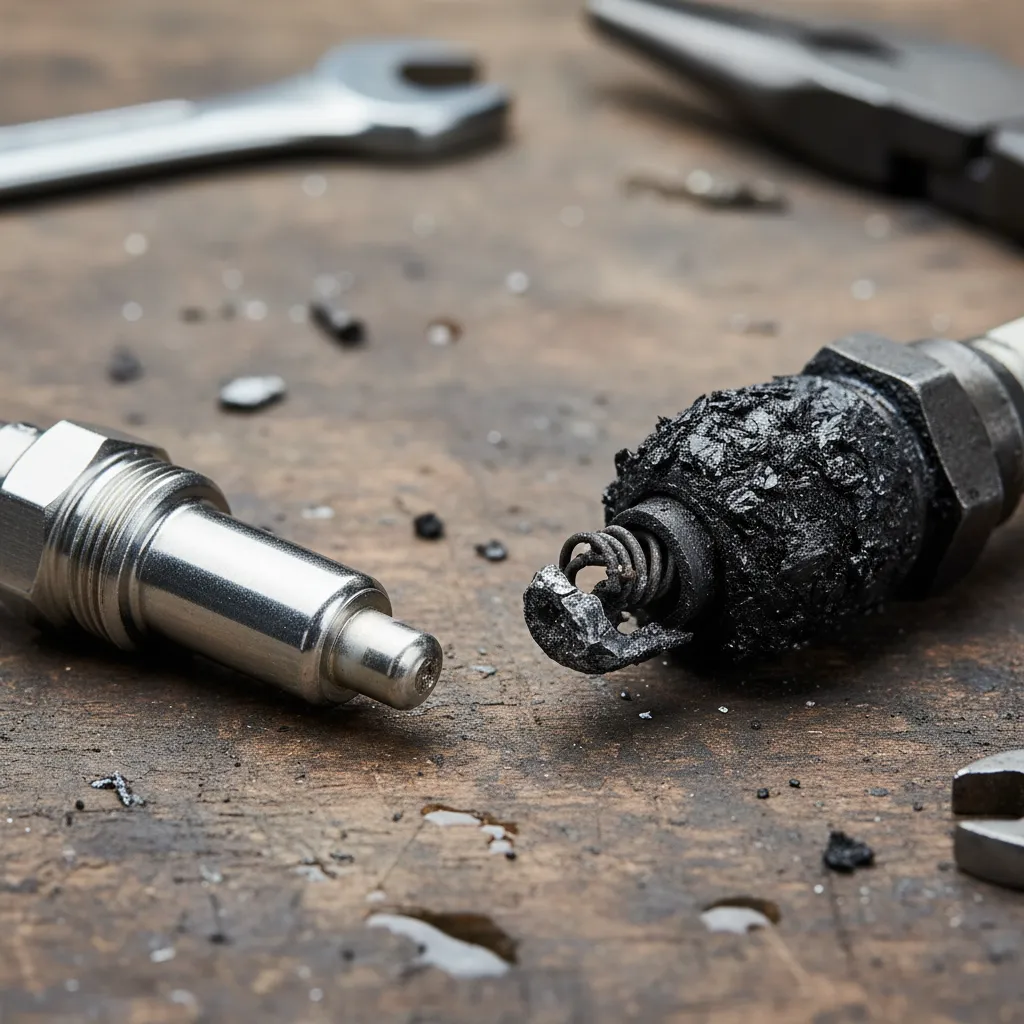
Diesel engines do not use spark plugs. Instead, they use glow plugs to heat the combustion chamber to temperatures exceeding 800°C in a matter of seconds. This pre-heating is essential when the ambient air temperature is low, as the cold metal of the engine block rapidly absorbs the heat generated by compression, preventing ignition.
In the Ford Ranger, the glow plug control module monitors the resistance and operation of the plugs. However, the system does not always trigger a “Check Engine” light immediately upon the failure of a single plug. A common symptom is a rough idle for the first 10-20 seconds after starting, accompanied by unburnt diesel fumes (white/grey smoke).
Testing and Replacement
For South Island owners, we recommend a proactive approach. Glow plugs are consumable items. If your Ranger has exceeded 100,000km and you are heading into a harsh winter, consider having the glow plug resistance tested.
- Resistance Check: A healthy glow plug should have very low resistance (typically 0.5 to 1.0 Ohm). High resistance indicates an internal break or degradation.
- Genuine Parts: Always use Genuine Ford or OEM-equivalent (like NGK or Bosch) glow plugs. Cheap aftermarket plugs can swell inside the cylinder head, making them impossible to remove without removing the entire cylinder head—a massive repair bill caused by a cheap part.
Anti-Freeze Concentration and Oil Viscosity
Fluids are the lifeblood of your Ranger, and their physical properties change drastically in the cold.
Anti-Freeze (Coolant) Concentration
Many owners mistakenly believe coolant is only for preventing overheating. In winter, its primary job is to prevent the water in your engine block from freezing and cracking the metal. Furthermore, the correct concentration prevents internal corrosion.
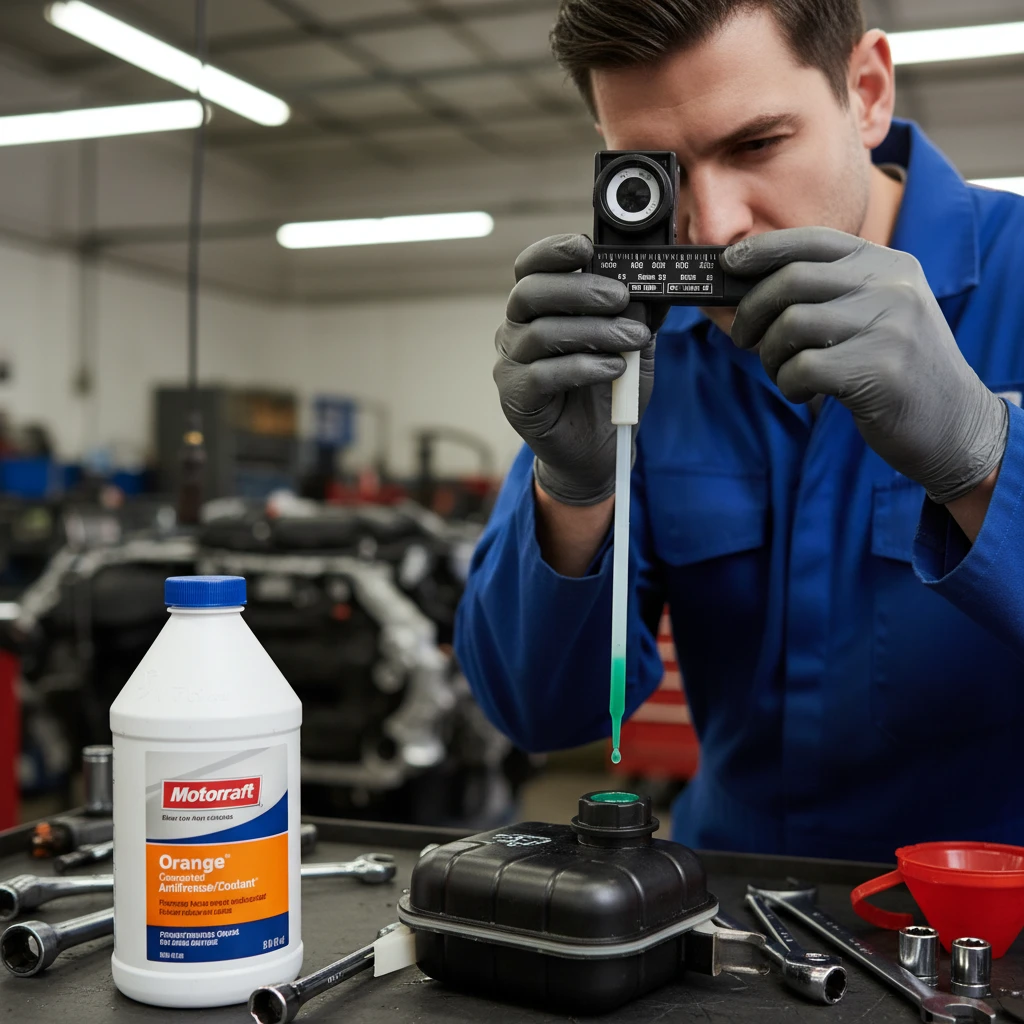
For New Zealand, the Ford Ranger requires a specific OAT (Organic Acid Technology) coolant, typically Motorcraft Orange or Yellow (depending on the year). The concentration should be tested using a refractometer, not just a floating ball tester, for accuracy. You should aim for a mixture that protects down to at least -25°C. If you have been topping up with plain water throughout the year, your concentration is likely too weak to protect the engine during a hard frost.
Oil Viscosity: 5W-30 vs. 0W-30
The “W” in oil ratings stands for “Winter.” A 5W-30 oil is standard for most NZ conditions. However, as the oil gets colder, it thickens. If the oil is too thick (viscous), the starter motor has to work much harder to turn the engine, and oil pressure builds slowly, increasing wear.
If you operate in extreme cold zones (e.g., Tekapo, Waiouru), switching to a high-quality fully synthetic 0W-30 oil meeting Ford’s WSS-M2C950-A specification can drastically improve cold starting performance. This oil flows more freely at low temperatures, reducing drag on the engine internals.
Diesel Waxing and Fuel Filter Maintenance
Diesel fuel contains paraffin wax. Under normal temperatures, this wax is liquid. However, as temperatures drop, the wax begins to crystallize and solidify—a process known as “waxing” or “gelling.”
If the fuel waxes, it clogs the fuel filter, starving the engine of fuel. The Ranger will crank but not start, or start and immediately stall.
Preventing Fuel Starvation
- Winter Diesel: Major fuel retailers in New Zealand switch to a “Winter Mix” diesel in colder months, which contains additives to lower the waxing point. Ensure you are filling up at high-volume stations that have fresh winter stock.
- Fuel Filter Health: A fuel filter that is already partially clogged with contaminants will block up much faster when wax crystals form. We strongly recommend changing the fuel filter before the onset of winter. The Ford Ranger fuel system is highly sensitive to contamination; use only Genuine Ford filters to ensure the correct micron filtration rating (typically 2-5 microns).
- Anti-Gel Additives: For extreme conditions, aftermarket anti-gel additives can be added to the tank. This is particularly useful if you have a vehicle that sits unused for weeks at a time with summer-grade fuel in the tank.
Understanding the Ranger Smart Charge System
It is important to note that the Ford Ranger uses a “Smart Charge” alternator system. This system varies the voltage output based on engine load and battery temperature. In cold weather, you may see the voltage on a gauge spike as high as 14.8V or even 15V. This is normal operation intended to replenish the battery quickly after a cold start.
However, if you have fitted aftermarket accessories (fridges, winches, light bars) directly to the battery terminals without passing through the BMS sensor (on the negative terminal), the vehicle may not calculate the electrical load correctly. This can lead to the main starting battery being chronically undercharged, resulting in cold start failures. Always ensure accessories are wired correctly to accommodate the Ranger’s sophisticated electrical architecture.
Frequently Asked Questions
Why does my Ford Ranger smoke when starting in the cold?
White smoke immediately after a cold start usually indicates unburnt diesel fuel. This is most commonly caused by one or more faulty glow plugs that failed to heat the cylinder sufficiently, or low cylinder compression. If the smoke clears after a few seconds of idling, check your glow plugs.
How many CCA do I need for a Ford Ranger battery?
For the 3.2L and 2.0L diesel engines in New Zealand conditions, a minimum of 800 CCA is recommended. If your Ranger has Auto Start-Stop, you must use an AGM or EFB battery technology to handle the frequent cycling.
Do I need to reset the BMS after changing my Ranger battery?
Yes. The Battery Management System (BMS) must be reset using a diagnostic scan tool whenever a battery is replaced. Failing to do so can shorten the life of the new battery and lead to charging system faults.
What is the correct coolant for a Ford Ranger?
You should use a coolant that meets Ford specification WSS-M97B44-D (often Motorcraft Orange or Yellow). Do not mix different coolant colors or types (like IAT green coolant) as this can cause sludge to form in the radiator.
Why does my Ranger crank but not start in winter?
If the engine cranks at normal speed but won’t start, suspect glow plug failure or fuel waxing (frozen fuel). If the engine cranks very slowly, the issue is likely a weak battery or oil that is too thick for the temperature.
Can I use starting fluid on my Ford Ranger?
Avoid using ether-based starting fluids on modern diesel engines like the Ford Ranger. The glow plugs can ignite the fluid prematurely, causing severe engine damage, including cracked pistons or bent connecting rods.